
Hoarse Whisperer
I’ve been looking for an everywhere camera for ages. The adage that the best camera in the world is the one you have with you has driven me to carry all sorts of impractical cameras across all sorts of terrain.
I take a camera everywhere. Quite often I’ll throw a film camera into a bag as I’m leaving the house, just in case aliens invade while I’m at the park. The decision is usually based on which cameras have film in, and which I’m feeling guilty about not using.
I’ve taken to ranting at strangers about compact cameras, my friends are tired of hearing me talk about them. I can often be found standing on street corners bellowing at passing cars about how compact a compact should be. I can be seen in coffee shops, mumbling into my latte about the specs I require.

Ricoh GR1 – Portra 400
My wholly unreasonable wish list
-
-
- Full Frame sensor,
- Fast, sharp, prime lens, (35mm would be nice),
- Viewfinder,
- Full manual control,
- Pocketable chassis,
- Cheap enough to take to the beach,
-
I know that the above isn’t possible, so I’ve considered compromising. I tried Fuji’s X100 series, and thought it was too big. I tried a 5d (mk1) and a lightweight prime, it was even bigger, but it was full frame, and cheap enough for fearless rock gambolling.
I’ve played with an RX100 and wished it were simpler. I even tried projecting my thoughts at Sony Execs in the hope they’d make a 35mm f/1.4 version just for me, but no luck.
I got to the point where I could dismiss any compact on the market as not what I wanted with petulant ease. I had a moment of clarity recently, and an intrusive thought silenced my spoiled blaring:
“The thing you want doesn’t exist, the reason is that you are wrong and everyone else is right”.

Ricoh GR1 – Portra 400
Decisions (un)made
My knee-jerk response was to very nearly order the Street Edition Ricoh GR III. I’ve always liked the GR form factor, image quality, and screen, but haven’t bought one because of the focal length, and because they always felt expensive.
(My usual routine was to shy away from buying one on the basis of price, and then spend more on a less practical film camera).
Having pulled myself back from the brink at the last minute, I resolved to run a cheaper test to see if I could make pictures I liked with a 28mm lens compact.
The DNA of the GRIII goes back to 1996 and the Ricoh GR1. A 35mm compact with a 28mm f/2.8 lens, Aperture Priority and a tidy little form factor.
As luck would have it, I knew of, (or had been made aware of), a secondhand GR1 Date that could be mine. I was off to France with family for some sea air and some good bread, it was a fait accompli.

Ricoh GR1 – ProImage 100
Classic Risks
I’ve written in the past about the dangers of owning classic compacts, less eloquently than others have, but the short version is that prices have gone crazy, and death hovers over them all.
(Bellamy Hunt of japancamerahunter fame offers this breakdown of the GR range and a note about how he no longer sources them here).
Instead of worrying (a lot) about its inevitable demise, I decided to take the opportunity to shoot a classic camera that is getting rarer, and to learn what all the fuss was about.
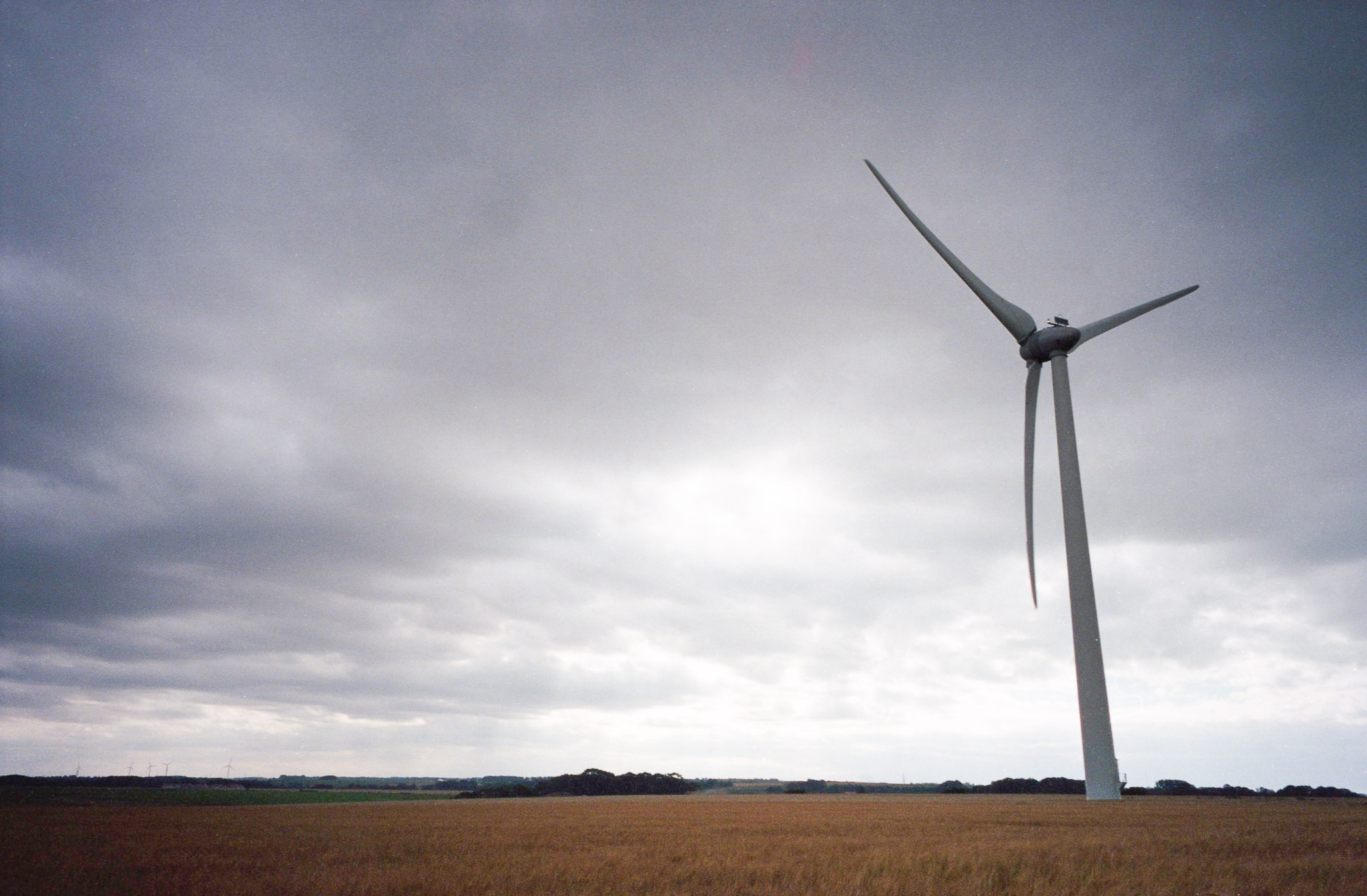
Ricoh GR1 – Portra 400
GR vs Mju
My favourite compact is my Olympus Mju, and as I automatically compared the two as I was shooting the Ricoh, I have some entirely subjective thoughts to share with you.
The Mju is small, sharp, and the lack of manual control allows you to focus on both the moment and the composition. The downside is that this lack of control makes it impossible to force it to do want you want it to do.
I really like the viewing angle 50mm gives you on a 35mm film, and so the Mju’s 35mm lens initially felt like a bit of a trade off. After a few rolls I was smitten.
The 28mm lens in the Ricoh initially feels even wider, really wide in comparison, but it’s for taking a different picture.

Ricoh GR1 – ProImage 100
The more times I brought it to my eye, the more I began to like the view it gave me, and the more I stood in the right place for the shots I wanted. Part way through my first roll of film I realised, both suddenly and somewhat stupidly, that 28mm is only a little narrower than the field of view that I get from my phone camera, which I use everyday.
One of the first things you notice is that the GR comes out of hibernation in the state it went to sleep. This means you can power up and shoot quickly, without having to remember to hurriedly deactivate the flash.
This is a massive win over the Mju which resets when you close it. This means you have to remember to switch the flash to ‘Off’, every time you open the camera.

Ricoh GR1 – ProImage 100
Shooting in program gives you a wide-angle Mju, and the aperture dial enables you to take more control when you need to. The over/under exposure dial also means that although the camera’s ISO is DX Code controlled you can cheat that little bit more control.
The Ricoh is equally pocketable, but has more that can go wrong with it. The extra functionality makes the camera both better, and in the view of the current market, worth more. This makes the fact that it’s likely to evolve into a brick a little bit more painful.
I’ve also pulled the GR from my bag on a couple of occasions to find the lens already extended. The on/off button is recessed but can evidently still get pushed while still in a (my) bag.
The lens is not only unprotected and open to scratching, but one could catch the extended lens on a bag seam and break it, whereas the Mju’s slide shell design means that this can’t happen.

Ricoh GR1 – Portra 400

Ricoh GR1 – Portra 400
Resolution
I wanted to hate the Ricoh GR. Partly because I didn’t want to keep it and have another camera to feel guilty about, and partly because liking it would lead to buying a digital GR.
I don’t hate it, I get it. The lens is sharp and contrasty, the AF is quick enough, and it really does go into a pocket. The control advantages over the Mju combined with its portability make it a powerful little package.
I was all set to get rid of it, and then spent more time with the images I’d made. I liked them, and having decided to part with it, I ended up taking it home again. Then having proved to myself that I could make images with a 28mm equivalent lens, I decided that it was time to go for it. I was going to order the GRIII Street Edition and be done.
Later, when I was once again equivocating about the expense, I found and bought a secondhand Ricoh GRIII. By eschewing the Street Edition I missed out on a paint job and an optical viewfinder, and I saved about £500.
So I now have both, which is ridiculous and awesome. I’ve parted with some other bits to ease the transition and have started carrying the GRIII everywhere. Time will tell what I can make with a digital compact, but it will be nice to talk to my latte about something else.

Ricoh GR1 – ProImage 100

Ricoh GR1 – Portra 400
Ricoh GR1 – Portra 400

Ricoh GR1 – Portra 400
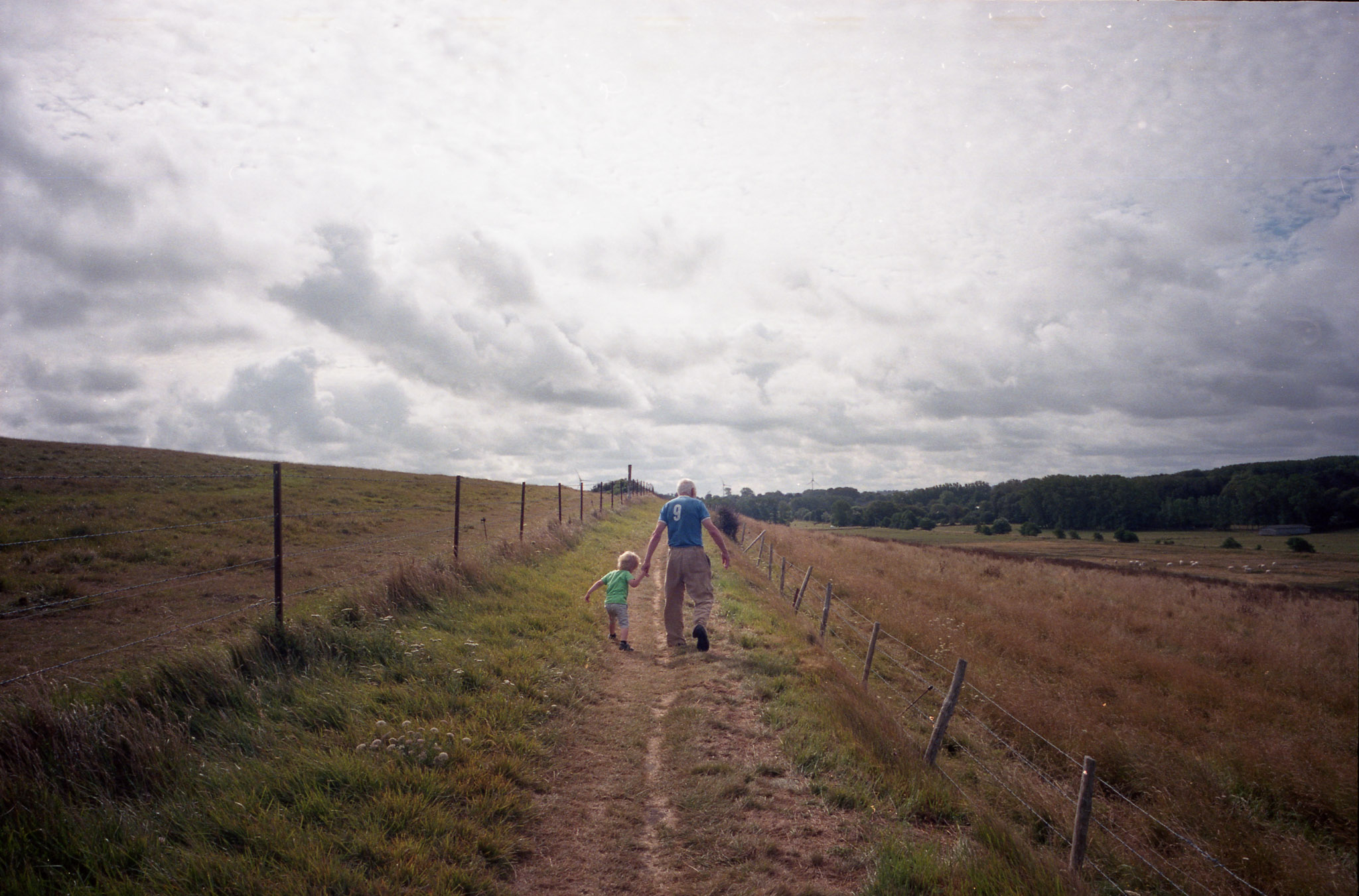
Ricoh GR1 – Portra 400