

I edit my adventures and only really share the stuff that goes well. The downside of this is that it gives the impression that things always go to plan. For this reason I began this blog post prior to completing the experiment. If it all went wrong, I would be honest about my failure.

GW690 mkIII – Provia 100 X-Processed
From stash to slapdash
Over the years I’ve amassed a fair amount of random film in my film stash. It comes from all sorts of places, photowalks, old camera bags, gifts from friends and stuff I’ve bought when I’ve been feeling ‘devil may care’.
What usually happens is that I get it, stash it, and then it never comes out again. A layer of orphan films has built up at the bottom of the box, going gradually more and more out of date.
The fact is that I like to know what I’m going to get from a film and have never liked to rely or depend on happenstance or the ‘ghost in the machine’ to create interest in my photographs.
This is evident in the way that I practice both my digital and analog photography. I usually always use the best camera and glass that I can afford. When shooting analog I’ll use a film I know well and can trust, when I’m using my digital cameras I do so at the largest resolution and best colour depth. Even when I’m shooting digital black and white, I shoot in raw so that I can edit the colour mix in post.
This leaves me with a collection of films and a sense of failure. Whenever I open the box I’m confronted by possibility and the pressure to adventure, but it never seems like the right time.
My adventure with Lomochrome Purple earlier this year has taught me that I do need to branch out, to keep experimenting and to forgive myself when things don’t work.
I need to fail some more so that I can fail better in the future.
A side note about cross-processing.
There are three chemical processes that make up the modern mainstream analog photography market. The most common is C41 which produces a colour negative (in most cases).
Traditional Black and White films are processed in a silver halide process which produces a black and white negative. Slide film or transparency film produce an image on film that is ready to be viewed or projected, with all the colours the correct way round.
Cross-processing films, effectively developing them in the wrong chemistry, produces colour shifts that can be interesting.
Some films are cross-processed more often than others, as the results are deemed more pleasant. Provia is one of these favoured emulsions. It’s better to be lucky than smart…

GW690 mkIII – Provia 100 X-Processed
Plan ish
While hurriedly picking a camera to take to a family barbecue I picked up my favoured GW690 III and went hunting in my stash for some film to shoot.
I had Portra 400 in the camera, with one frame taken, and then suddenly, and on a bit of a whim, I threw some expired Provia 100 (RDP II) and some Cinestil 800t into the bag.
I have no idea from where or when I got the roll of Provia, it came from somewhere, and has been in my stash ever since.
It’s an E6 or transparency film that’s rated at ISO 100 film and expired in August of 2000. Being nearly 20 years old, and having been stored at room temperature since it’s been in my care, I assumed it was unlikely to produce good results.
You don’t get the same kind of latitude from E6 film as you do with a C41 film. Over or under exposing by a relatively small amount will make for significant differences in the picture produced. Given its age if it were a negative film I would have overexposed a little to counter any degradation in the emulsion. Given E6’s lack of latitude and the fact that going to one stop over would push me into tripod territory, I didn’t over expose and shot at box speed.
You can freeze or refrigerate films to preserve them, but it requires a kind of organisation that I don’t apply to my film photography. You can’t microwave a film you’ve forgotten to defrost.

GW690 mkIII – Provia 100 X-Processed

GW690 mkIII – Provia 100 X-Processed
Developing
After finishing the Portra that was in camera, photographing family enjoying the barbecue, I loaded the Provia. I tried to take and photos that included a mix of colours.
Cross-processing films can (apparently) cause some of the mis-processed chemistry to drift off in the mix and affect the processing of other films in the same batch. (I once asked a lab to cross-process a slide film and they refused on the basis that it could bum up the works for the other films in the machine).
I don’t know whether the above is true, but it seemed sensible to put the rolls through in separate batches. (I also have over 4 litres of chemistry that I’m going to struggle to use before it ages out, so it doesn’t feel like a waste).
To add a further frisson to the experiment I was going to develop the film in some ageing chemistry that was old when I mixed it, and that has been oxidising gently in my cellar ever since.
The cross-process film went first, and in keeping with the slapdash nature of the experiment I over-cooked it, getting sidetracked prepping roll two, and I left it in the developer longer than I should have done.
Having done no research as to how to shoot the film for cross-processing, having used a film that was 20 years past its best, chemistry that is getting a little old, and slapdash dev technique, I was delighted (and a little surprised) to find pictures on the film.
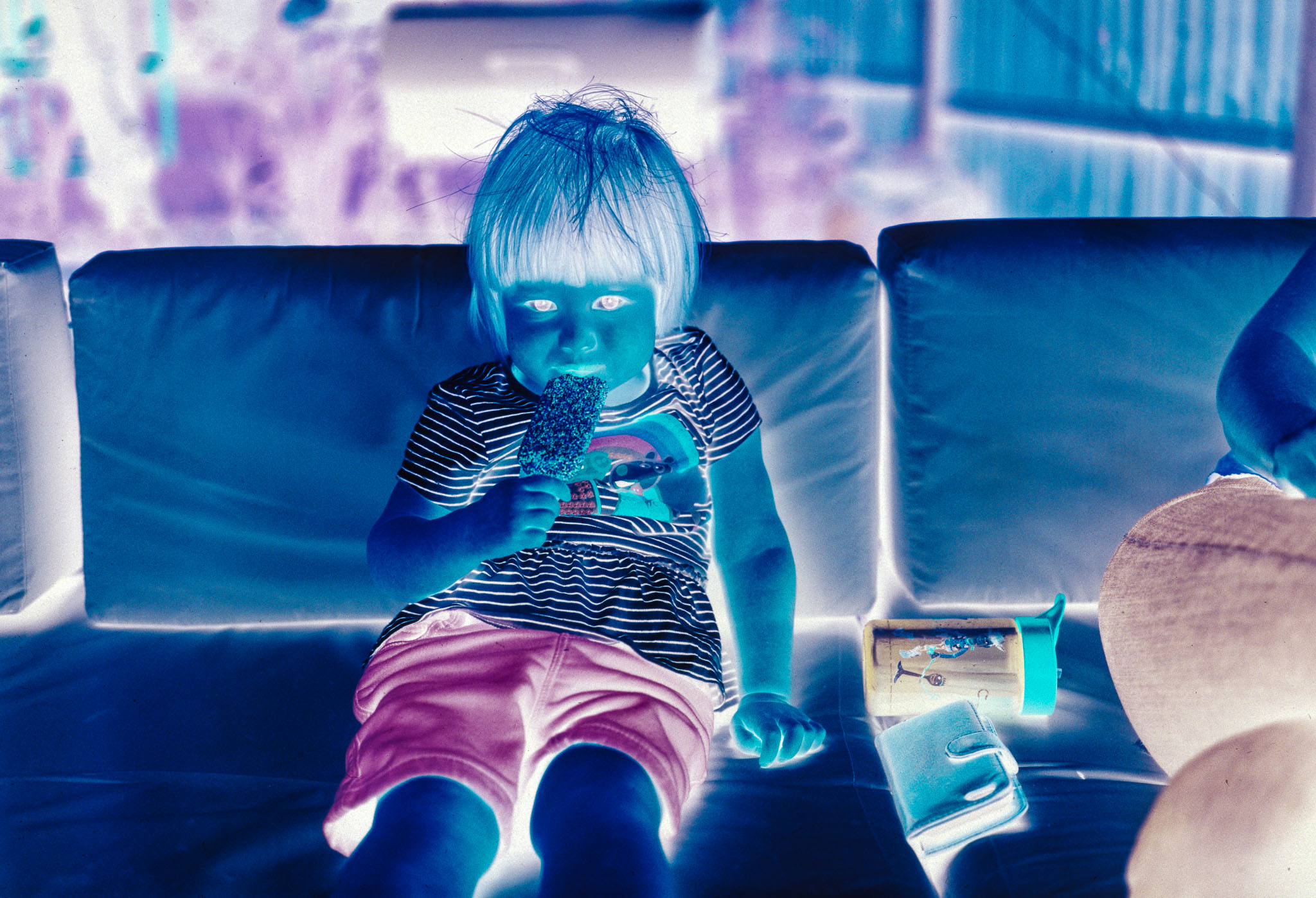
Slide Scan
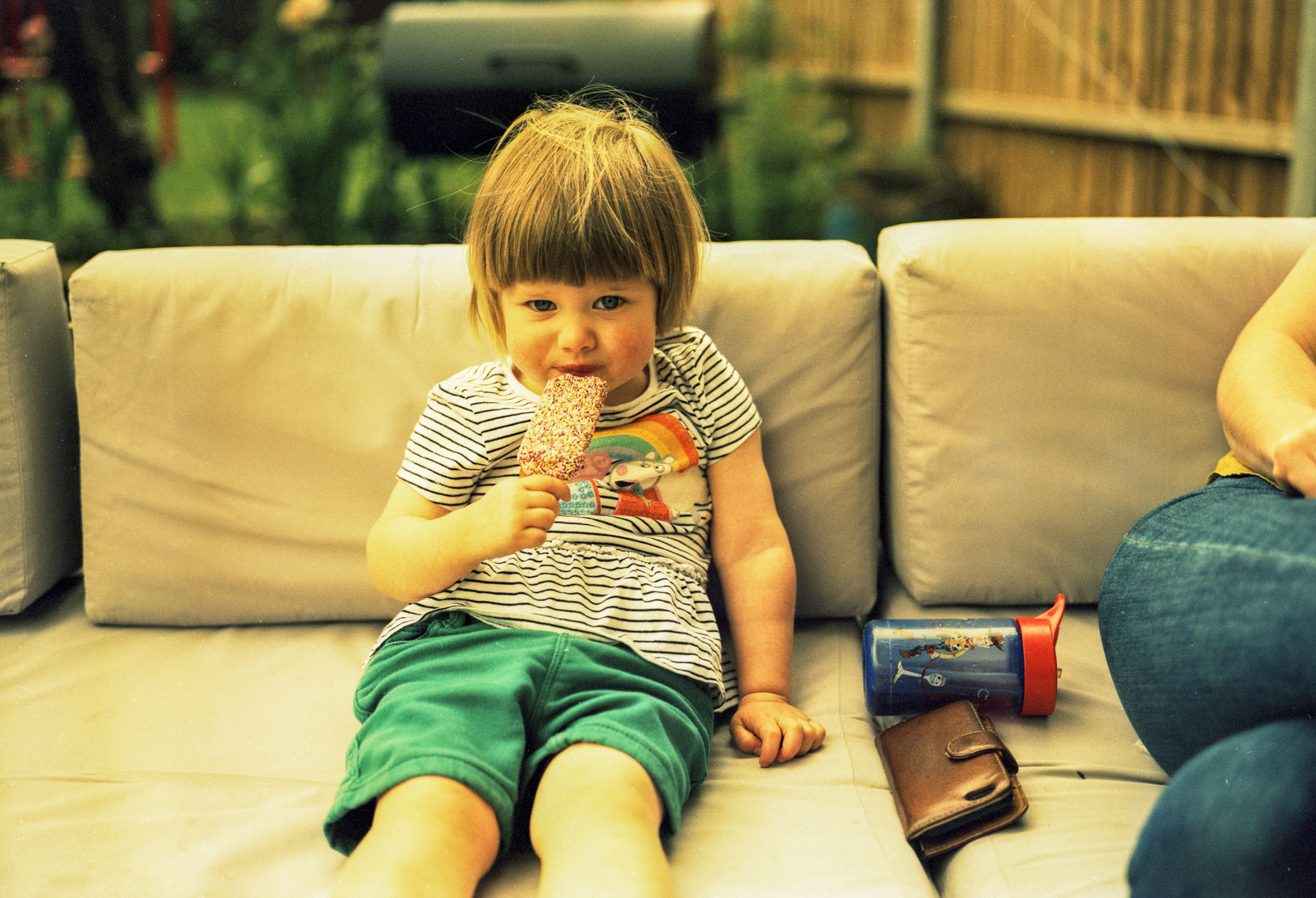
Negative Scan

Edited Scan
Post-Process
I kept the post-process light, scanning the images as if they were negatives, scanning for the chemistry rather than the film. (I also scanned them at the settings I normally use for 35mm film, cleverly creating 900mb/150 megapixel tif files).
I tweaked the white balance in Lightroom, using the dropper to select a pleasant and neutral grey to counter the very yellow colour cast in the scans.
I’m glad to have done the experiment, and I love the look of the pictures. I’m blown away by the performance of the film, to produce images given the circumstances is remarkable, and I’m totally going to do more.
I’m also pleased to have one less orphan in the bottom of the stash.
I’ve yet to shoot my Cinestill, but the the brightest part of the year probably isn’t the best time to be trying a tungsten balanced film stock. At least there’s one reason to look forward to the dull winter nights that await us.
This was one the few occasions where I wished I got more than eight frames out of a roll with the big Fuji. (Had the experiment gone badly I would have been glad to have only lost eight pictures).
Either way I fall more in love with the GW690 mkIII each time I shoot it.

GW690 mkIII – Portra 400

GW690 mkIII – Portra 400