

A recent journey
In March I published a piece about shooting a roll of Lomochrome Purple. In the weeks that followed I reworked the text for a “5 Frames with” post for emulsive.org. I felt that, as a photographer who doesn’t mess with a lot of different film stocks, this was a nice opportunity to write for someone else.
Time passed and my post went live last week. Pretty quickly it became clear that I had made a mistake. Feedback (some constructive and some less so), suggested that my images were pretty odd.
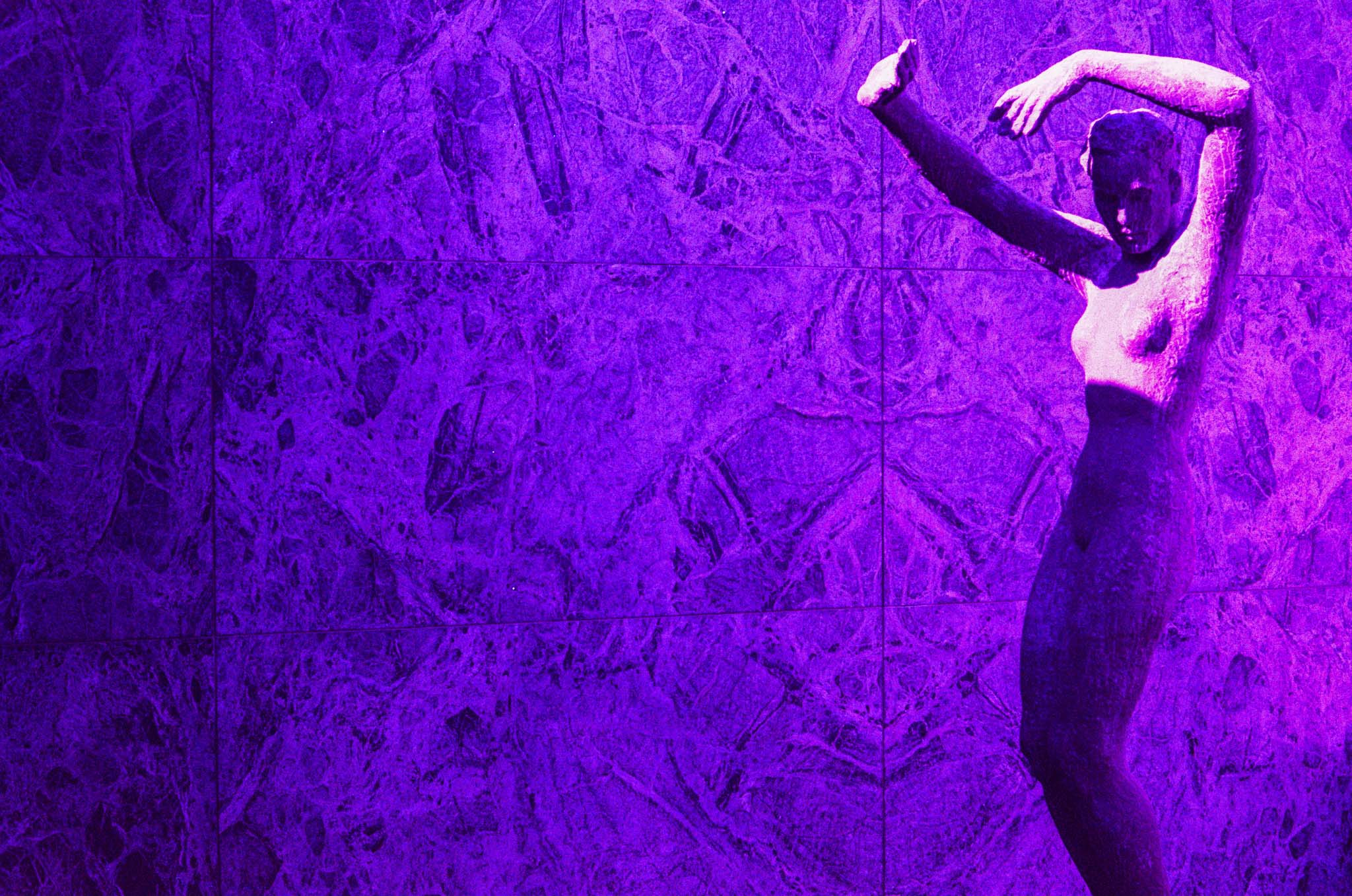
Georg Kolbe’s Alba – Barcelona Pavilion
Leica M4-P / 50mm f/1.1 / Lomochrome Purple XR 100-400
Lab Scan
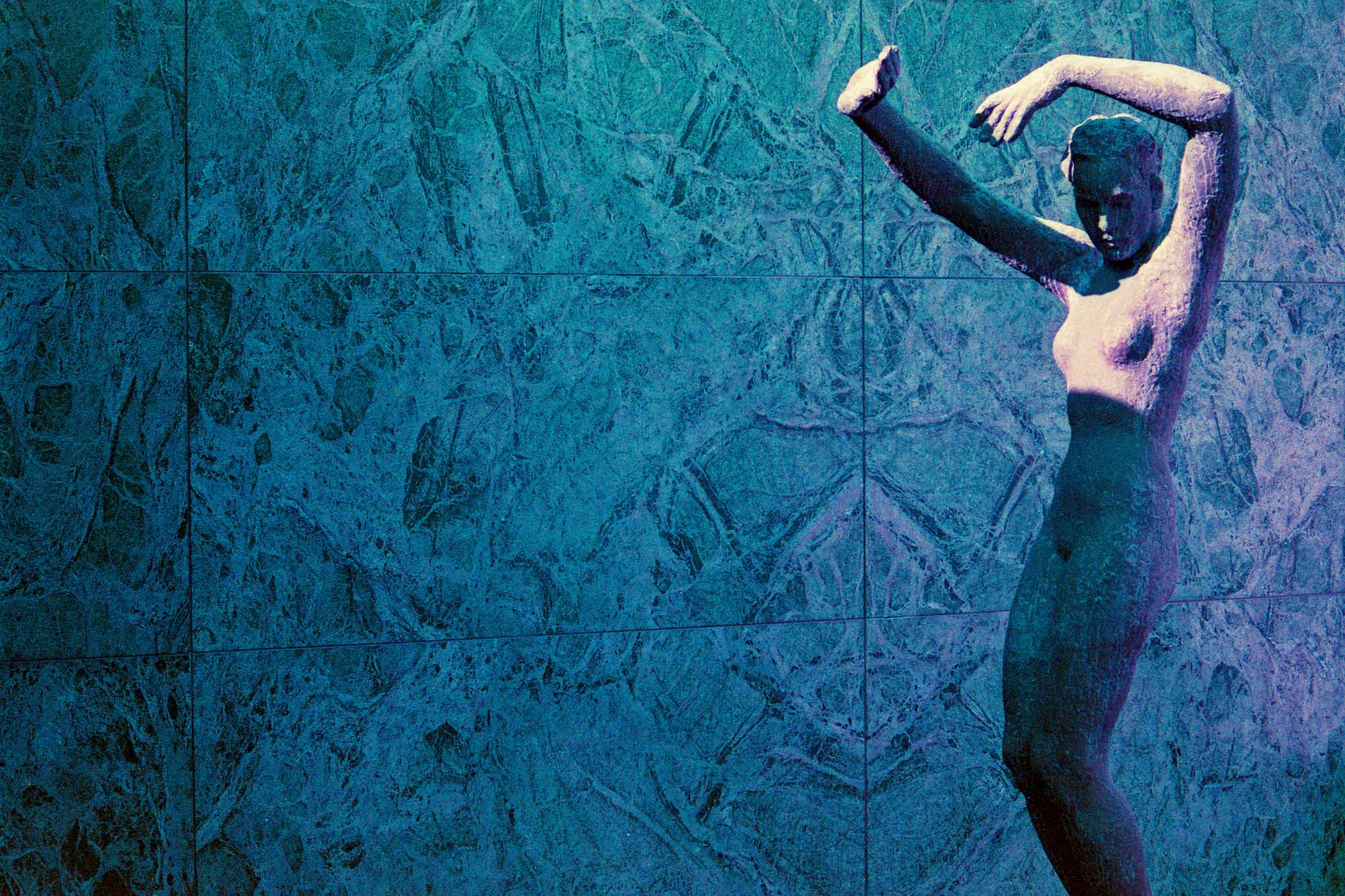
Georg Kolbe’s Alba – Barcelona Pavilion
Leica M4-P / 50mm f/1.1 / Lomochrome Purple XR 100-400
My Scan
I had been aware that the pictures I got back did not look like the results other people were getting. I was also aware that Lomochrome films in the past have had a reputation for inconsistency. I had put my ‘different’ results down to this.
I decided to scan the negatives myself, just to see what they looked like. My scans look nothing like the images I received from the lab. They look much more like the images I’ve seen others produce using this film.
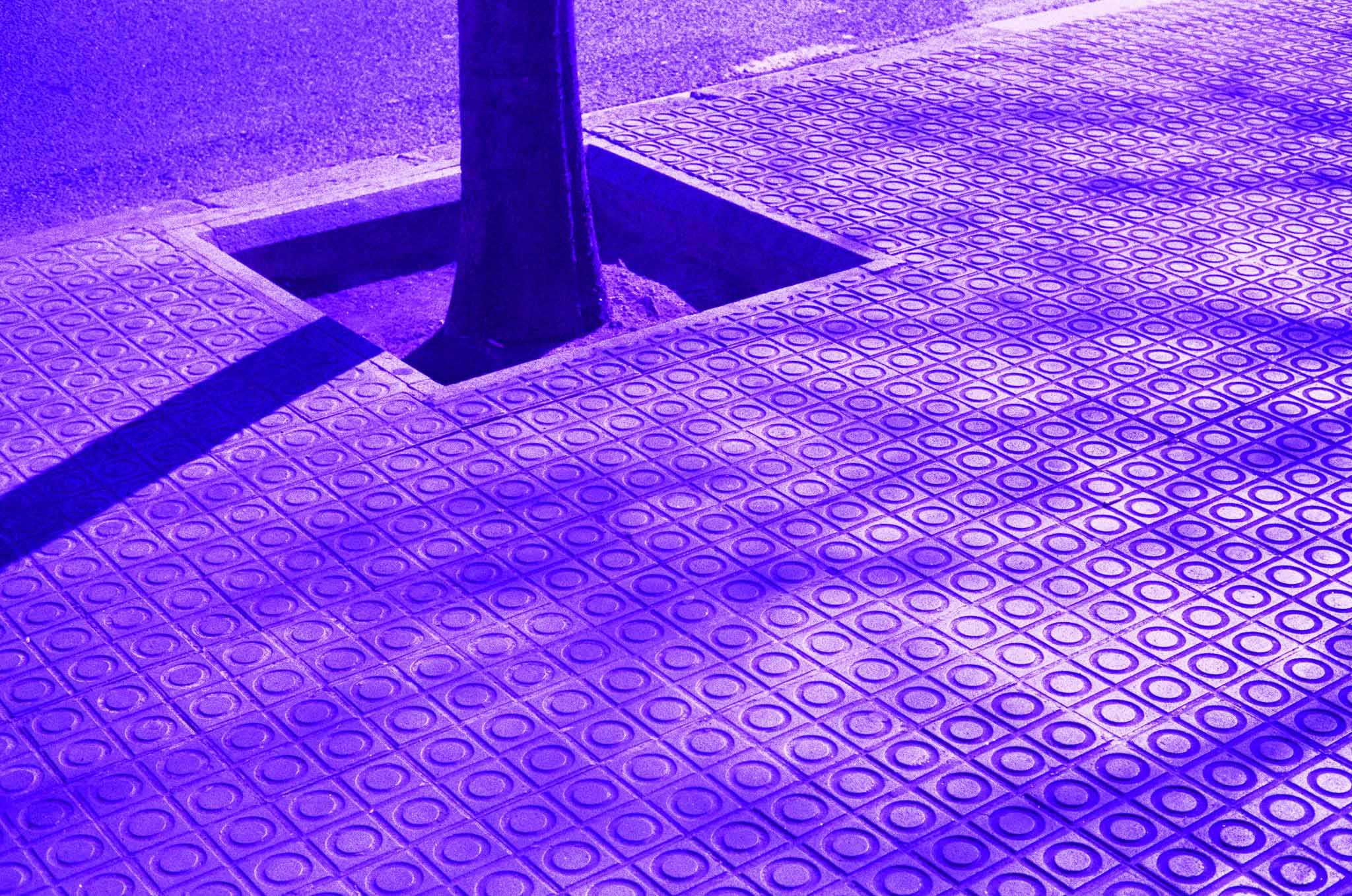
Street – Barcelona
Leica M4-P / 50mm f/1.1 / Lomochrome Purple XR 100-400
Lab Scan
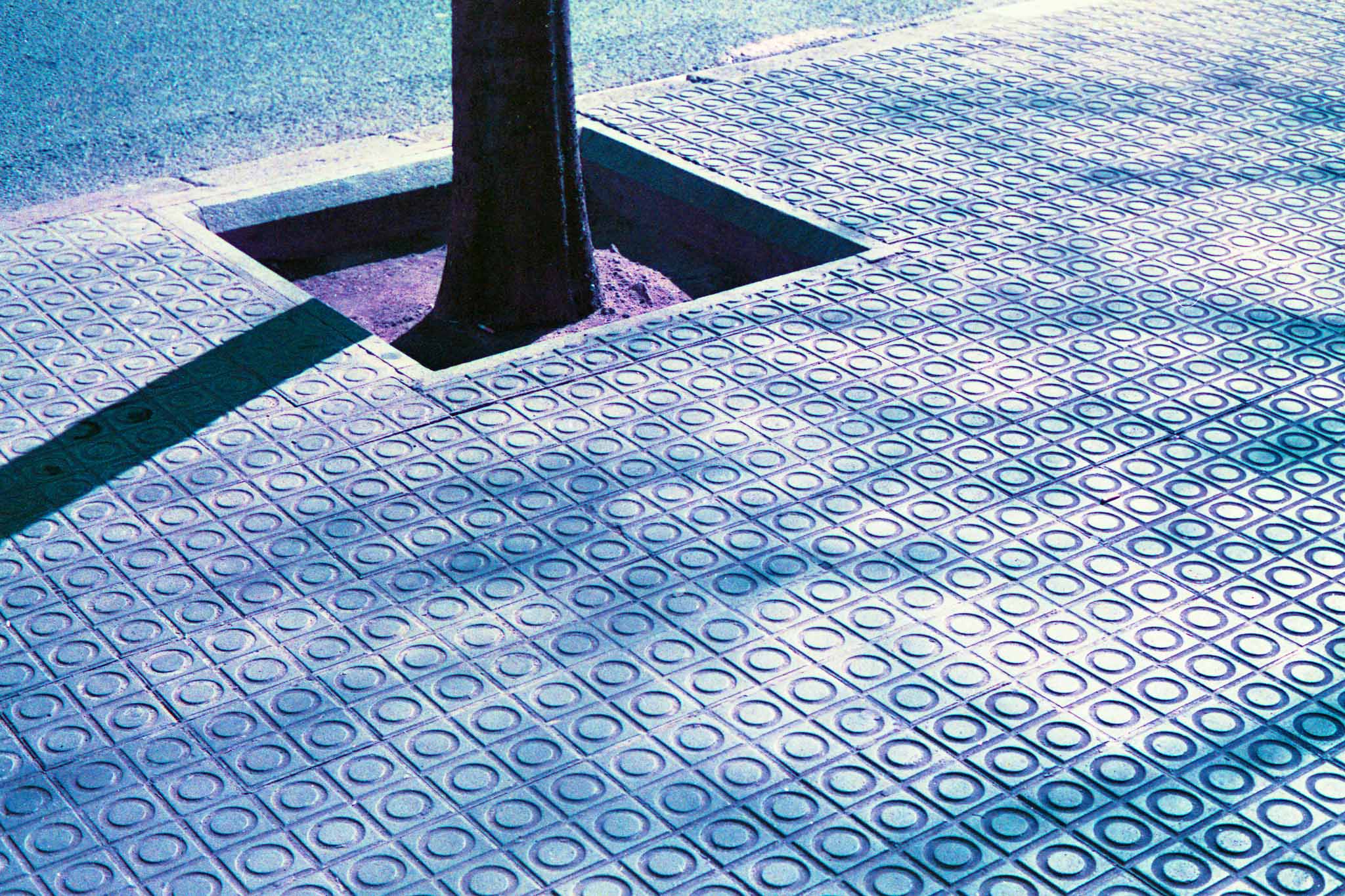
Street – Barcelona
Leica M4-P / 50mm f/1.1 / Lomochrome Purple XR 100-400
My Scan
The lab has this to say about processing boutique film stocks:
“Important: Special Effect, boutique and re-manufactured films.
Lomo, Revlog, Dubble etc etc. and films that have been subjected to secondary processes, such as Cinestill. The results from these films vary very widely. Often they have been “made” from old and out of date stock and often do not live up to the sample images found online. With this in mind, we can offer no guarantees as to the results you will obtain, we can not subject scanned files to any more than our normal balancing procedures and we can only make our own judgment as to balance, and this judgment is FINAL. We can not be held responsible if the results do not match your expectations”.

Warriors – Casa Mila
Leica M4-P / 50mm f/1.1 / Lomochrome Purple XR 100-400
Lab Scan

Warriors – Casa Mila
Leica M4-P / 50mm f/1.1 / Lomochrome Purple XR 100-400
My Scan
This raised some interesting questions. My scans look like the film is supposed to look and were not labour-intensive to produce. The scans the lab supplied appear to have been heavily magenta shifted, I can only assume deliberately.
I have had countless rolls of film developed and scanned by this lab over the years and haven’t had much cause for reflection. Occasionally something doesn’t look quite right, but I’ve always put that down to inaccuracies in my process. This is not that.
If I didn’t have a scanner, I wouldn’t have been able to go back to the negatives to review them, and given the lab’s ‘final judgement’ would be stuck with very purple images.
This is something to bear in mind if you’re shooting these film stocks regularly and it serves as a reminder that being in control of your own process is important.
Saying something stupid is embarrassing, shouting something stupid in a crowded room more so, but I’m choosing to focus on the positive.
I’m much happier with my scans, and I’m both much more likely to shoot the film again, and much more likely to try other boutique film stocks. I won’t however be paying for scans.
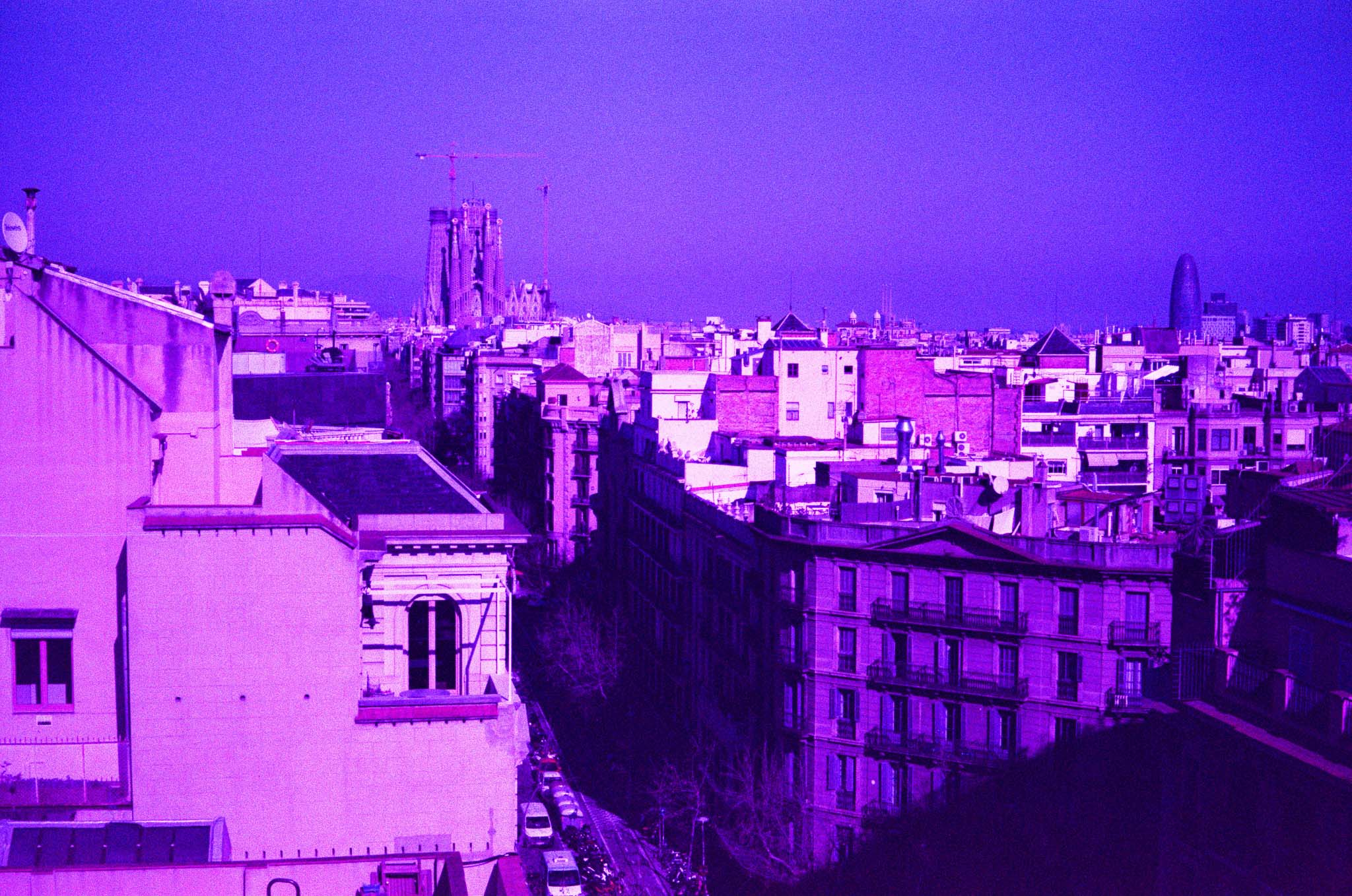
Sagrada Familia from Casa Mila
Leica M4-P / 50mm f/1.1 / Lomochrome Purple XR 100-400 – Lab Scan
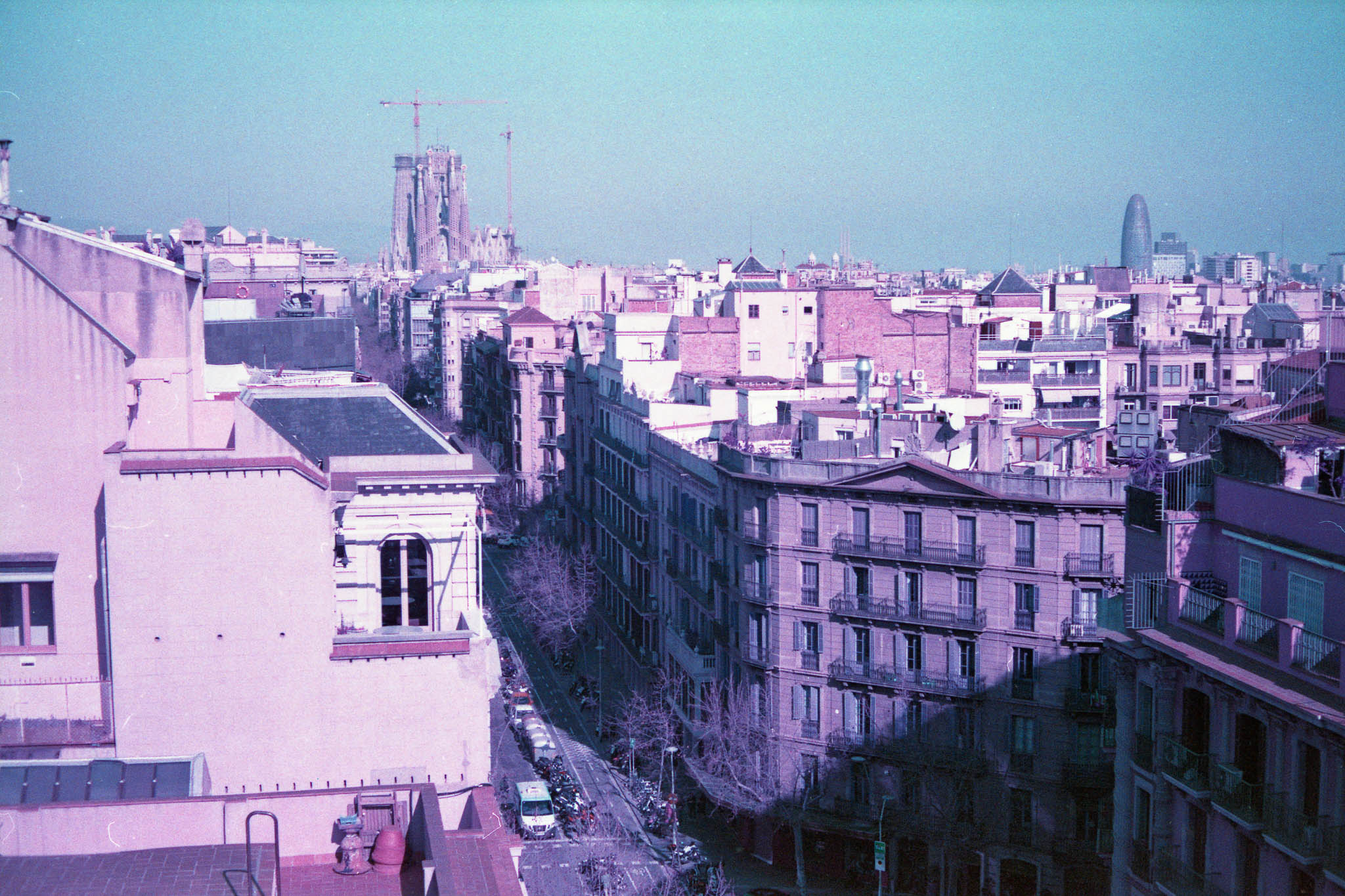
Sagrada Familia from Casa Mila
Leica M4-P / 50mm f/1.1 / Lomochrome Purple XR 100-400 – My Scan
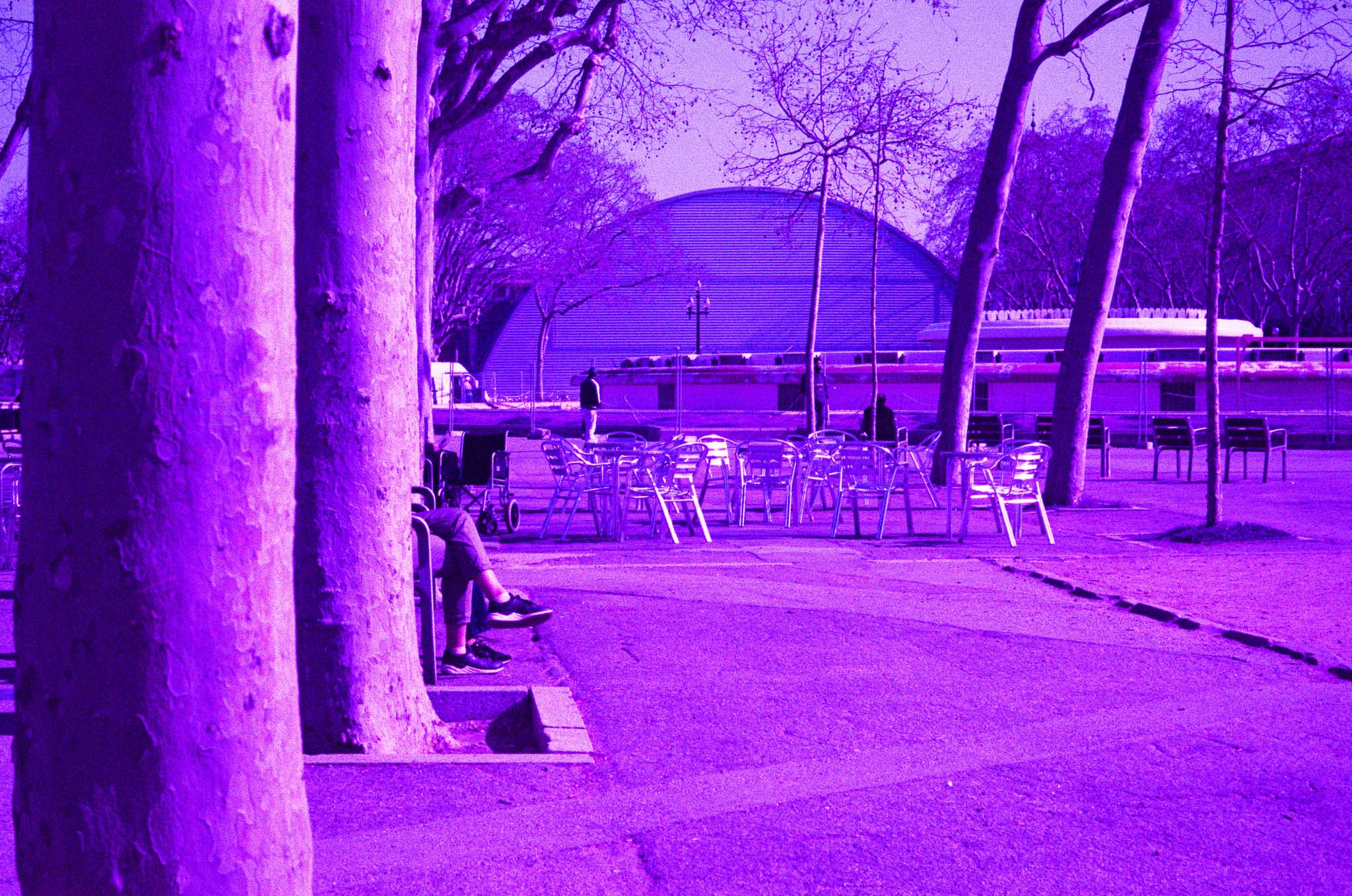
Legs in a Square
Leica M4-P / 50mm f/1.1 / Lomochrome Purple XR 100-400 – Lab Scan
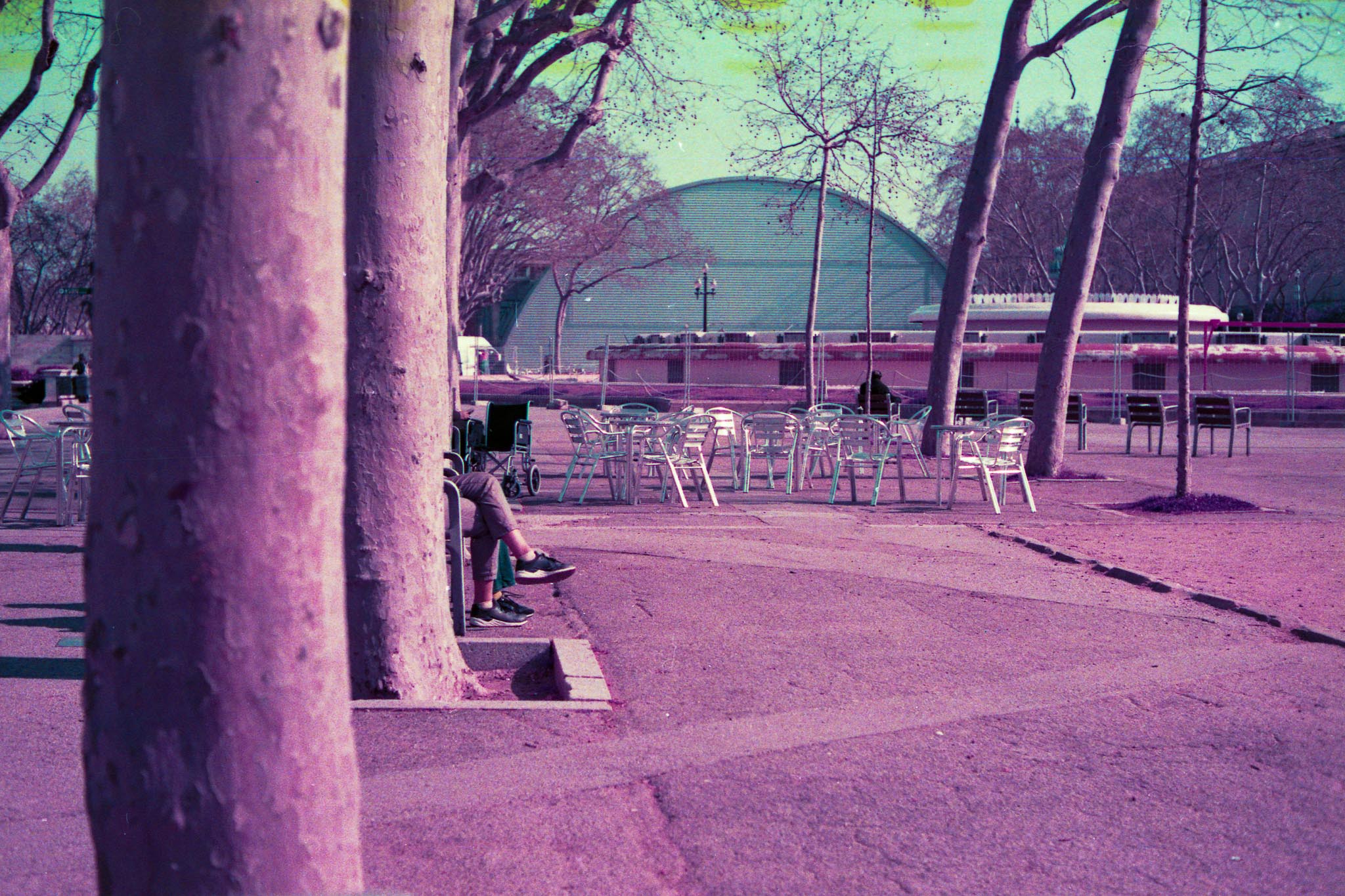
Legs in a Square
Leica M4-P / 50mm f/1.1 / Lomochrome Purple XR 100-400 – My Scan
Addendum 22/06.2020
Since posting this I’ve been working on a similar piece for Emulsive, and I decided to contact the lab for a comment. They sent me the following:
It’s really simple – the scan software is processing the image, whether you like it or not.
Although you say you have scanned them flat, with no adjustments – reality is, adjustments ARE being made because the image is still being processed by the scan software and the colour/contrast/density is determined by that processing. Every scanner and software combination will give differing results.
The results you have from us are what the Noritsu HS1800 scanner and EZ Controller software came up with, and with no input at all from us – we don’t try to balance these type of films other than very lightly, because, where do you go?
Without having the customer sat next to the technician saying, actually, they should be bluer or less blue or more cyan or a bit less yellow – you really can’t balance like you can with a normal image. I note you say that a lot of magenta must have been deliberately added – there is no reason for anyone to do this, and we wouldn’t have done so.
I take their point. My scanner is interpreting the negative as is his. Our scanners differ, as do our results. I should not have implied that their scans were manipulated, merely that they were very different from mine.
I’ve vacillated as to whether I should name the lab in this post and have decided not to. This was never about who did what, but about what happened. I also hope not to have damaged the relationship I have with the lab.
This all began when I shot a roll of film I was given at a photowalk, and has now become four blog posts, I’ve never written as much about a single roll of film.