
Fortress of Community
Canon EOS1 – 50mm f/1.8 STM – Kodak Portra 400
The Trip
In April ‘we’ (the @billychiltong collective) had our third outing, this time it was to London, and while I had a few cameras on me, my priority was to photograph the Barbican on my 4×5 view camera.
I drove as it would be cheaper for a car full of us to drive down and park than all get the train. It also meant that I didn’t have to be too selective about how many cameras I took with me, (and I probably packed too many).
I’ve been in love with the Barbican for years, and often imagine a life where I live there. (In a universe where I worked harder at school and had more mercenary priorities).
I’ve always enjoyed modernist architecture for it’s aesthetics, making pilgrimages to Mies Van Der Rohe’s Barcelona pavilion, and Le Corbusier’s Notre Dame du Haut, but it’s the feel of The Barbican that so draws me in.

Barcelona Pavillion – 2020

Notre-Dame du Haut – 2016
A quick primer
For those that don’t know, the Barbican was designed by Chamberlain, Powell, and Bon and constructed on a part of London flattened by wartime bombing.
It’s grade II listed for its Fortress or Brutalist architecture, and includes around 2000 flats and maisonettes. Between its heavy straight lines and stark outlines breathes the heart of a community, made up of its 4000 residents plus the locals and tourists who visit everyday.
Amongst the residences it also houses multiple auditoria, cinemas, galleries and an arboretum as well as a private garden. There are also schools, libraries, restaurants and exhibition halls.
I can absolutely imagine a life spent reading books and going to concerts, padding around my mid-century flat watching the weather move over London while I think things. (Presumably the version of me that could afford it, wouldn’t want it.)


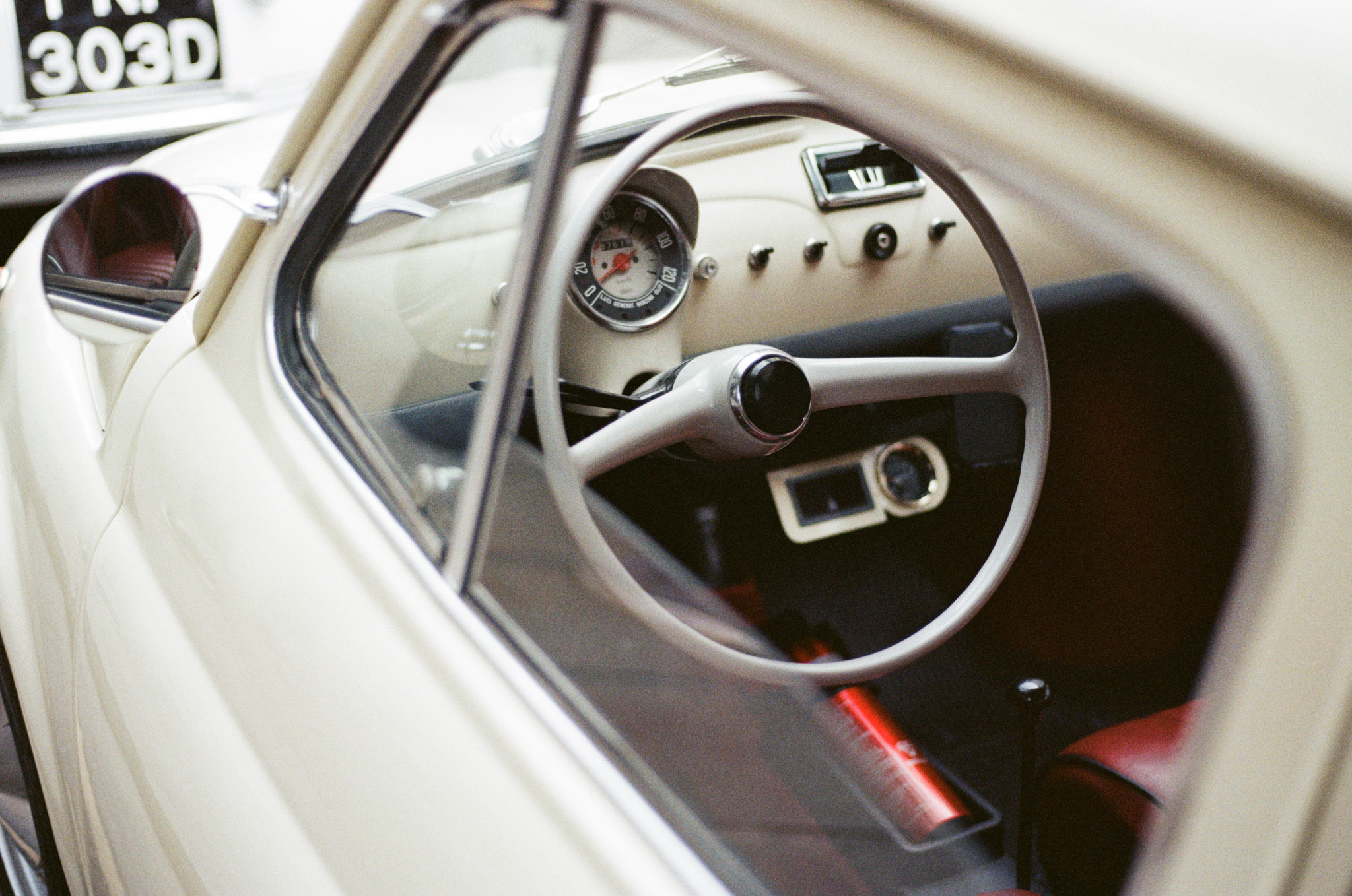


A Burlesque of Cinquecentos
Canon EOS1 – 50mm f/1.8 – Kodak Portra 400
The Day
I wanted to make architectural photographs of the Barbican on the Tachihara, shooting all five sheets of Portra 400 before moving on to my Fujica G617, then to my Hasselblad, and finally finishing the roll in my Canon EOS1.
This wasn’t what happened – As we were finding our way to the carpark we passed a collection of Vintage Fiat 500s gathering together just off Silk Street. Once parked we walk-jogged over in hope of catching them before they left.
The owners were welcoming and excited and the cars were beautiful, and the EOS1 reminded me what a quick and fun format 35mm can be.
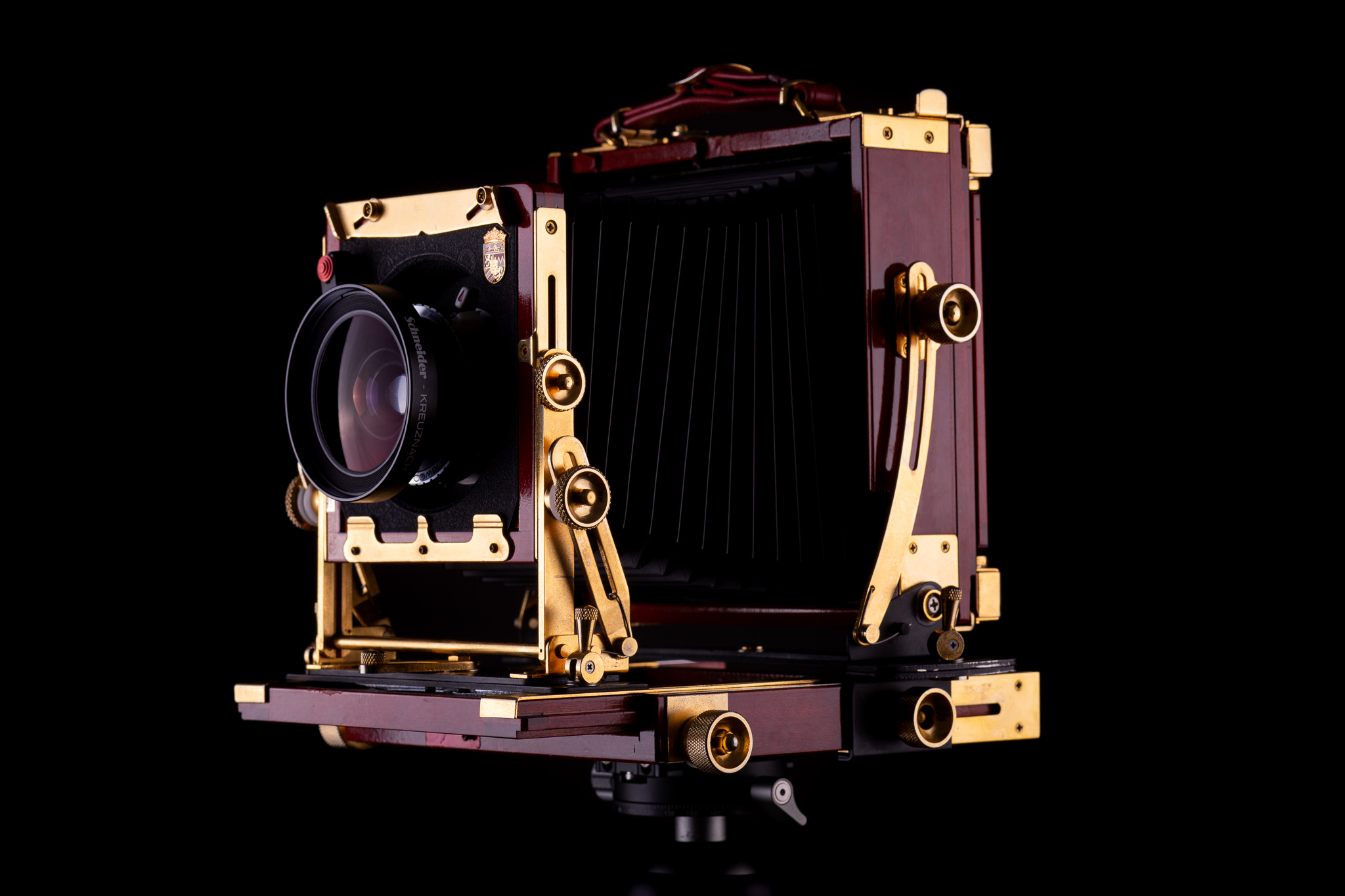
Tachihara Hope
Pictured with 90mm f/8
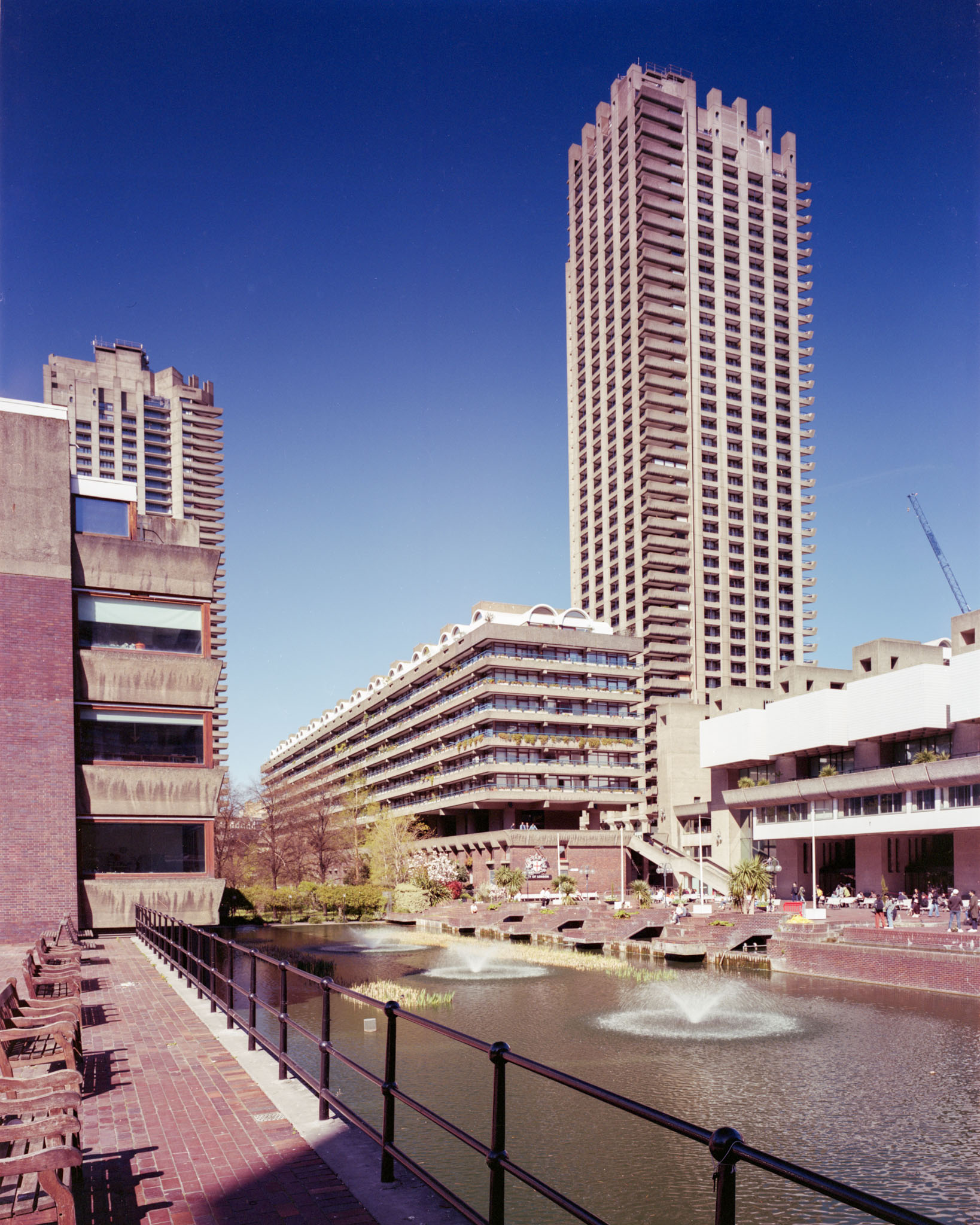
Frame One – Lakeside Terrace and Shakespeare tower from St. Giles Terrace
Tachihara Hope – Schneider 90mm f/8 – Landscape Polariser – Kodak Portra 400
Out of the Bag
The collective came together over brunch and the Tach came out of the bag. It was time to make some big negatives. Part of the reason I was shooting big Portra again was being able to rely on its expansive exposure latitude. It gave me the confidence to add filters into the mix..
My first composition was a challenge. Getting the tower in, and the verticals vertical, meant using my 90mm f/8 and all of the rise my camera could muster. Even on a recessed lens board I was squashing the top of my bellows against the rear standard.
This was an image much akin to one that I had pre visualised in the run up to the trip, and while successful, I think it lacks art. Perhaps I was more focused on the technicality of the image, rather than the feel of it. Either way it’s a half-success, and an image I’ve wanted to make for a long time.
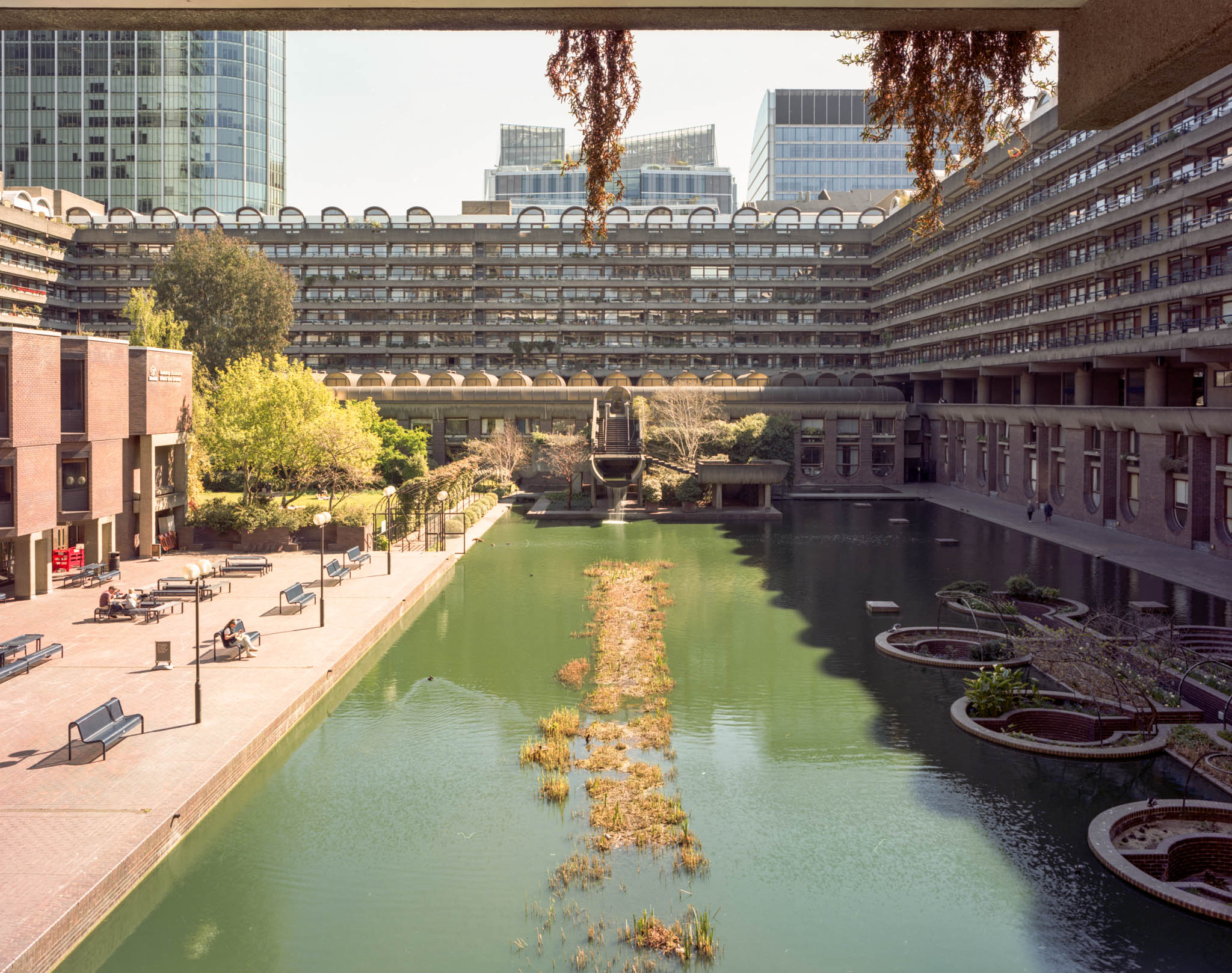
Frame Two – Central Ponds from Gilbert Bridge
Tachihara Hope – Schneider 90mm f/8 – Kodak Portra 400
The shot that followed was of a less adventurous arrangement. I returned to my 150mm f/5.6 because that’s how I’ve come to see the world, (I have been fully indoctrinated to a ‘normal’ focal length). It works as an exposure, and is close to the image I was hoping to make.
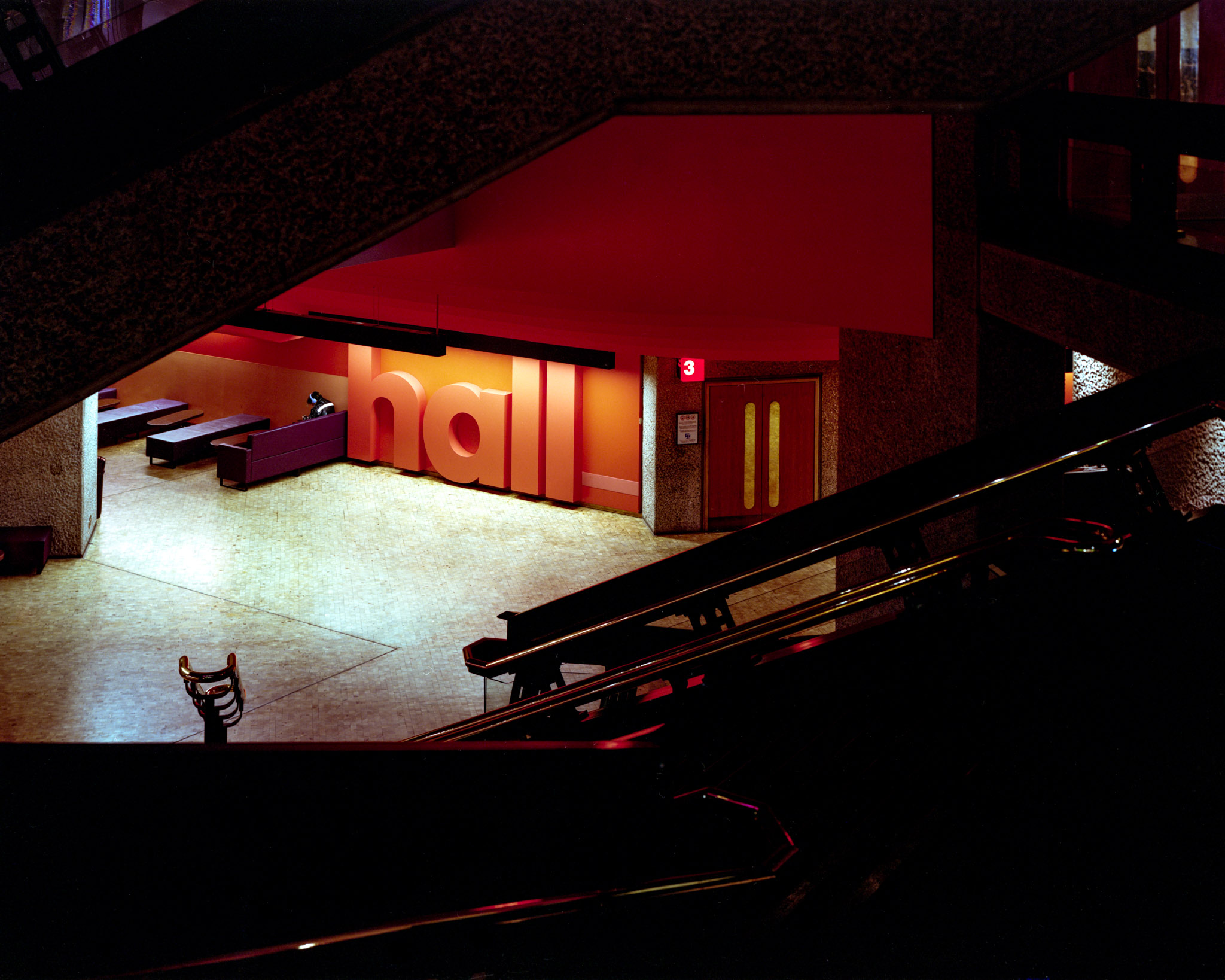
Frame Three – A Quiet Moment
Tachihara Hope – Schneider 150mm f/5.6 – Kodak Portra 400
Frame three however is my favourite from the day. I wasn’t expecting to be able to shoot inside, (there are rules about what you can and can’t do with and without a permit), but I’d seen this shot as we were jog/walking through the arts centre earlier in the day.
As we were coming back through towards some food, I saw the person with the headphones in the seat and this addition made it worth asking for permission to make the picture. It’s a favourite because its beautiful, and because the scan most closely reflects the image I had in my head when I saw the composition.
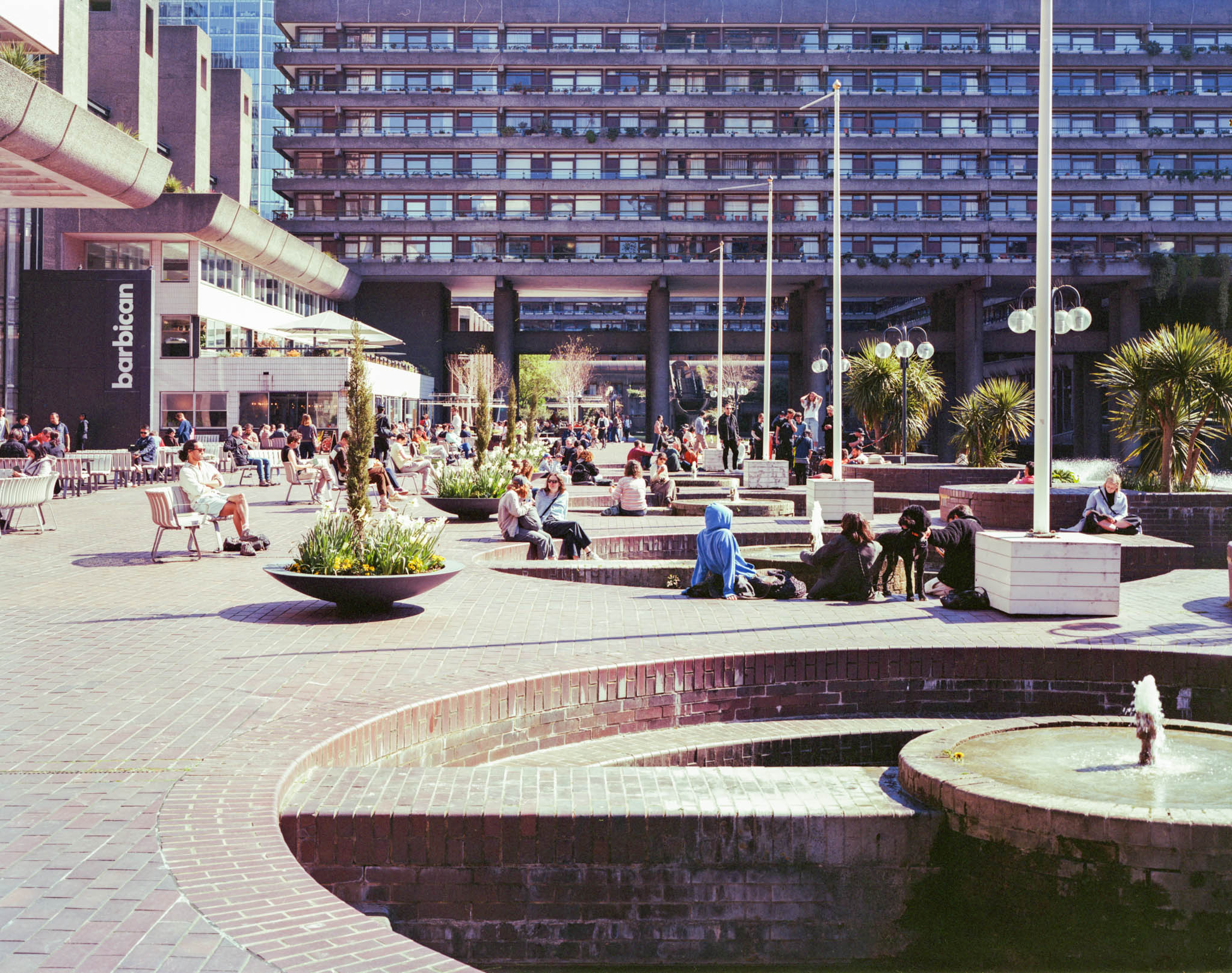
Frame Four – Lakeside Terrace and Gilbert House
Tachihara Hope – Schneider 150mm f/5.6 – Kodak Portra 400
Frame Four was an attempt to capture the life of the centre, to present the architecture in a populated and human context. I had Joel Sternfeld’s The Space Shuttle Columbia Lands at Kelly Lackland Air Force Base, in my head as I made this image, but I’m in two minds as to whether the foreground holds enough interest.
I’ve tried various crops, but I can’t decide if it loses more than it gains once the frame is full.
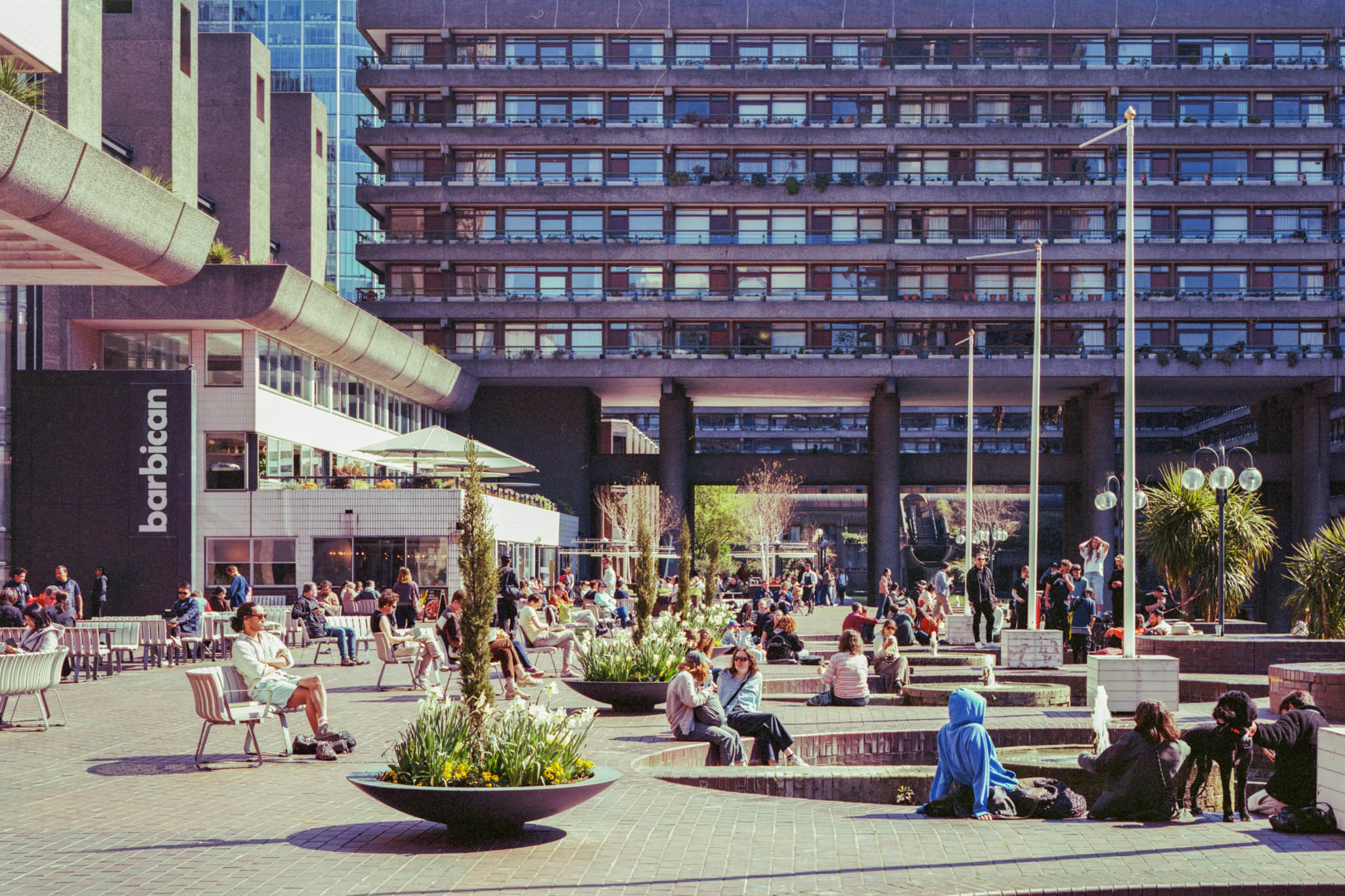
Frame Four (a possible crop) – Lakeside Terrace and Gilbert House
Tachihara Hope – Schneider 150mm f/5.6 – Kodak Portra 400
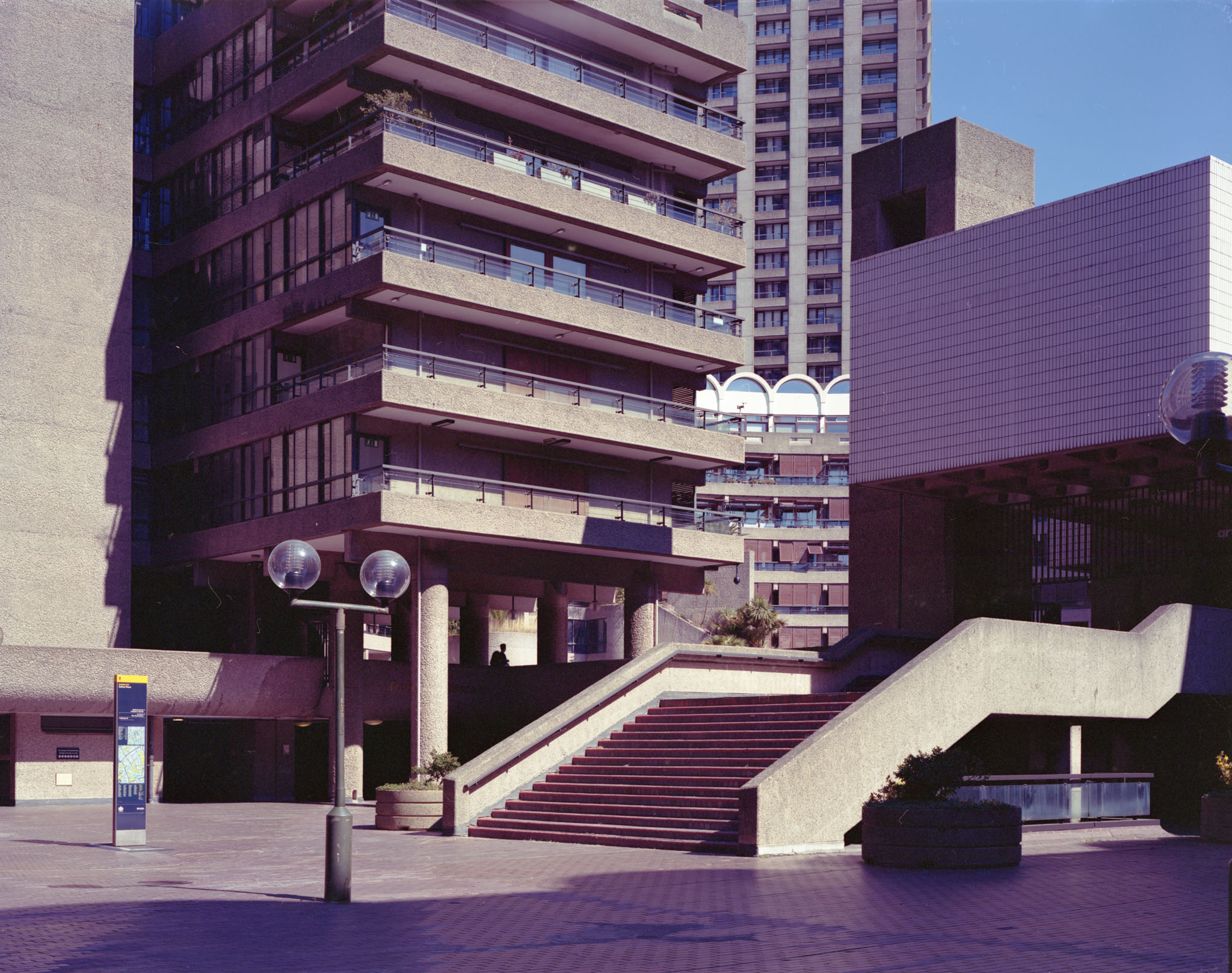
Frame Five – Defoe Place
Tachihara Hope – Schneider 150mm f/5.6 – Kodak Portra 400
The image of Defoe place is one borne of inertia. The group were ready to move on, I was keen to finish the sheet film and move on to one of the other experiments that I had planned for the day.
I waited for sometime for someone to walk through the image, to give it more balance and scale, but none were forthcoming.
While it works, it does little and I’m tempted to think that it would have been better to have saved the sheet. This was also a real challenge to nail with regard white balance, most likely due to a failure of metering.
In the end I settled for the distant figure under Shakespeare Tower and packed the Tachihara away. Next up was shooting the Fujica G617 handheld, loaded with Ilford Delta 3200.
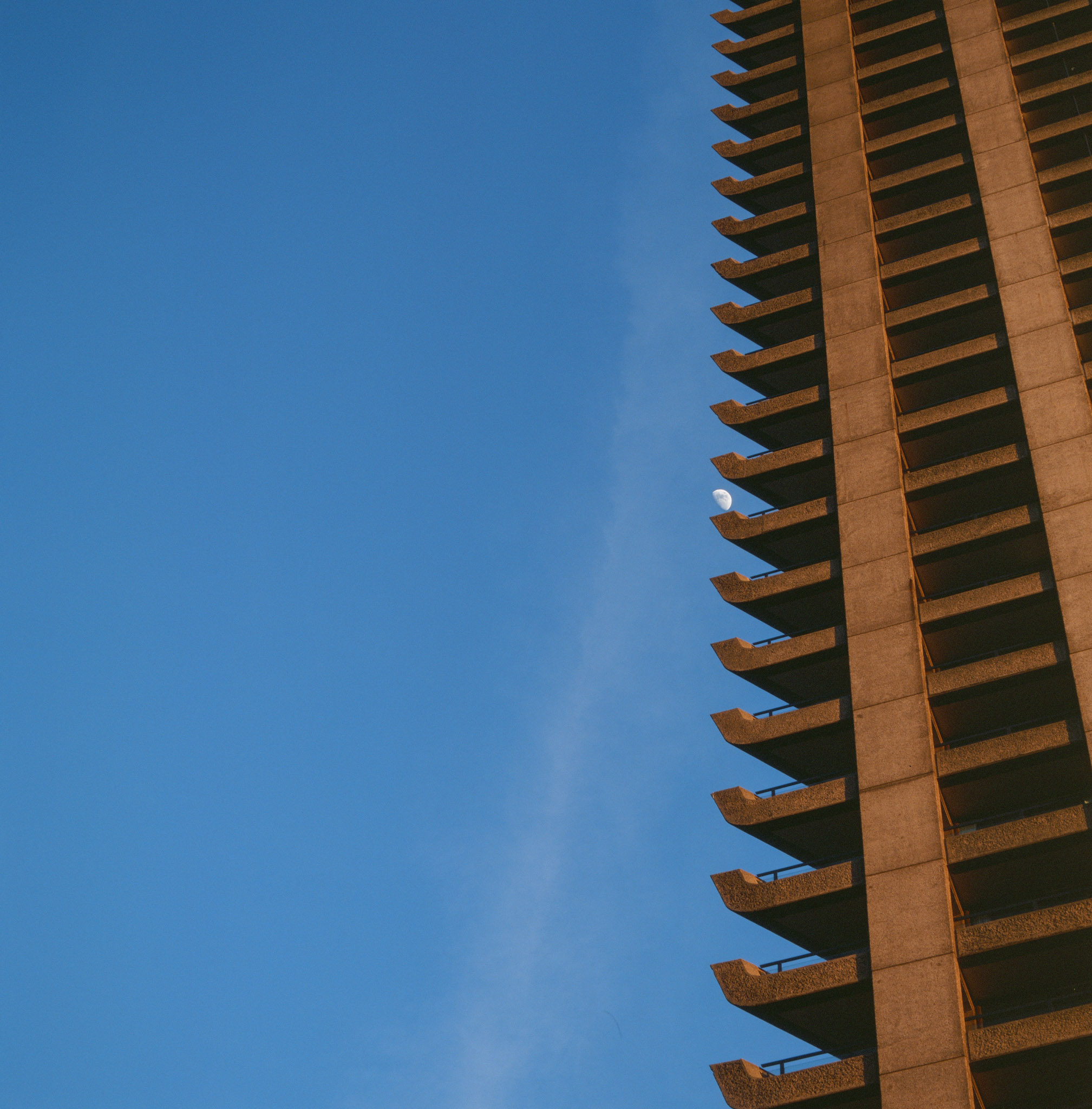
Moon on a shelf
Hasselblad 503CX – 120mm f/4 Makro – Kodak Ektachrome 100
Conclusions
The trip to Weston-Super-Mare earlier this year was an exercise. It was an opportunity to try something and to have some fun. I was in it to learn, rather than to make pictures. Conversely this Barbican trip wasn’t an exercise, it wasn’t practice, this was the real deal.
I wanted architectural photographs of the Barbican.
While I succeeded in making exposures, I’m not convinced that the architectural imagery is as strong as I wanted it to be. The images I pre-visualised were the least rewarding and I preferred the images where I worked against my own brief.
This was a great day out, and between the four cameras I’m very pleased with my haul. It was also a nice way to mark the start of my tenth year in large format photography. However, with the multiple lab bills, a very tasty brunch, dinner out and a stack of pricey film, I spent too much money.
The next mission with the collective is coming up in a few weeks and I have no pre-visualised agenda, no shot list or plan. I’m going to embrace that freedom and make it a digital trip. I’ll have my sticks and my filters and a broad array of glass, but no dev costs or wait times, and no ‘next camera’ inertia.
It’ll be interesting to see whether the freedom is freeing.
Rockwell Moment
I don’t have affiliate relationships but it might be useful to know that my Tachihara camera from London Camera Exchange, as did much of my film in this case. The 4×5 film images were developed by Tanner’s Bank Darkroom and scanned by me. Other formats and stocks developed and scanned by Analog Wonderland