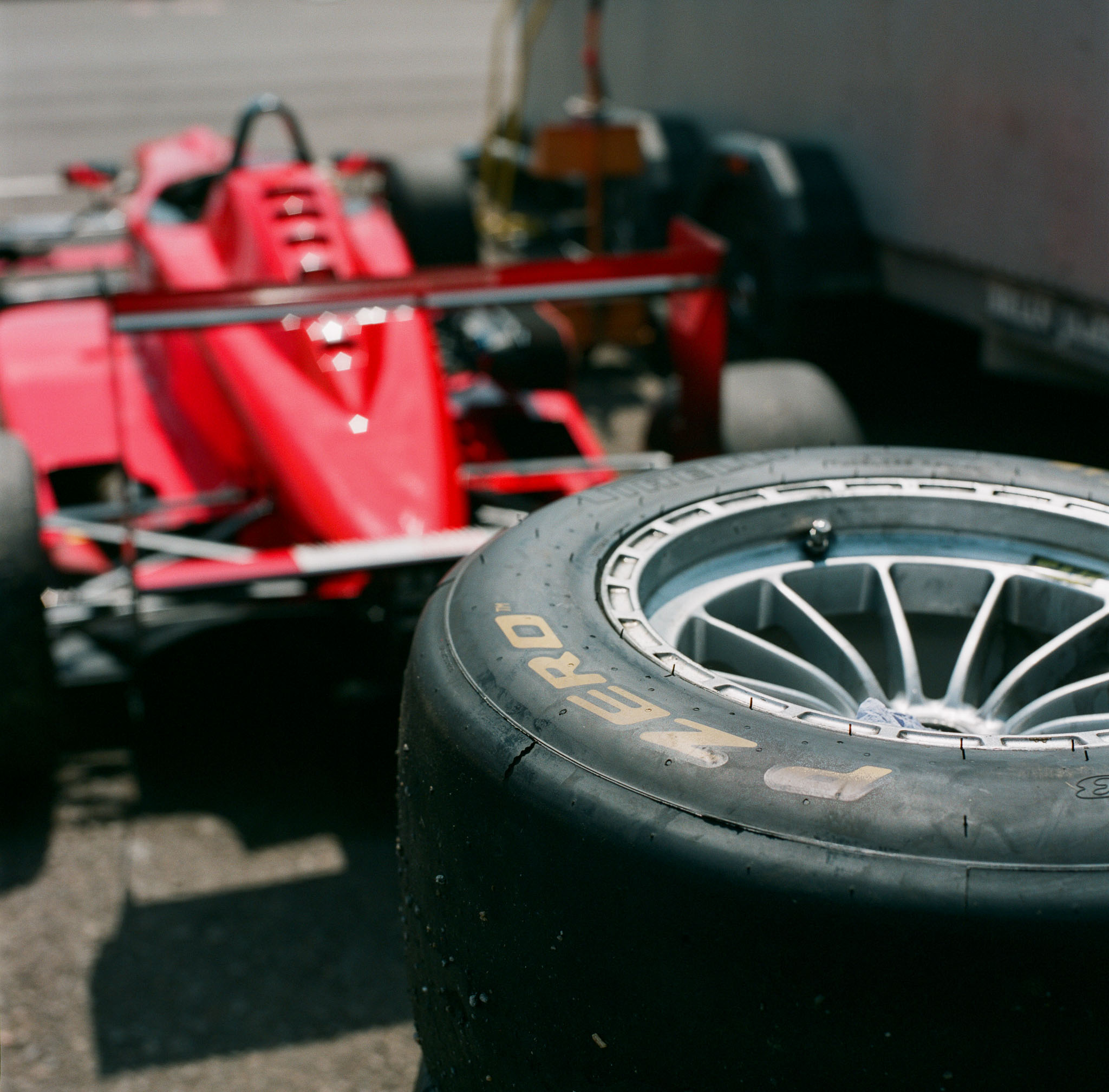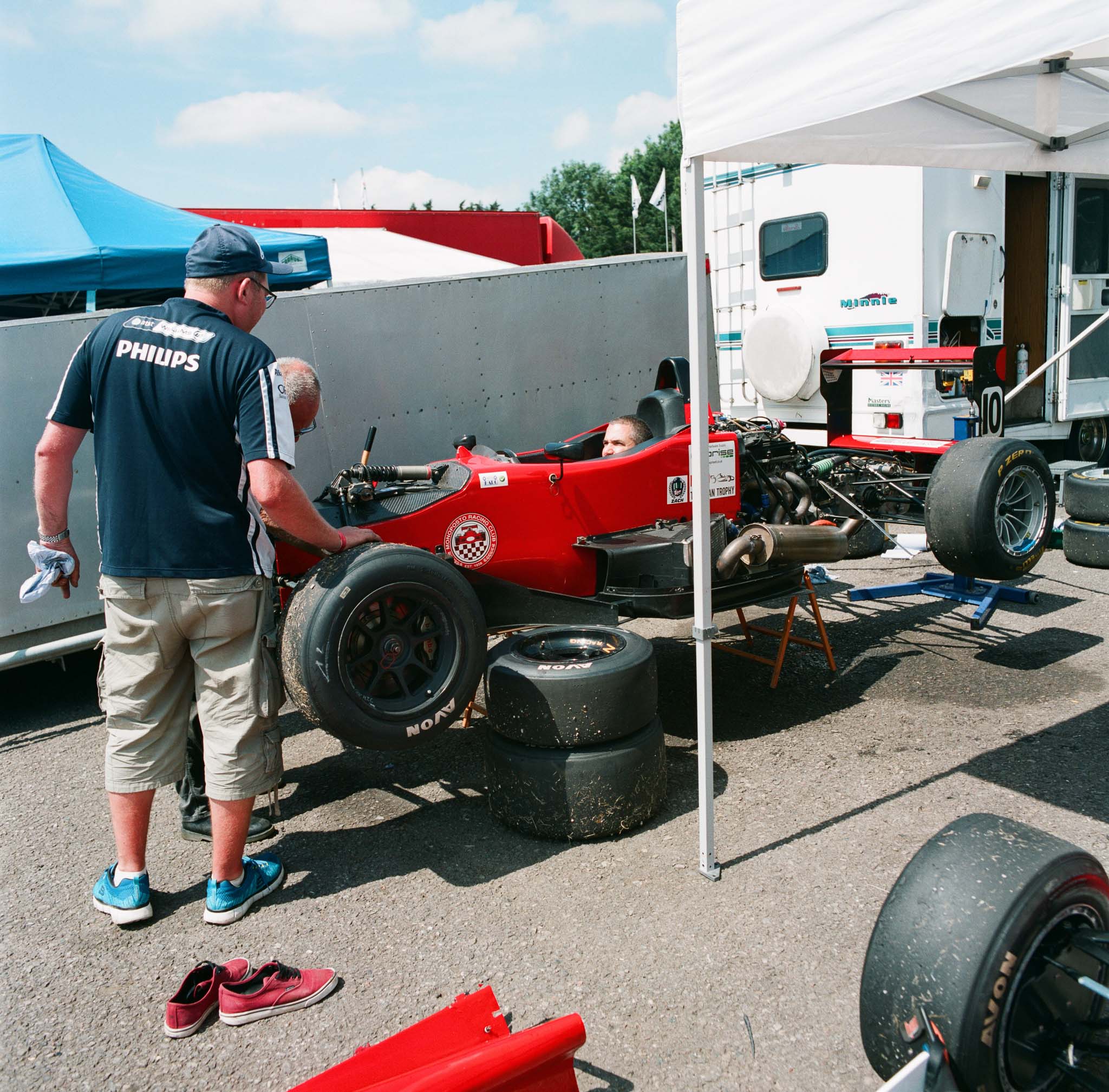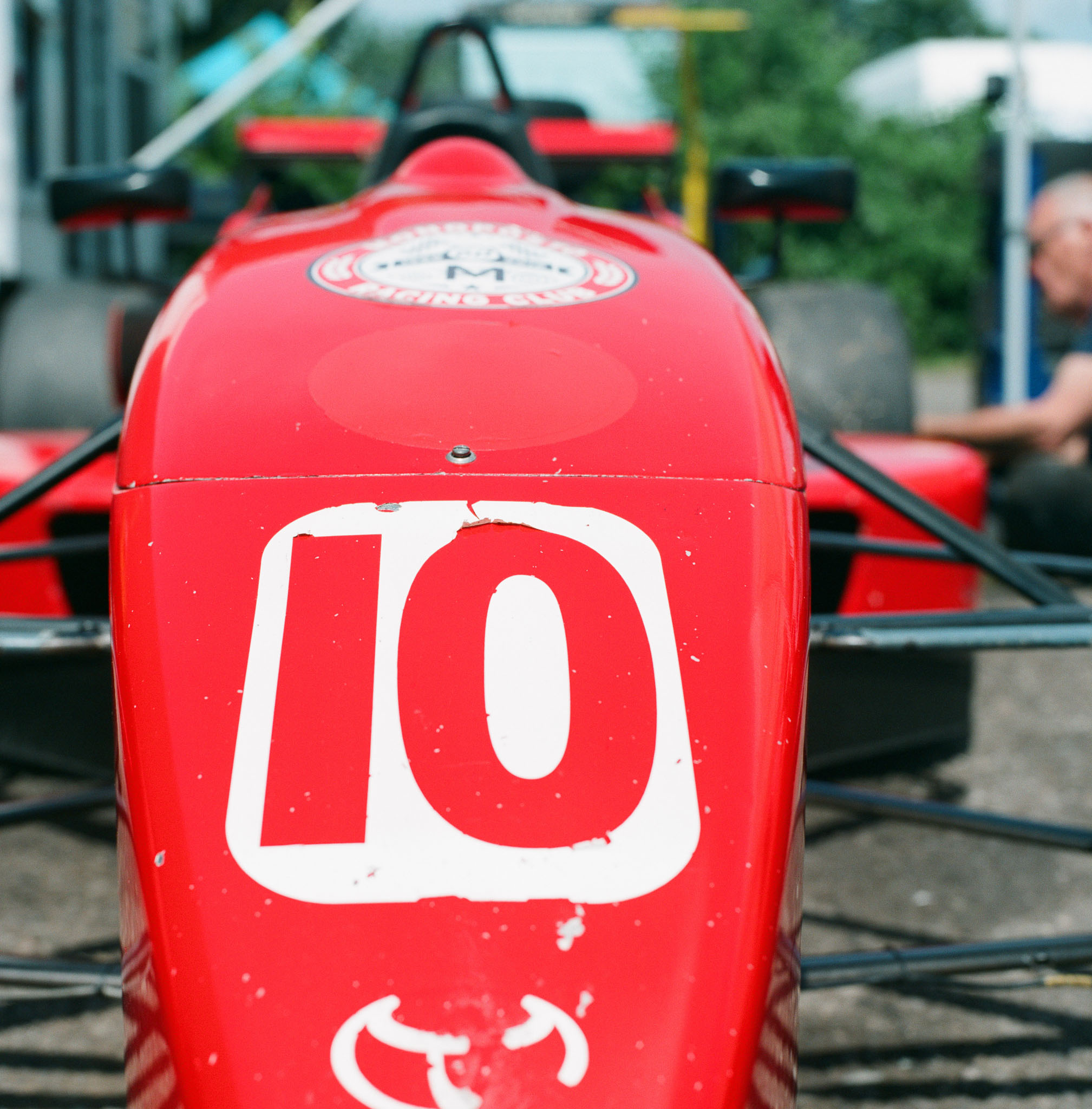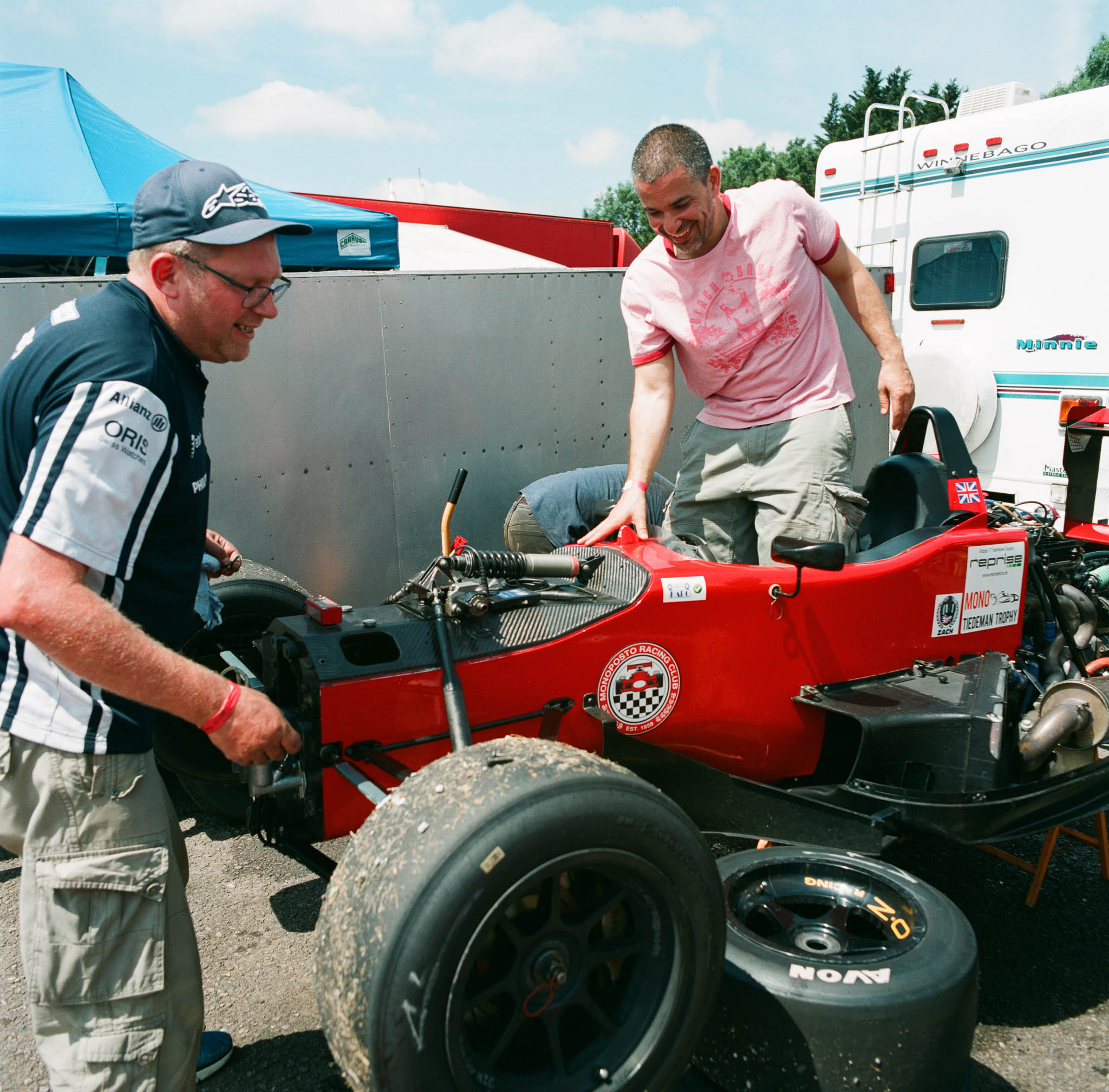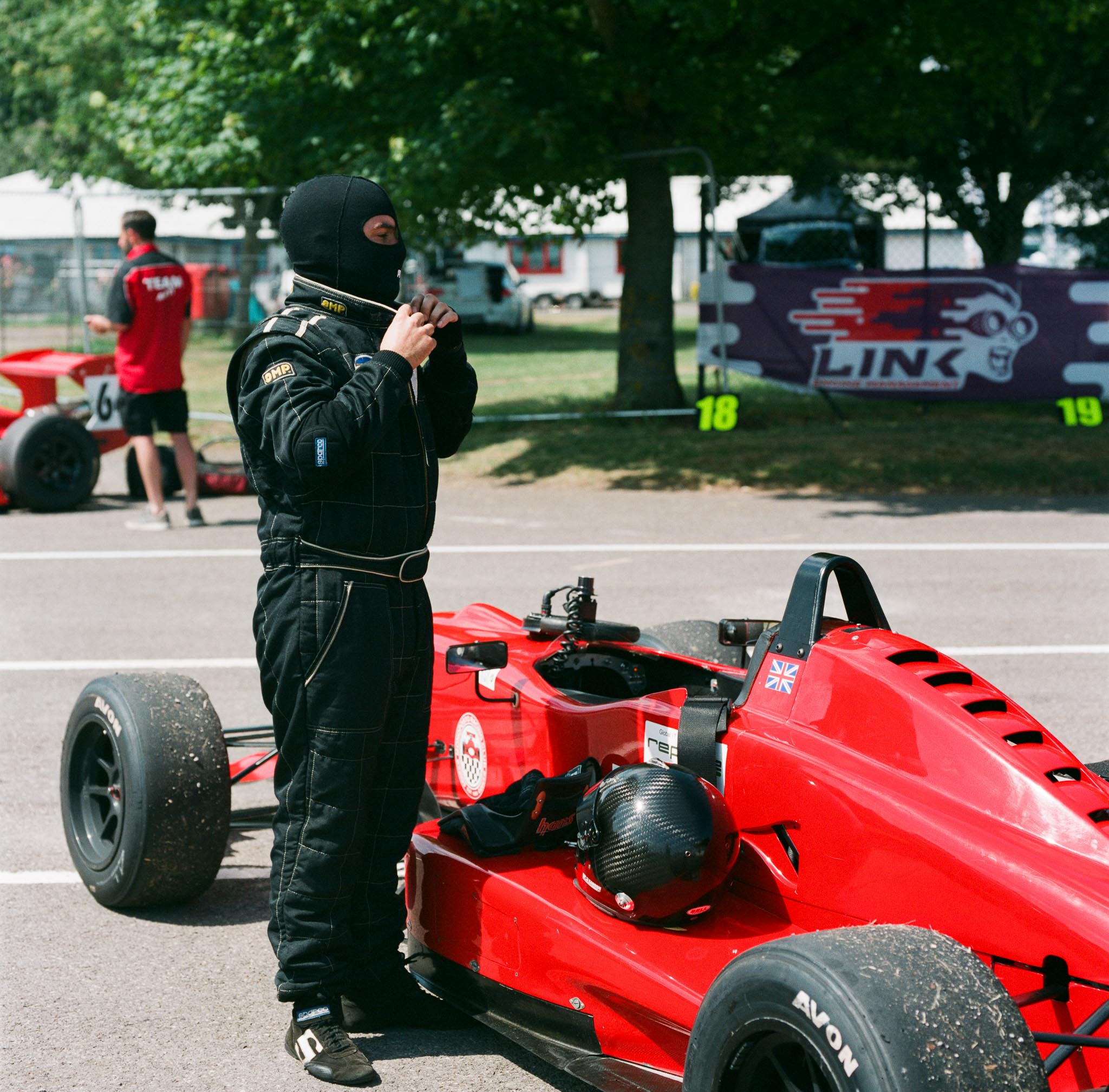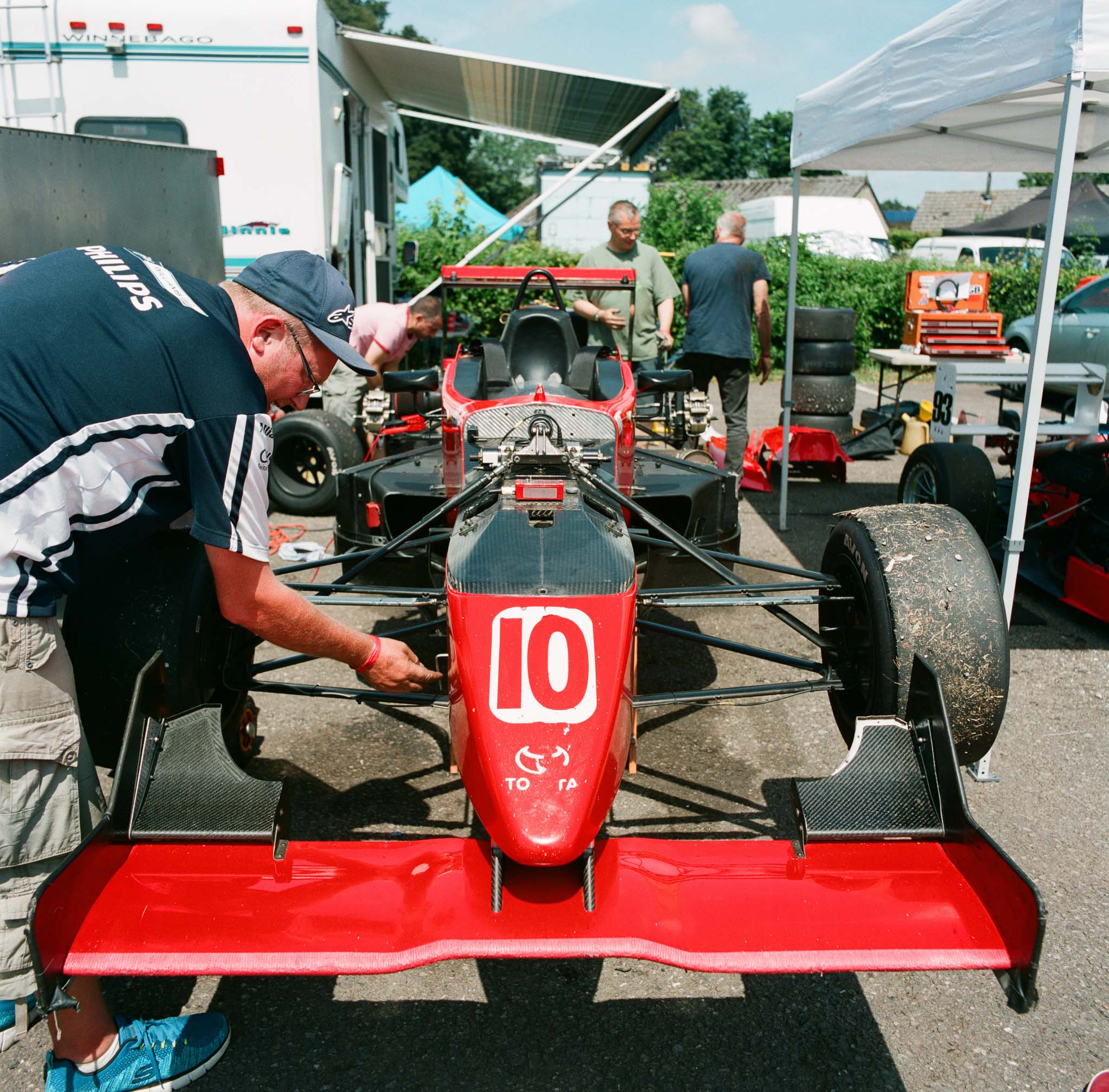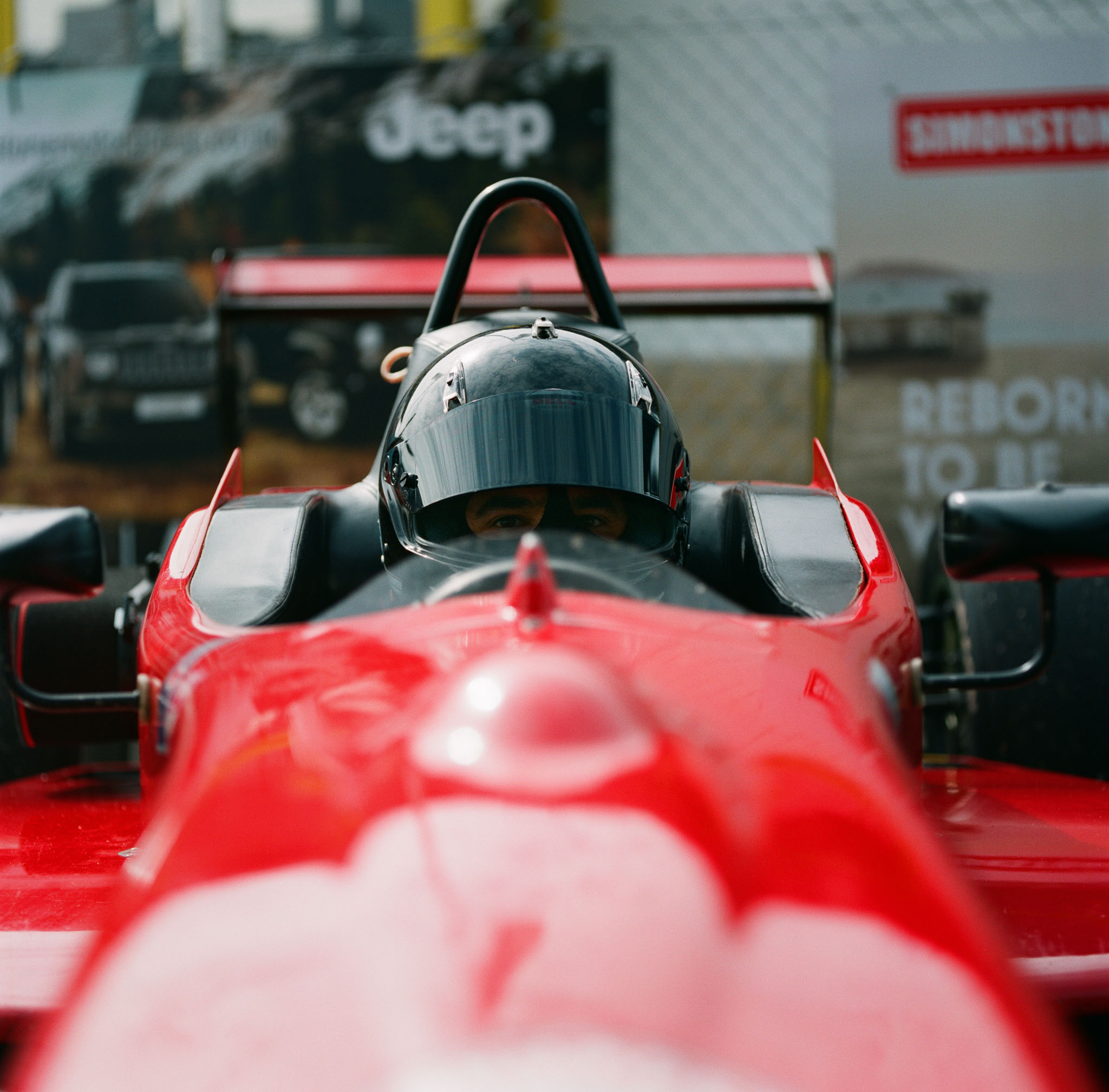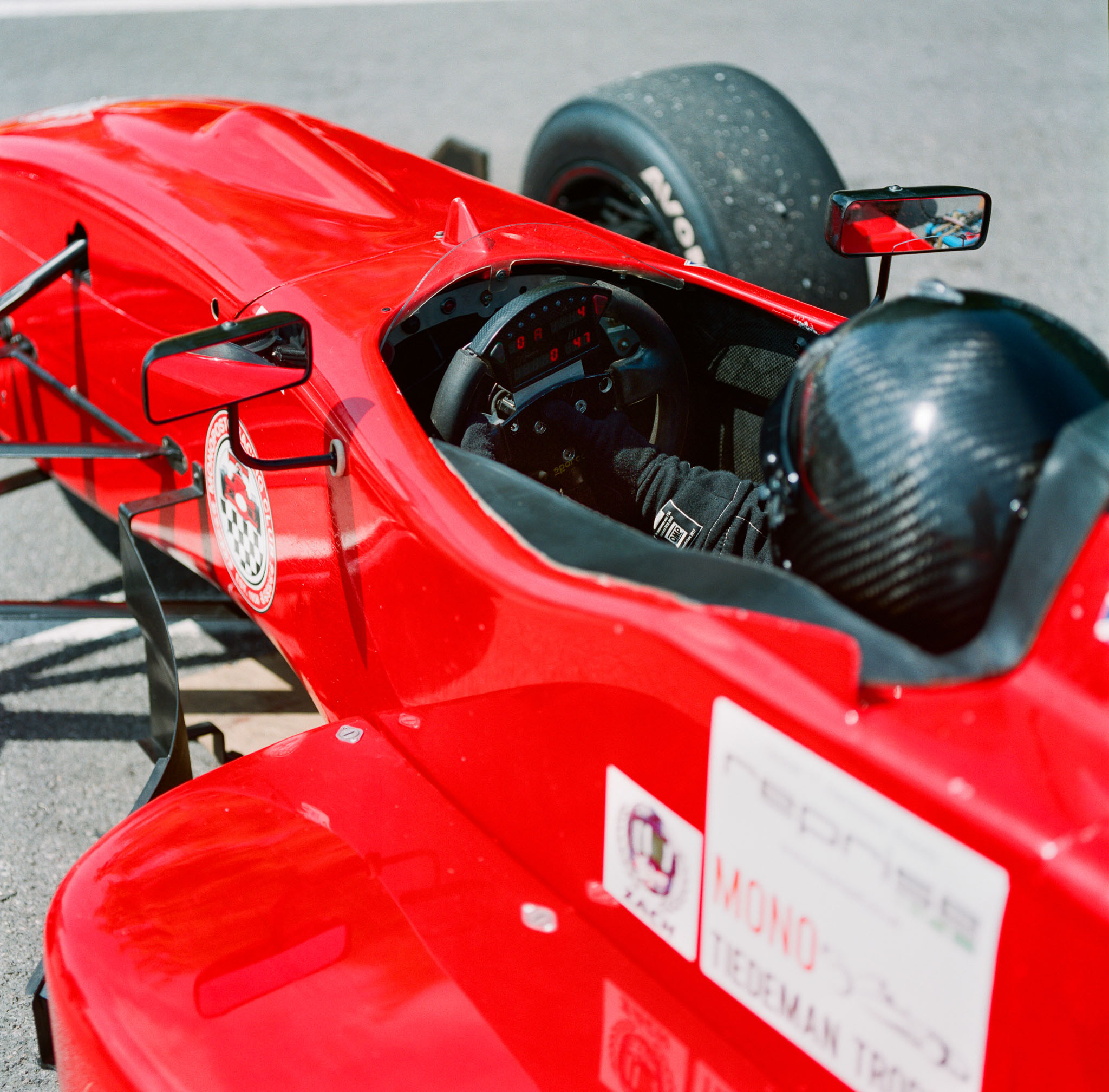
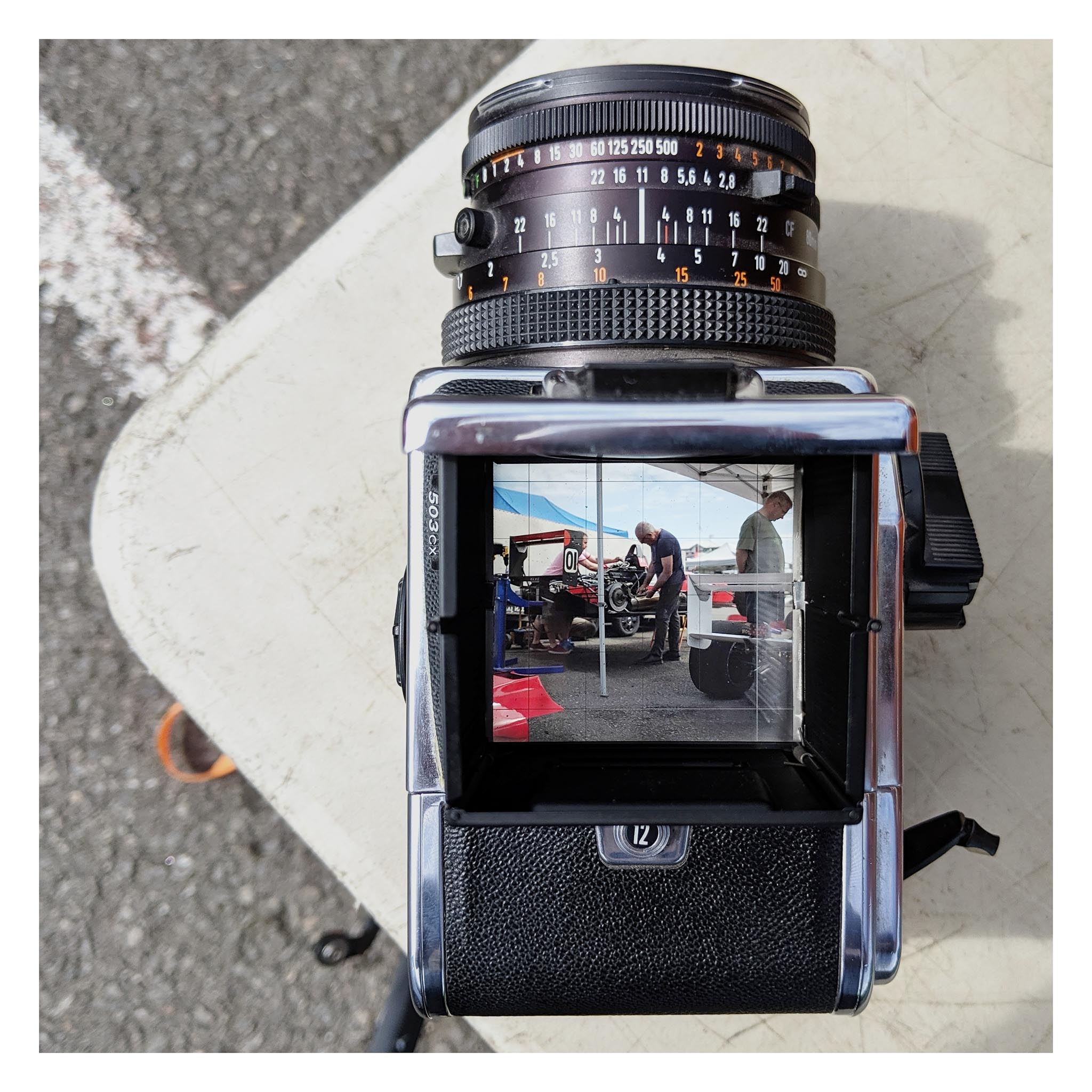
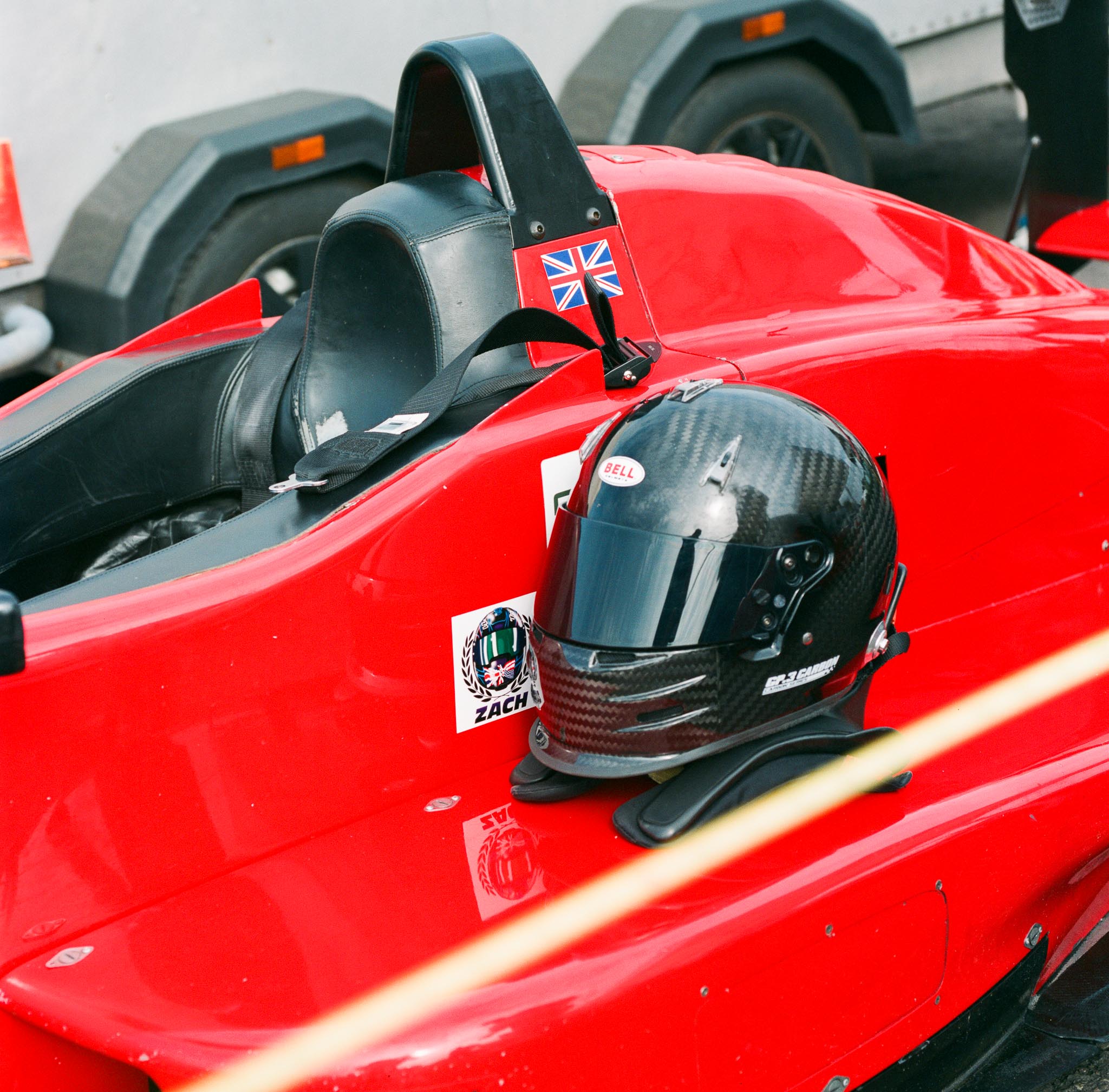
A few weeks ago I joined Team Harrison at Castle Combe Racetrack for rounds 6 & 7 of the Monoposto Championship. I took my Hasselblad, some expired film, and a chance or two.
The Hasselblad has had some time out over the last little while. I’ve been on a 35mm binge, driven by an urge to get to grips with other additions to the menagerie. The things that work against the Blad are its size, weight and the cost implications of shooting it. While compact for a medium-format SLR, it’s not small, and each actuation costs roughly 3 times that of a 35mm frame. Since buying it I’ve bought a bunch of cameras and each has spawned its own tendril of enquiry.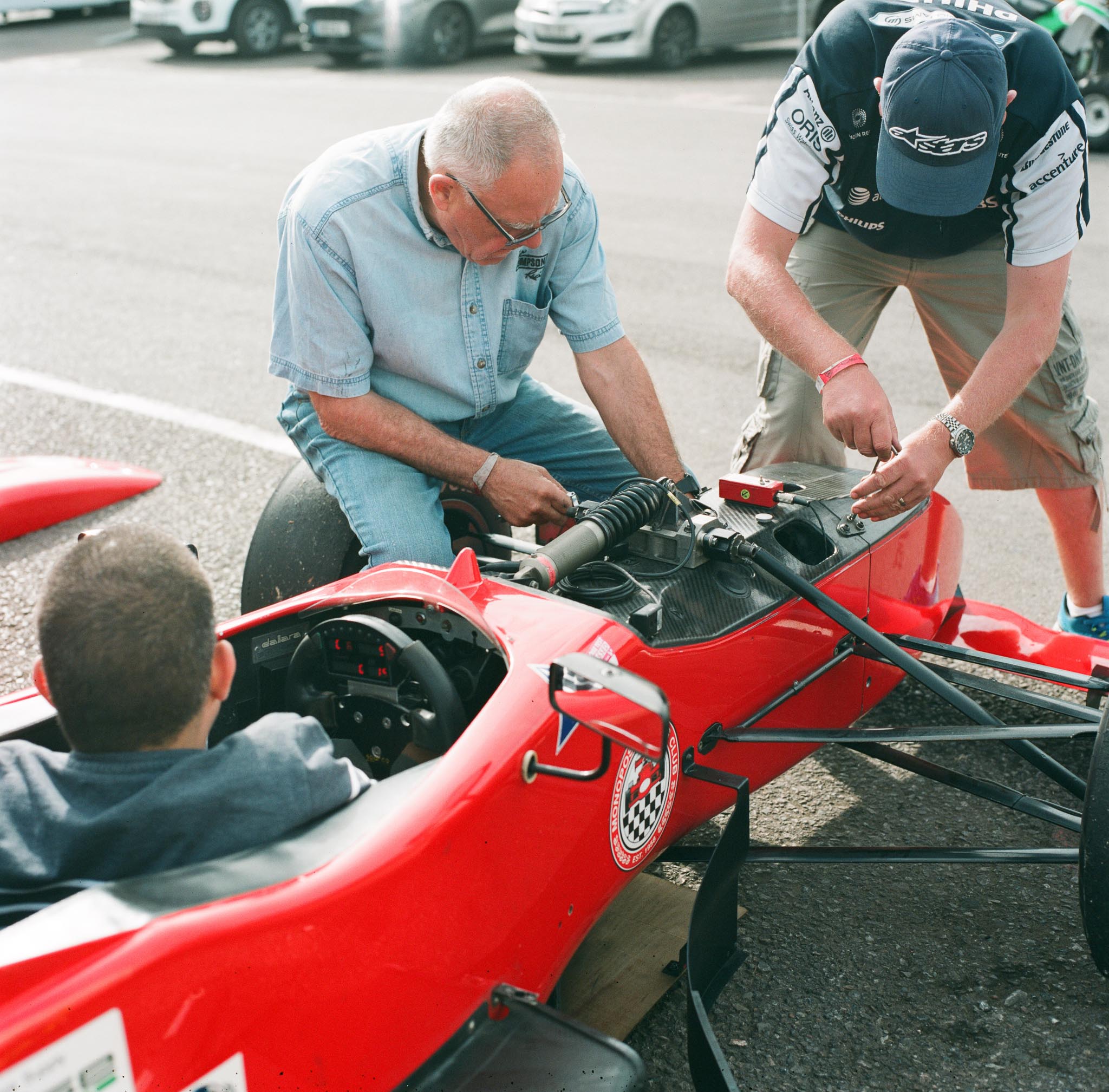
Camera Choice
I am however, always drawn home to the Hasselblad. It calls to me from the shelf, or I catch glimpses of images made with it. I enjoy most of the cameras I own but there will come a day when they are gone and my Hasselblad remains.
It’s a 503cx, which was in production between 1988 and 1994. I bought it with an 80mm f2.8 Planar, a waist level finder and an A12 back. It was my intention to leave it like this. Since then I’ve added a prism finder, a metered-prism finder, a 150mm f/4 which I then sold, a 120mm f/4 makro which I’ve kept, and a 50mm f/4 which I bought, sold to a friend, replaced it with a lens I then sold, and then bought back the original from said understanding friend.
So much for keeping it to a one lens system…
The things that pull me back to the Hasselblad are the images it produces and its loveliness. I love the unaffected square aspect ratio, the quality of the optics, the sound it makes, at 25 years old it remains taught, quick and smooth.
The extra expense is invariably countered by the pictures created and the joy inspired by using it. The money buys you four times the resolution of 35mm, the extra bulk is countered by image quality and the depth of the images.
Even so it has not been out since January and it had gone out then because it had not gone out since July. I shot a roll and put it back on the shelf.
This time I deliberately only took the Hasselblad. This would prevent me from, out of a mixture of laziness and weakness, shooting an accompanying digital camera instead. In the past I’ve taken film cameras to events and not shot them, preferring the feedback of a screen. Even worse, on occasion I’ve taken a few images on a stranded roll, non-sequiturs that materialise out of context, months after the fact.
Not this time.
Film Choice
Turning out my film stash I was surprised to find a dearth of Portra 400. I fought the brief temptation to shoot black and white, (it’s a red racing car) and I didn’t fancy slide film. Kodak Ektar can go a bit bonkers in bright sunshine, particularly with reds, and only I had one roll of Portra 160. It was time to shoot some Fujifilm Superia Extra 400 (Superia).
I’ve missed Superia, it was a favourite of mine prior to its discontinuation. (The 120 format was discontinued in 2013). Every now and again I shoot my last roll and then another pops up from somewhere. I recently acquired 4 rolls that expired in 2014 and had been saving them for something or other, evidently it was this.
(My film stash currently contains much expired film, it comes in but rarely goes out. I collect it because I want to shoot it, then don’t because I want the predictability of nice fresh emulsion).
Having been out with the guys before, to this track no-less, I felt confident enough to go film only, one camera, all expired film.
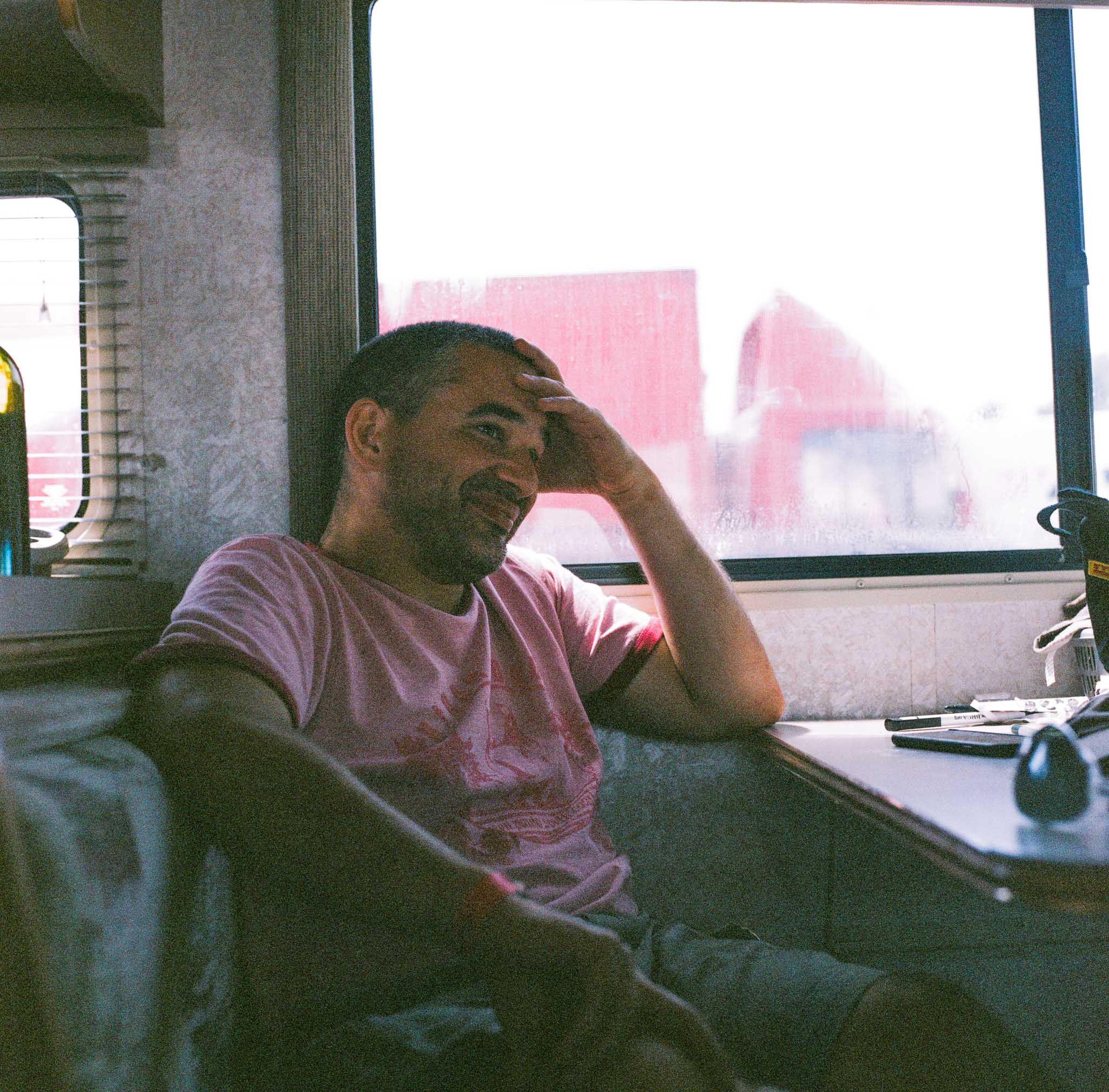
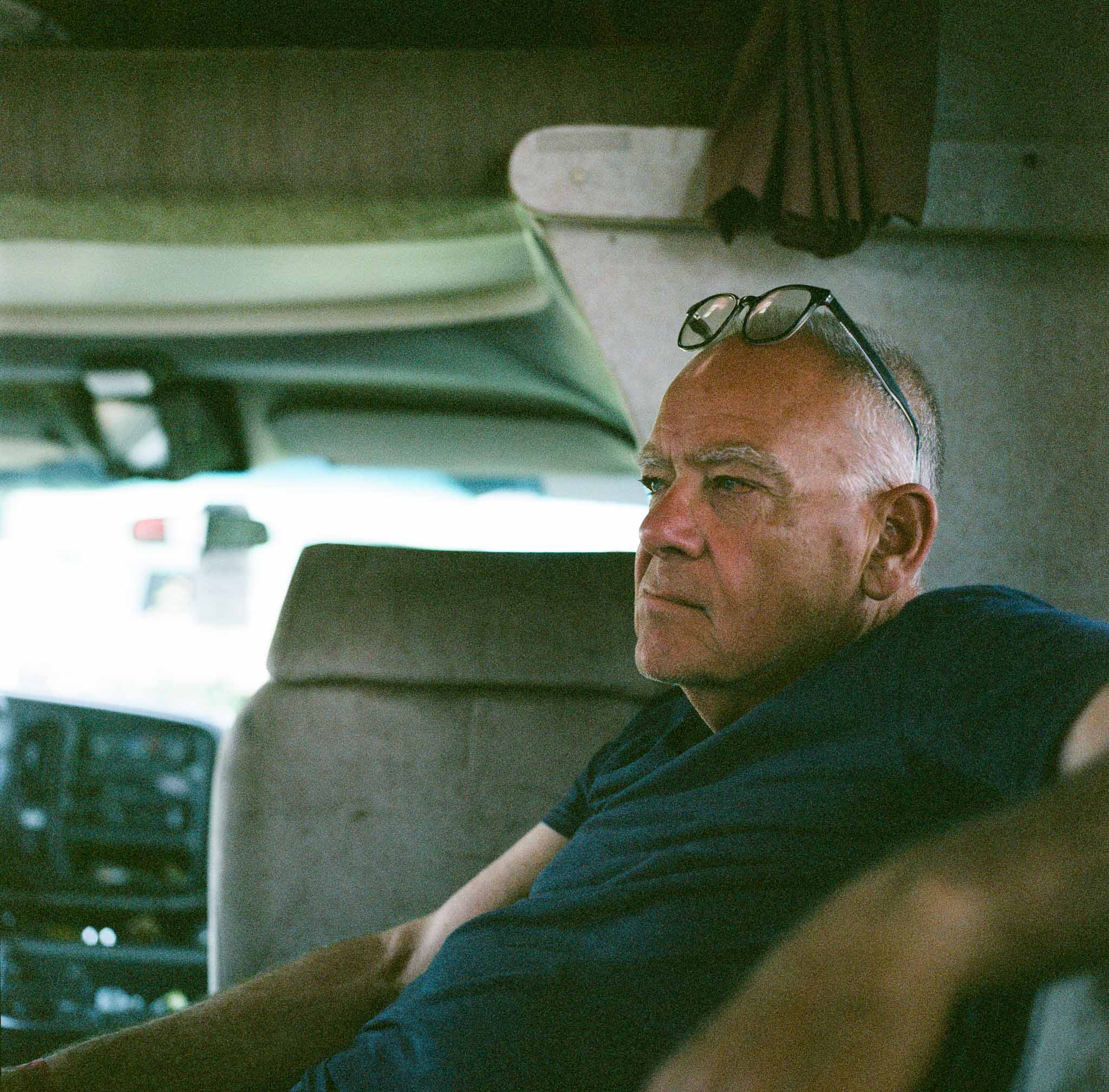
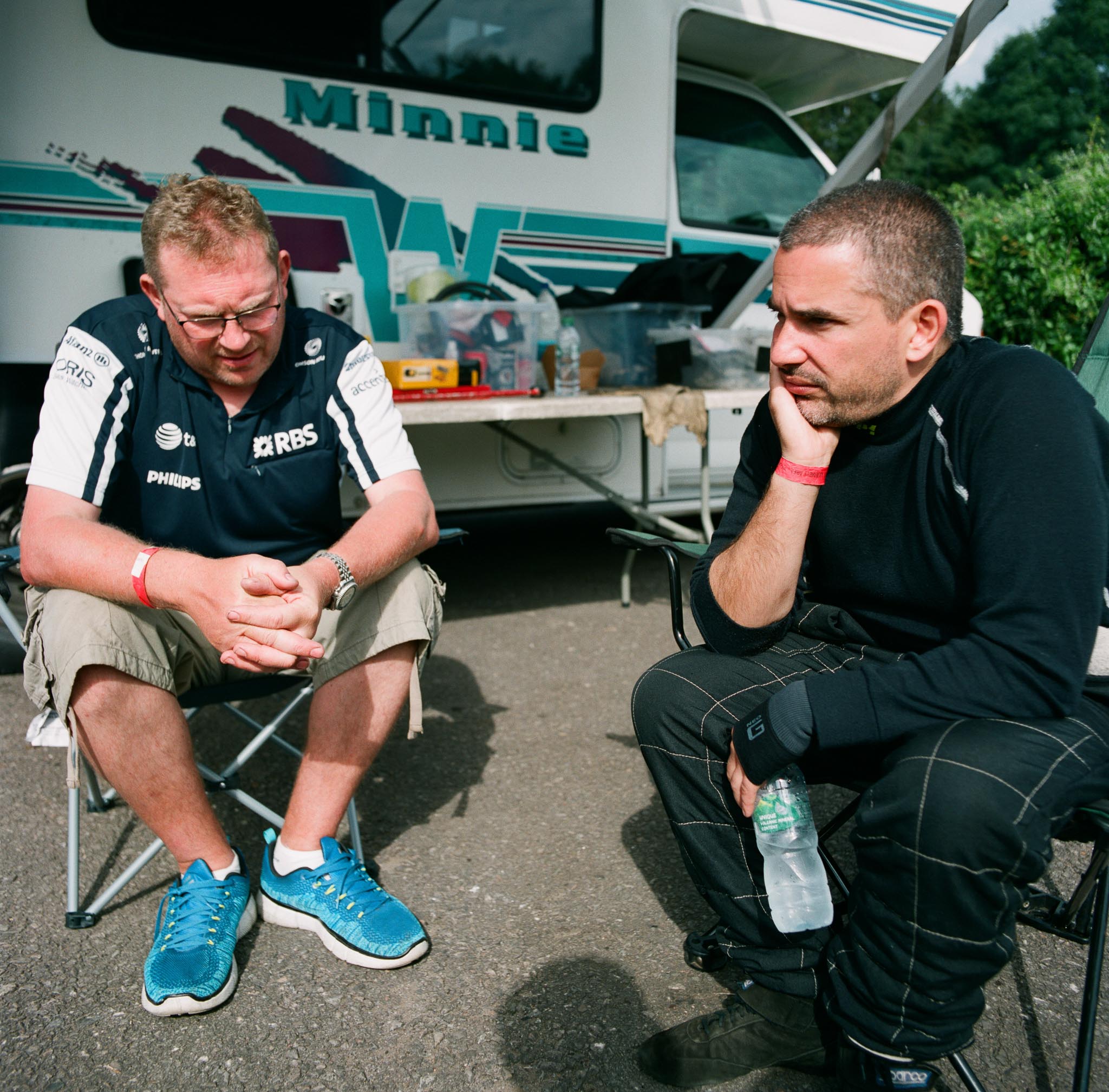
I wanted a 400 speed film because I wanted in-Winnebago* reportage of the downtime between races. I would need speedy film for that. I had forgotten that the Hasselblad’s fastest shutter speed is 1/500th sec. Combine this with a sunny day and my current predilection for accurate metering and it was time to start stopping-down.
*The under-exposure of precisely these images then, is somewhat ironic.
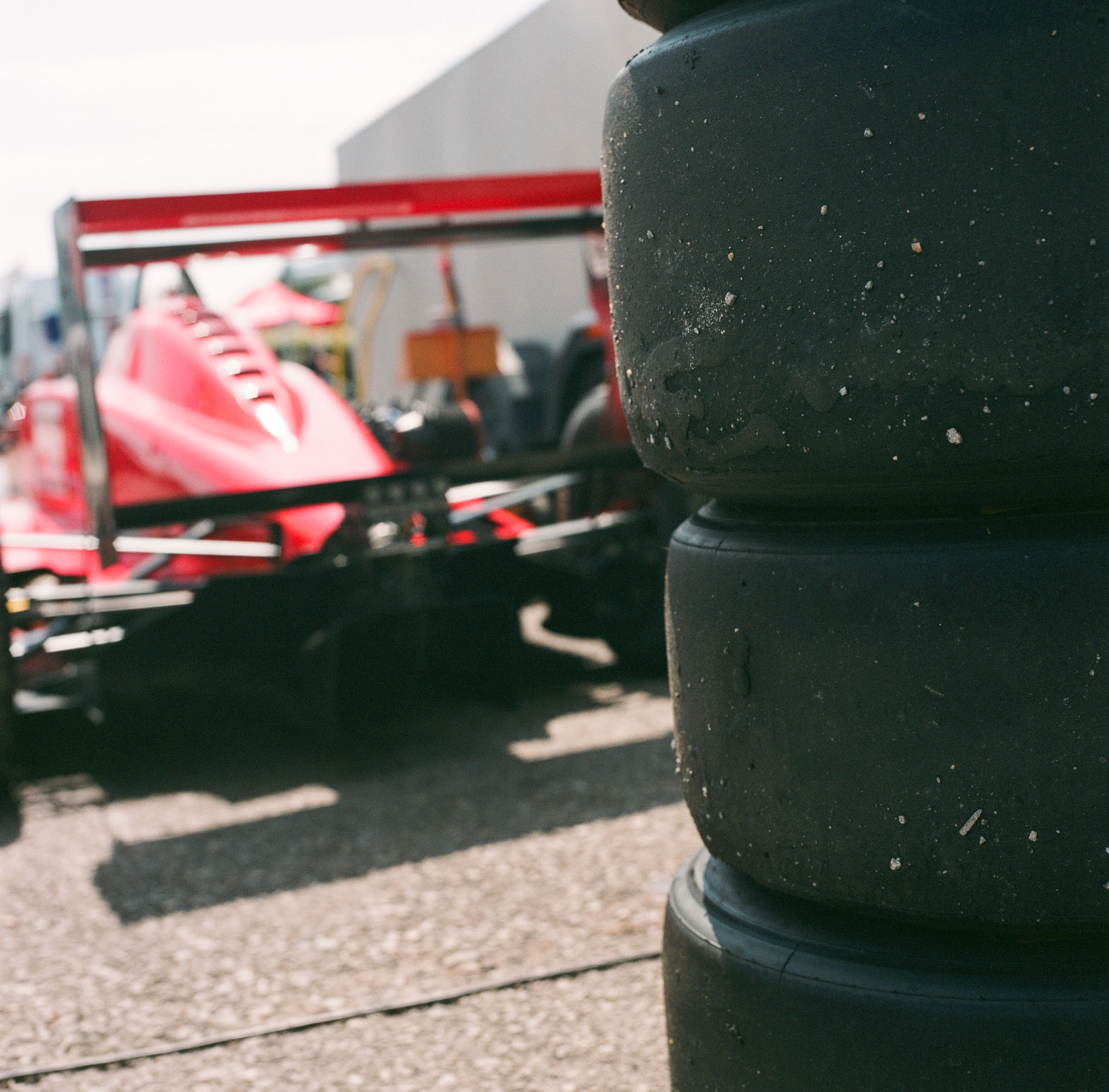
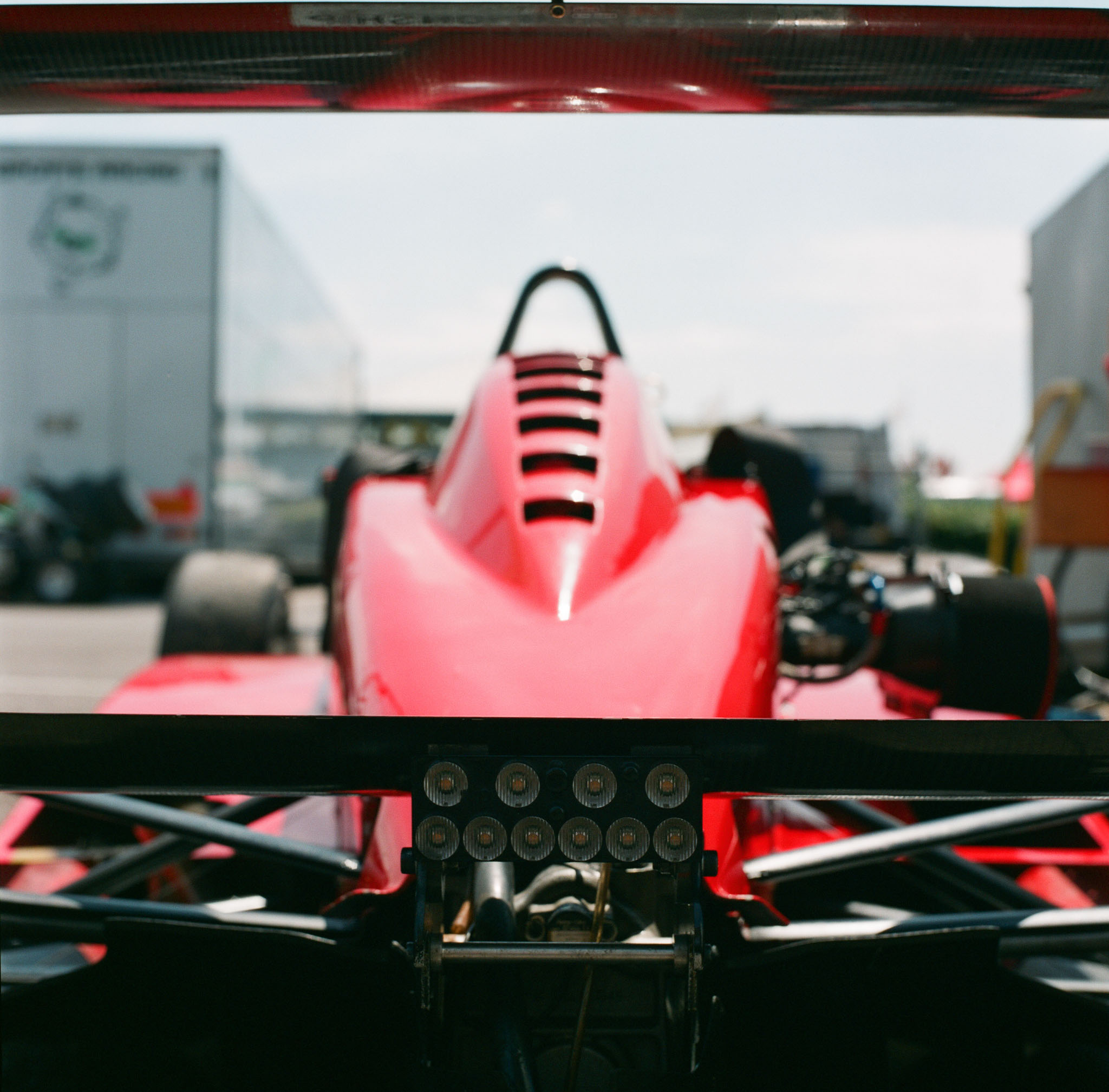
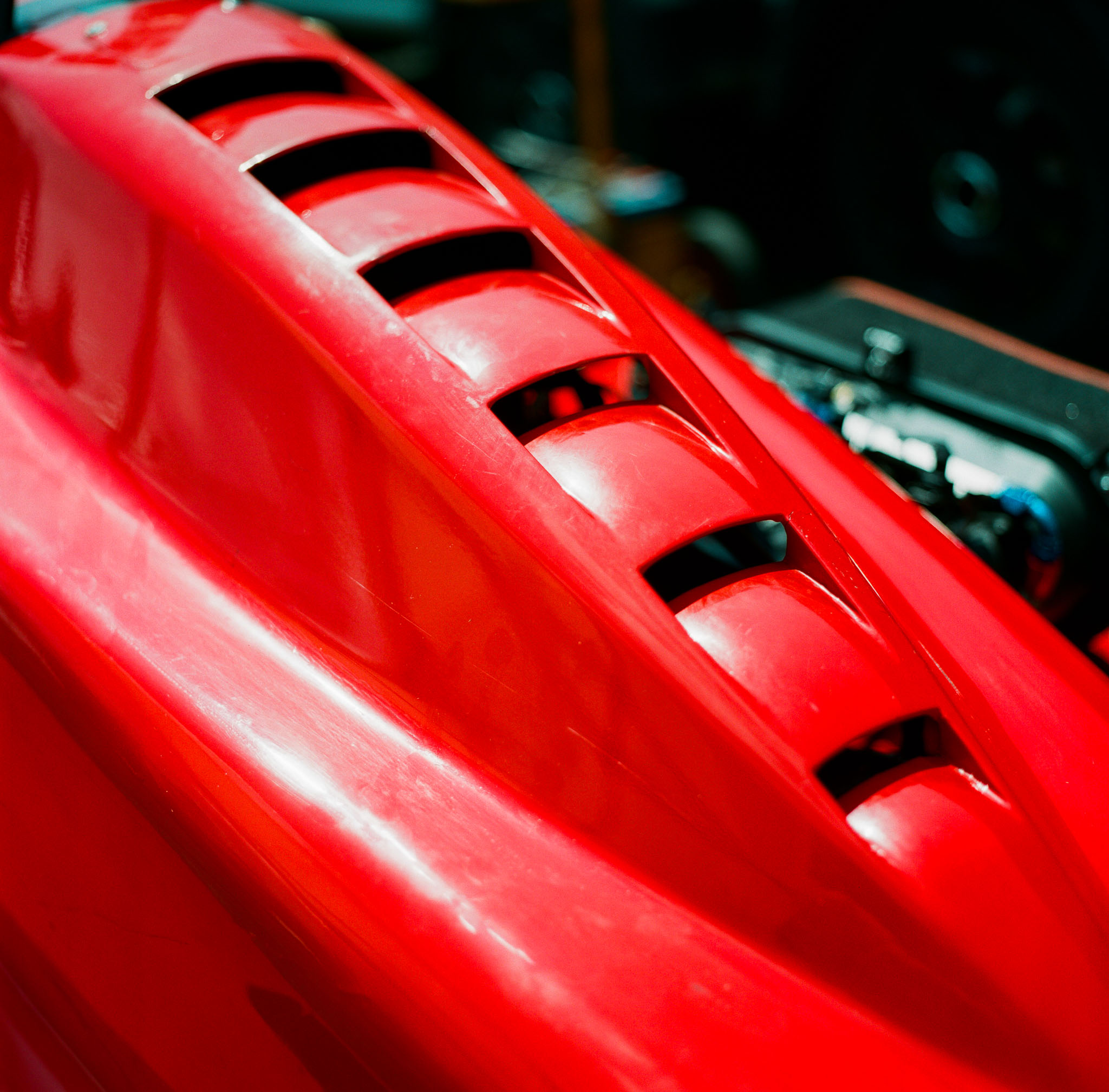
Race One
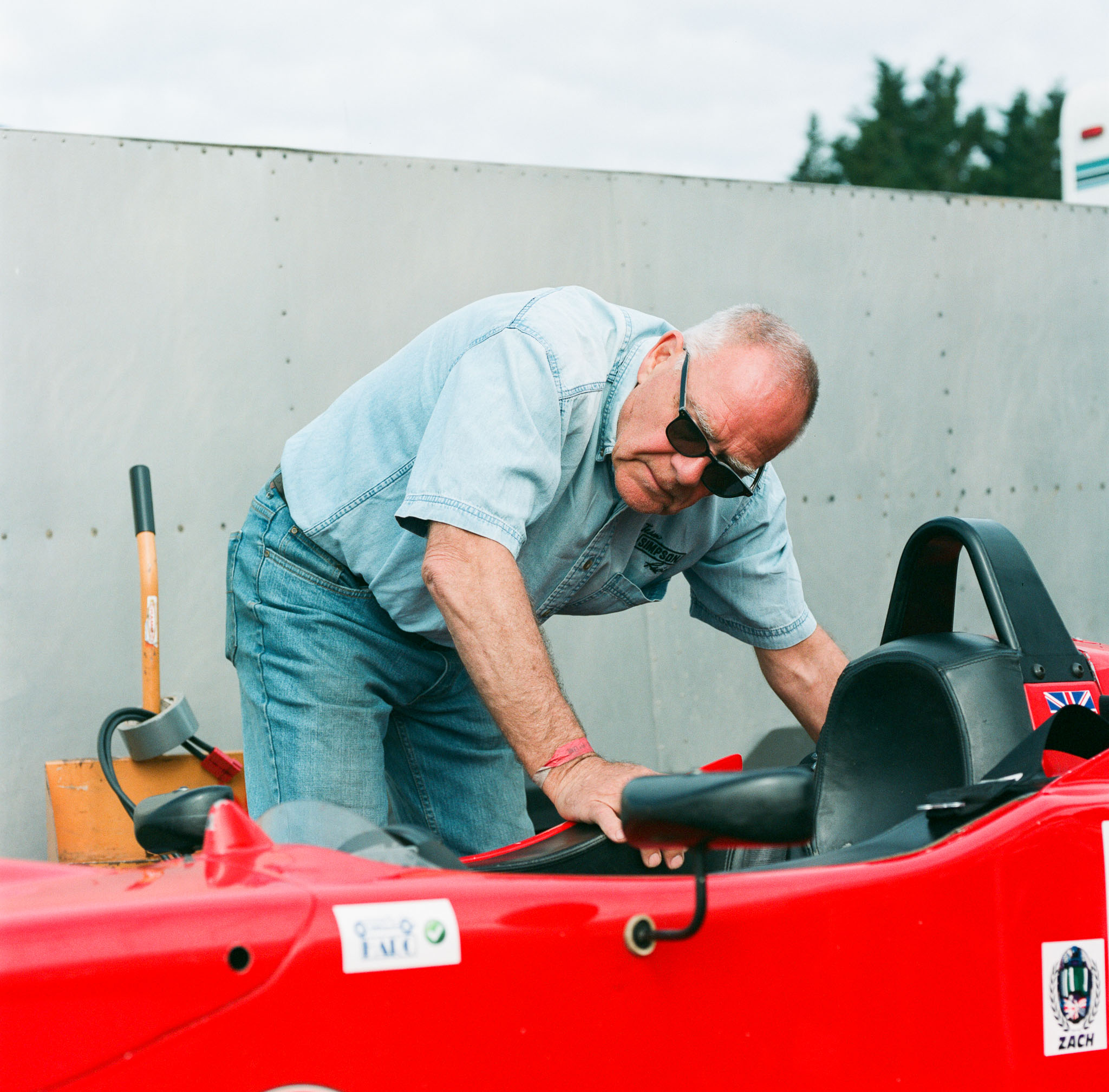
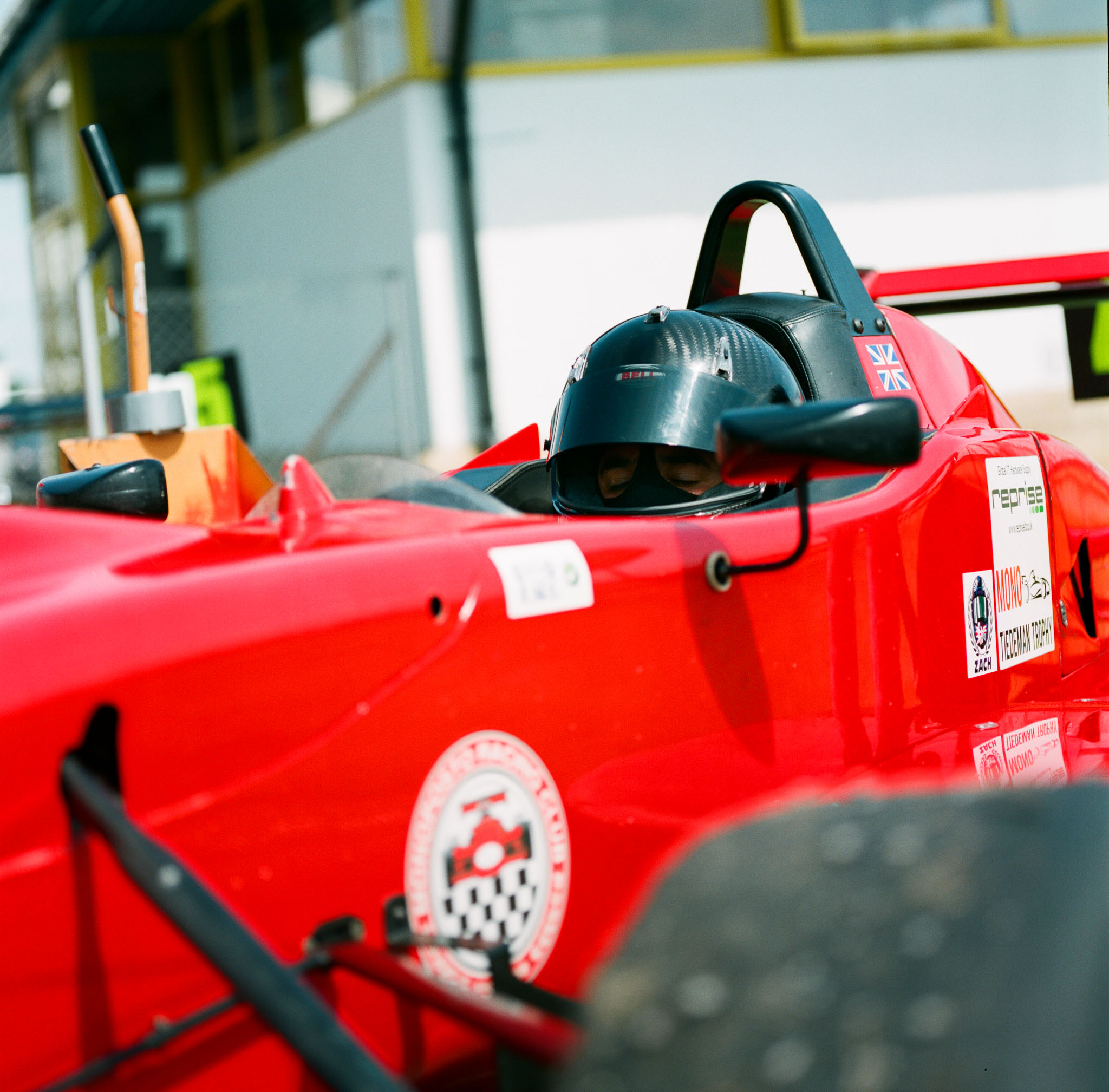
Neil and I rocked up together. He had his helmet, suit and neck-brace thing. I had a camera and some sausage rolls. I tried to keep out of the way while they performed final checks and tried to fix Neil’s aberrant clutch. Very quickly it dawned on me that I was going to have choose between massively over-exposing or having all of the depth of field. Nick and Neil had a split paddock with Russ and Rich, and all hands were on deck to get Neil’s car ready for the first race. The previous day had seen some excitement. Russ had spun in qualifying and then put a hole in his block in the race. Neil had a clutch failure that had had to be fixed twice and still wasn’t happy. The previous evening had been spent swapping Russ’s car for Mark’s car so that Russ could still race. Once the car was sorted there was chance to relax and eat sausage rolls. I took a few shots in the assembly area before watching the race from the pit wall.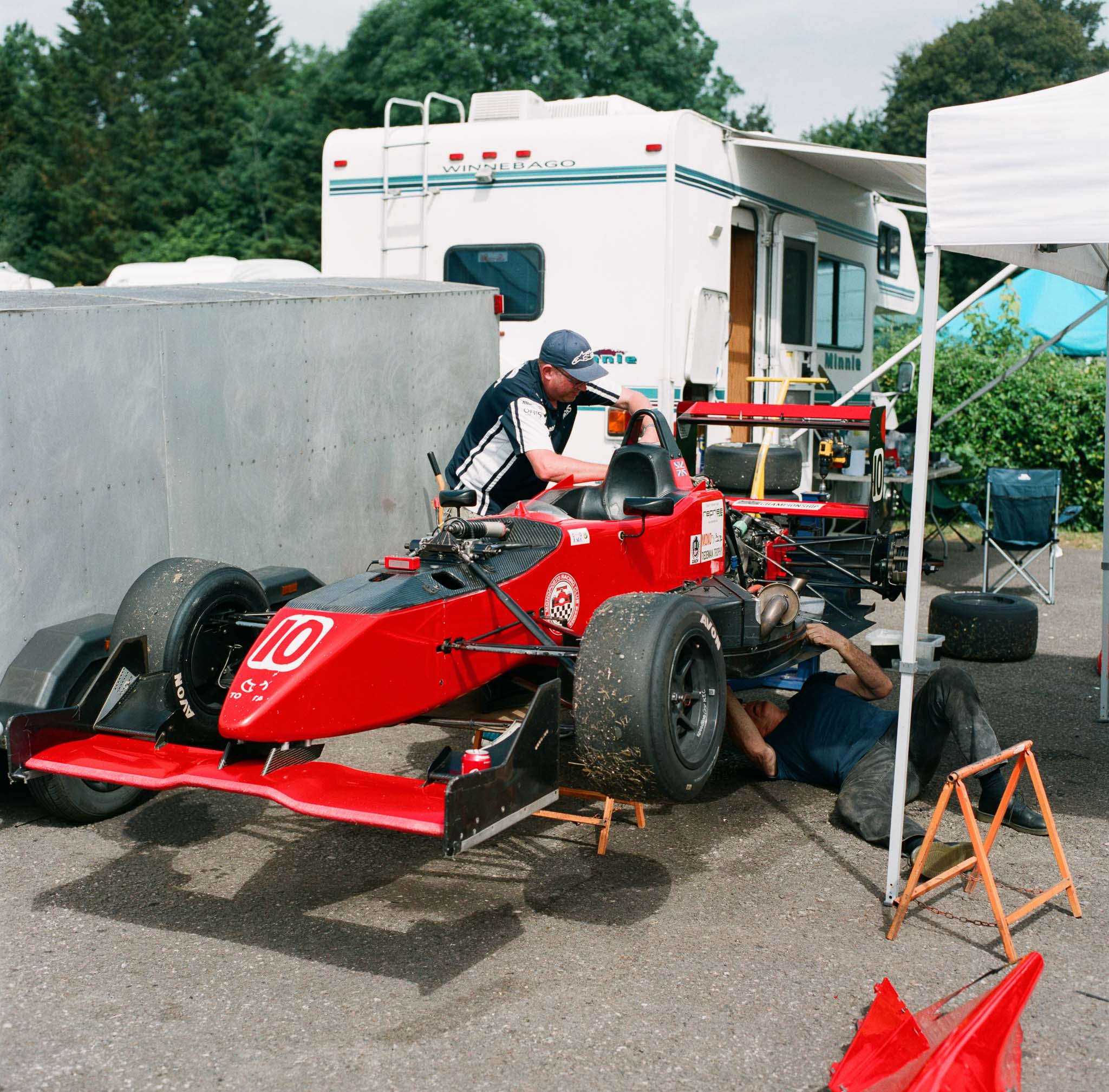
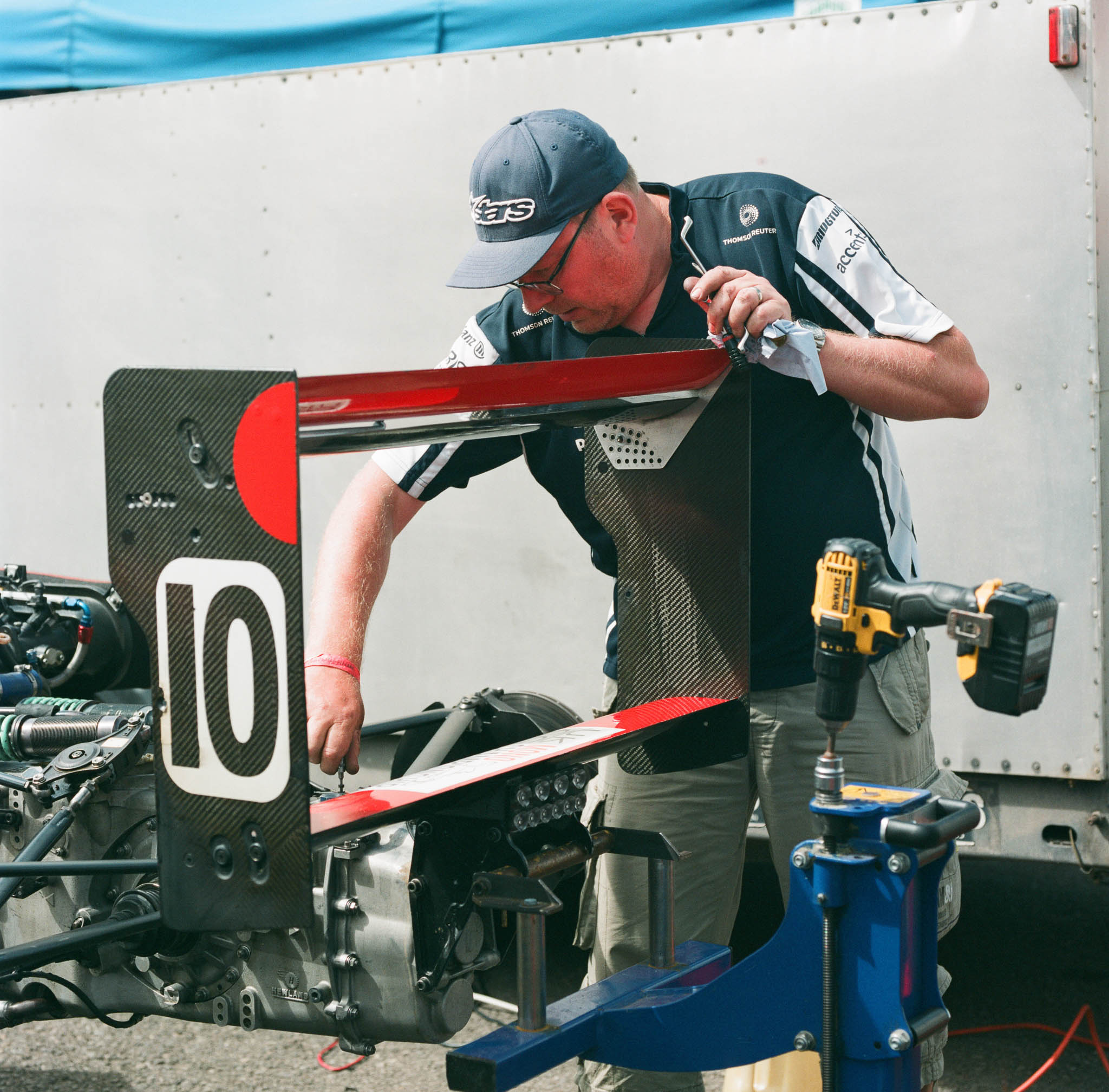
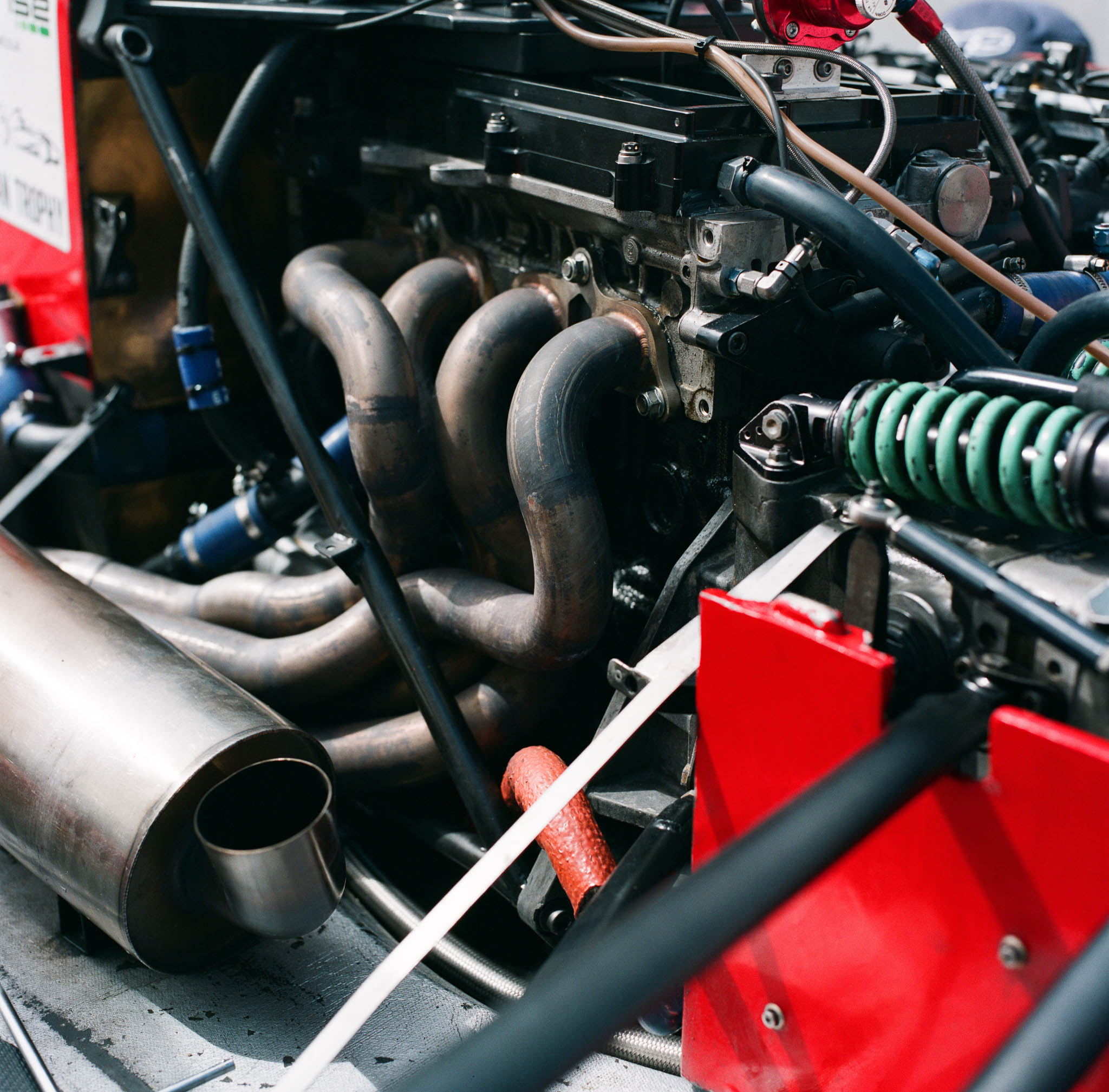
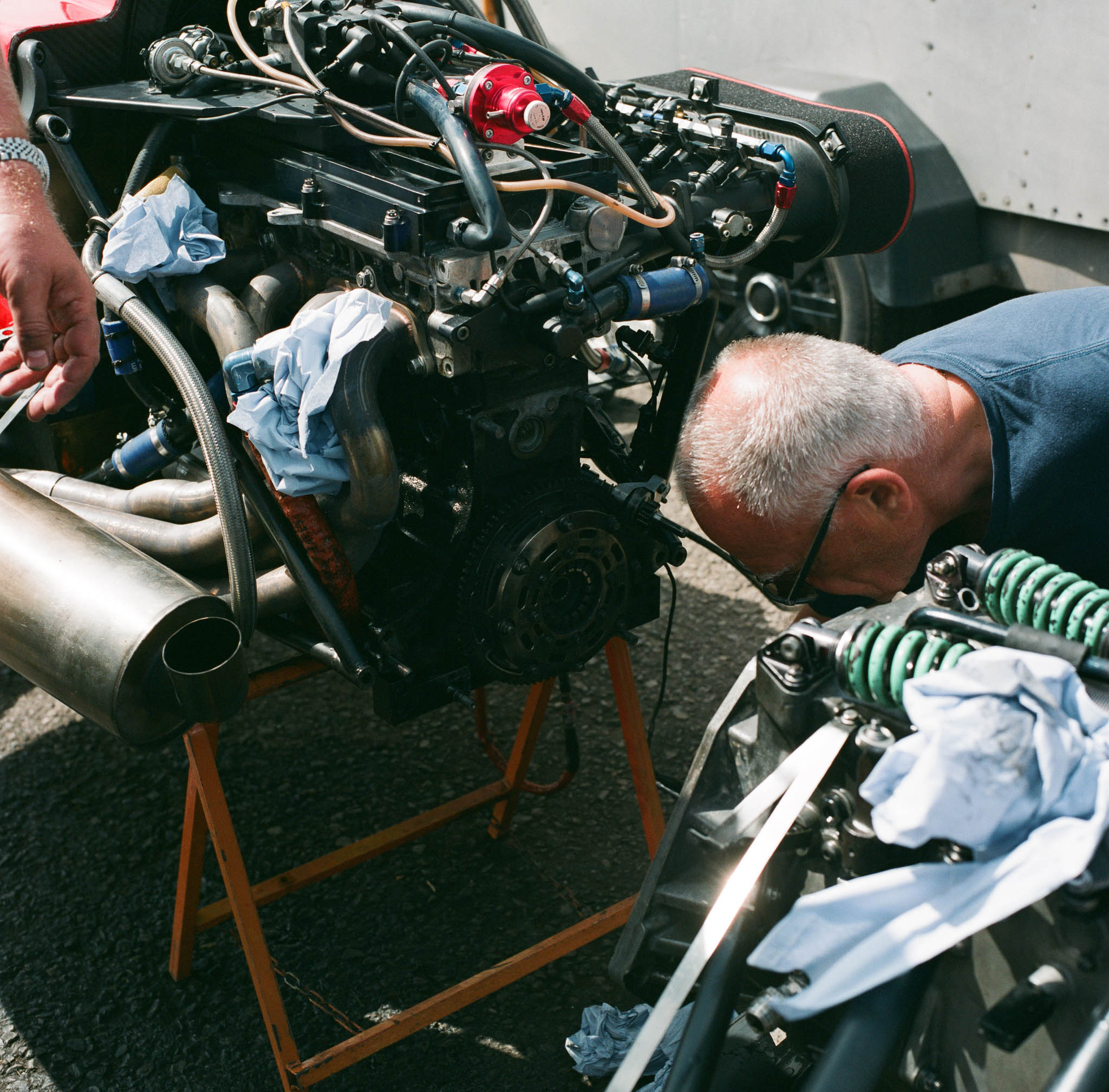
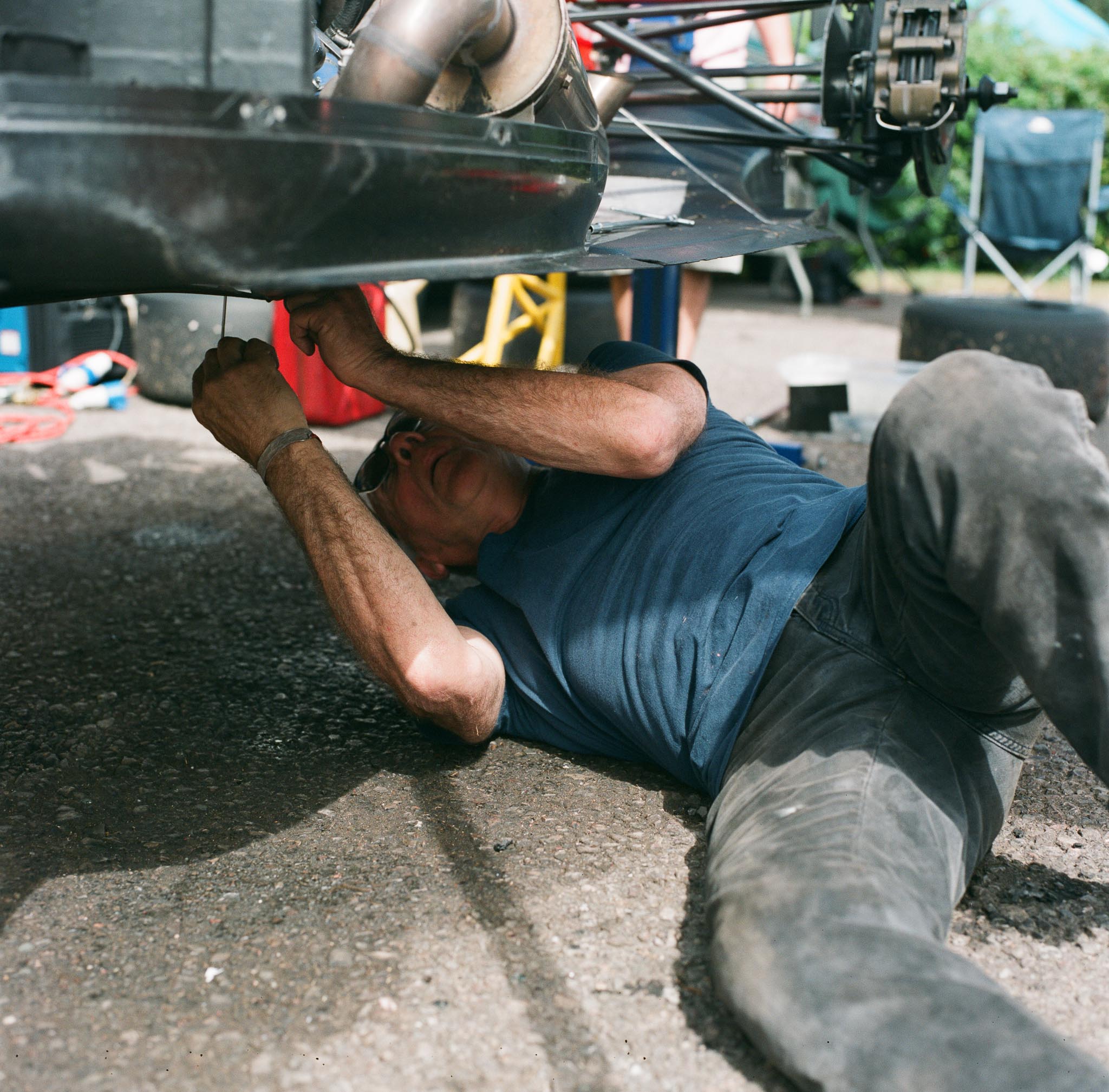
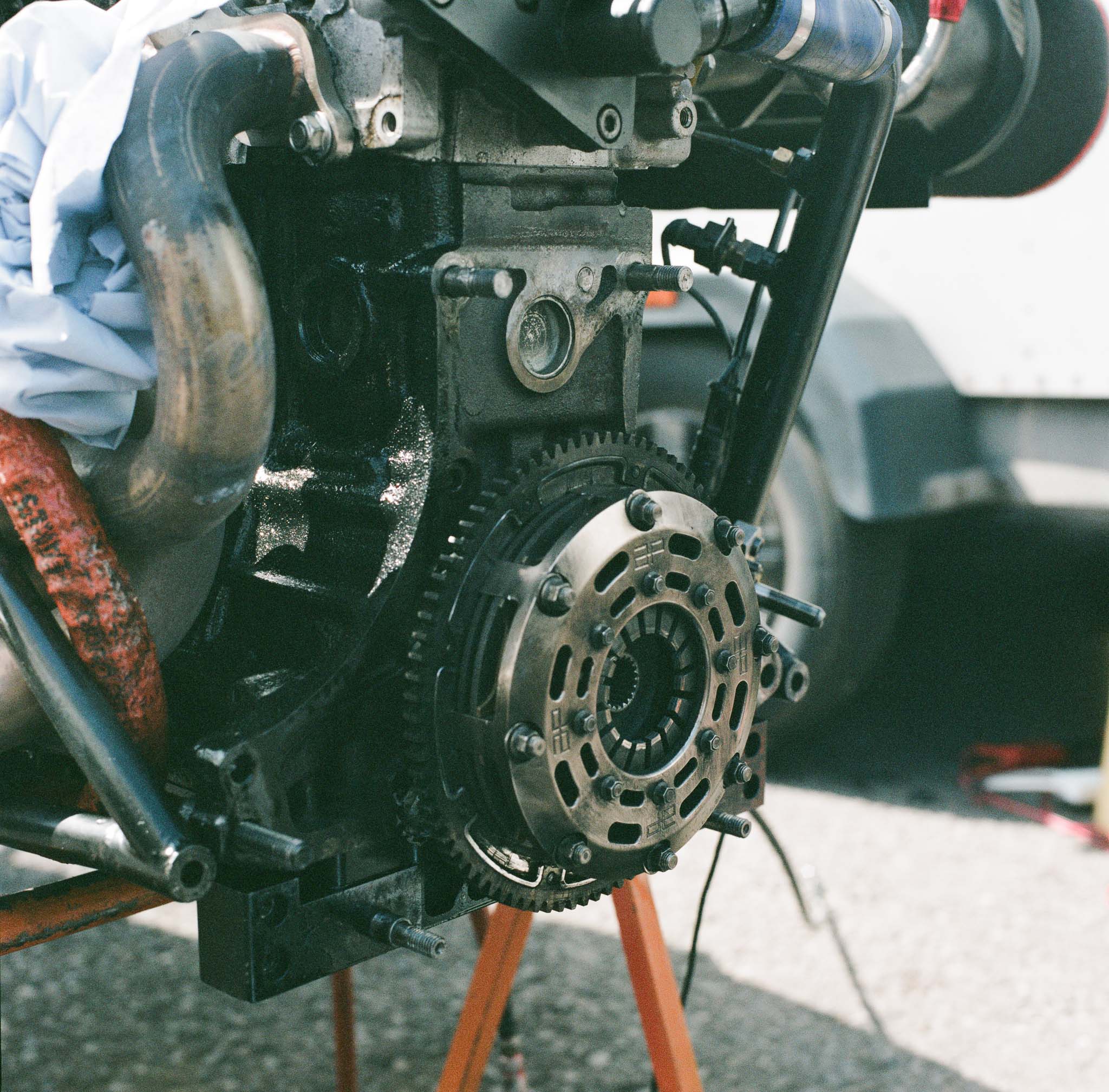
Emergency Surgery
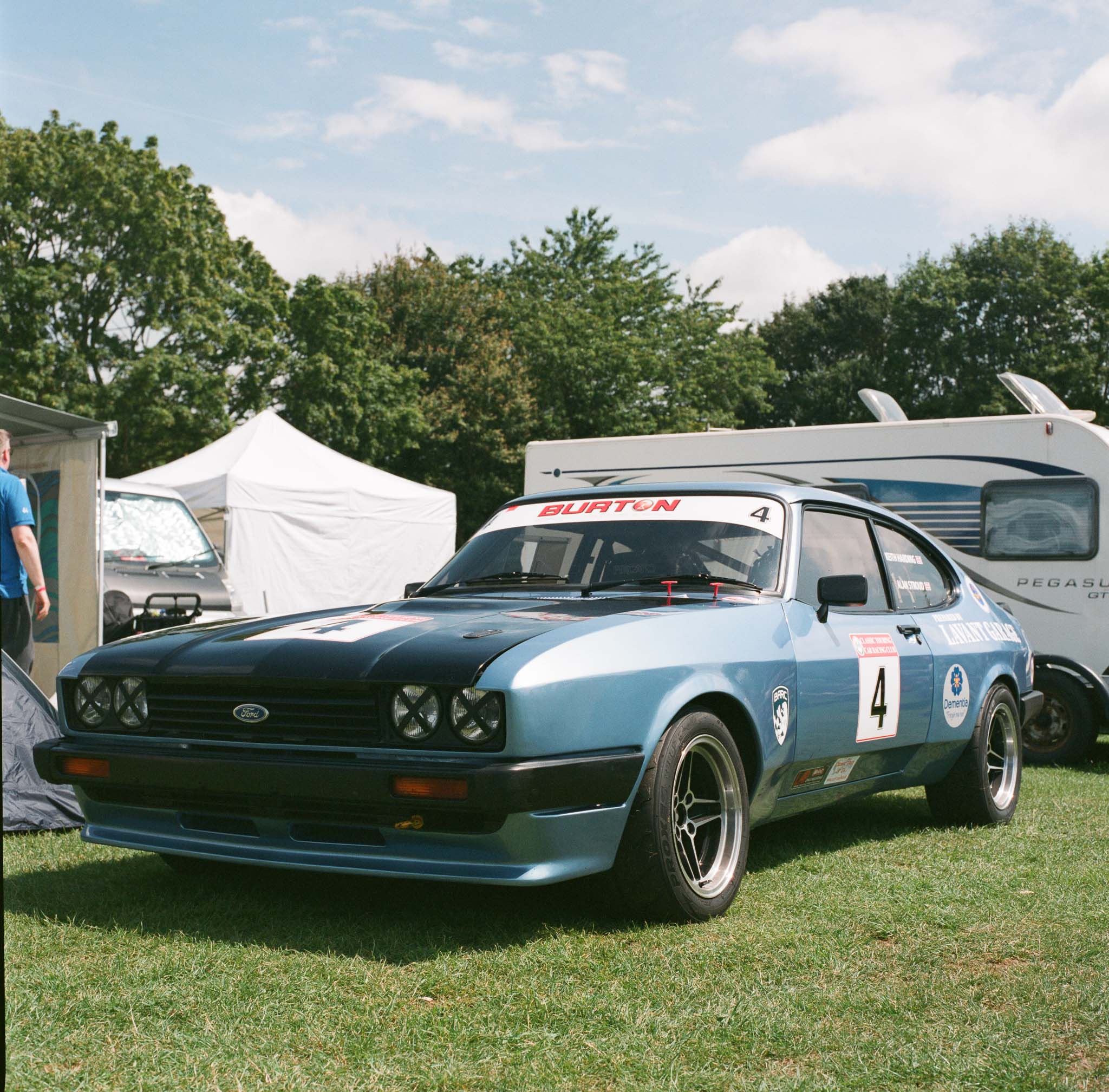
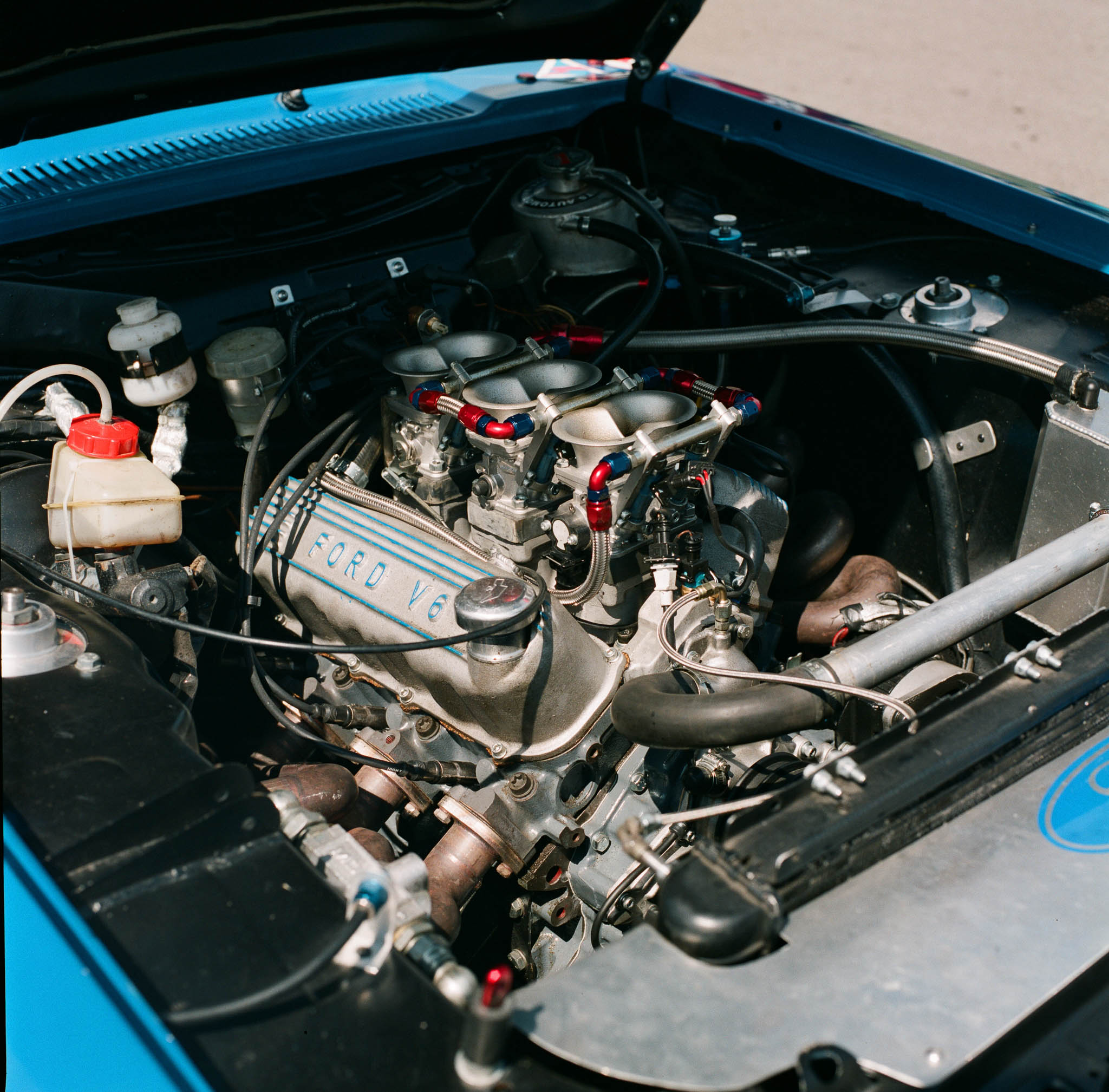
Russ ran well, making up a few places and battling reasonably given the car wasn’t his. Neil struggled to maintain the pace as his clutch still wasn’t right. He finished but the car had to be pushed back to the paddock, (I helped, it was awesome). What followed was my brief indoctrination as a racecar mechanic/jack-stand. In order to service the clutch one has to remove the gearbox. The gearbox is bolted to the engine, the rear wheels and wing are attached to the gearbox. The car was in two pieces remarkably quickly. The rush of sunlit adrenaline pushed the activity to a fervour, so much so that it was back together and with ample time to spare. Now came the hot downtime. I bimbled off to drool over some Ford Capris.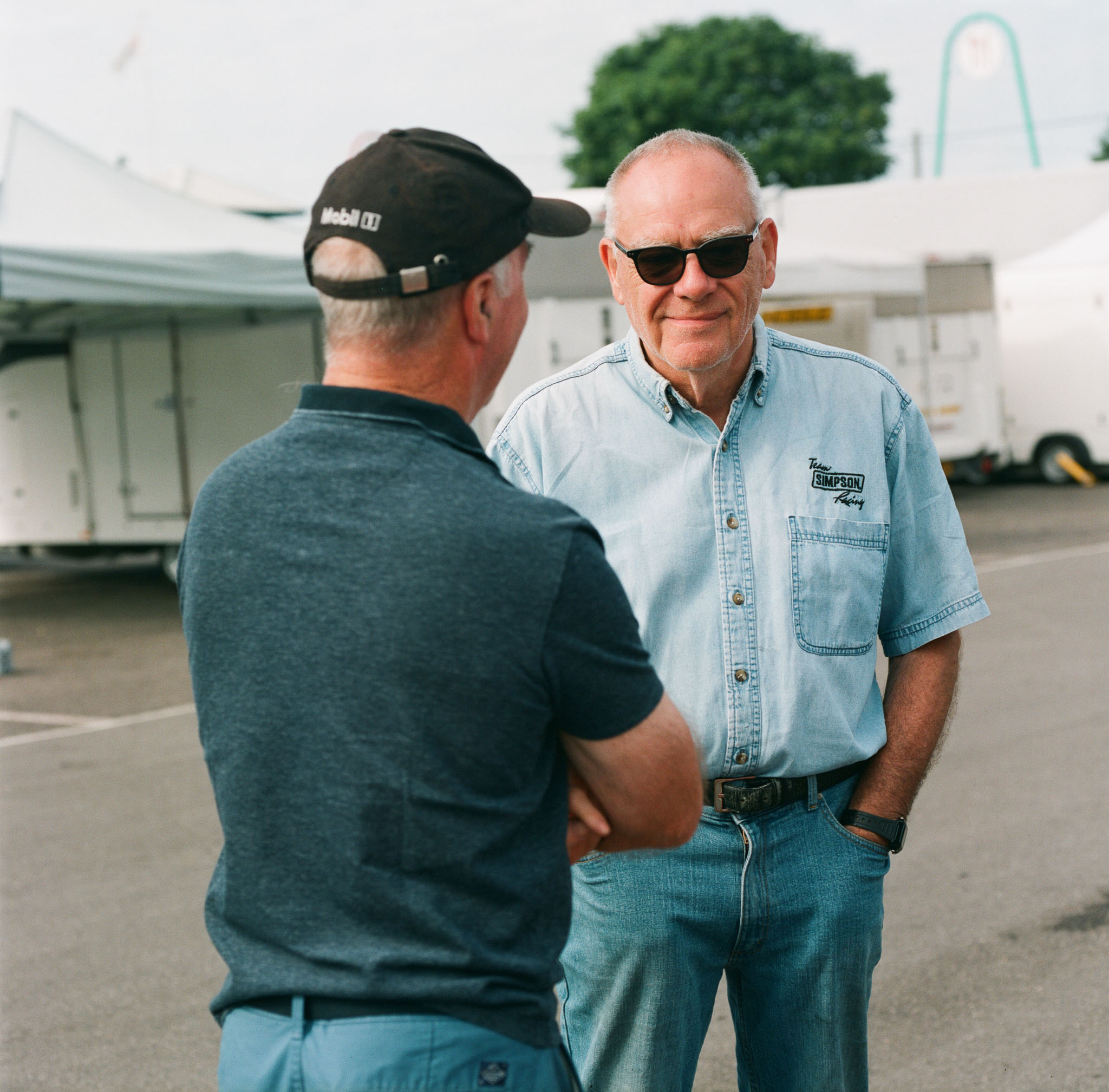
Race Two
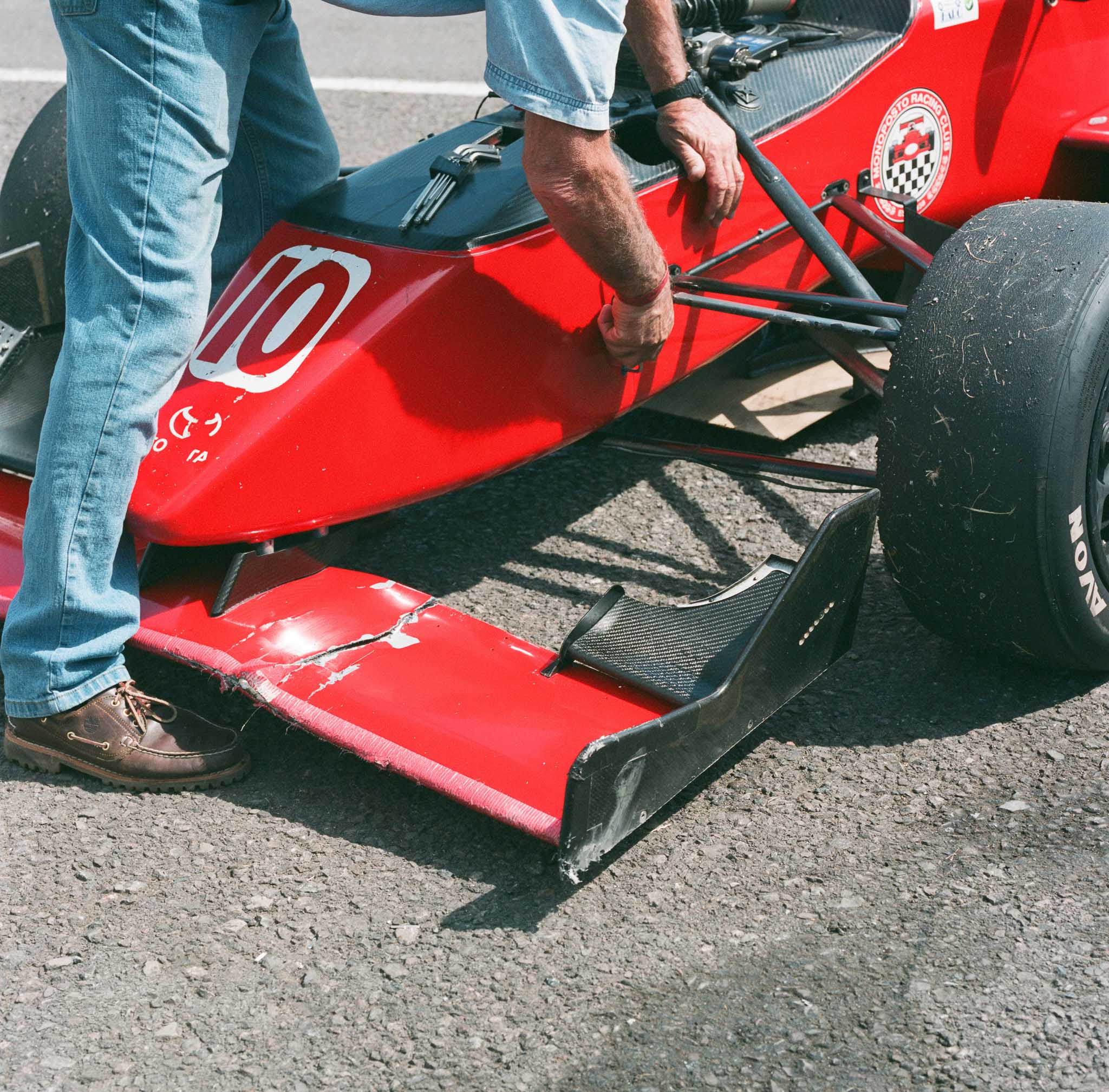
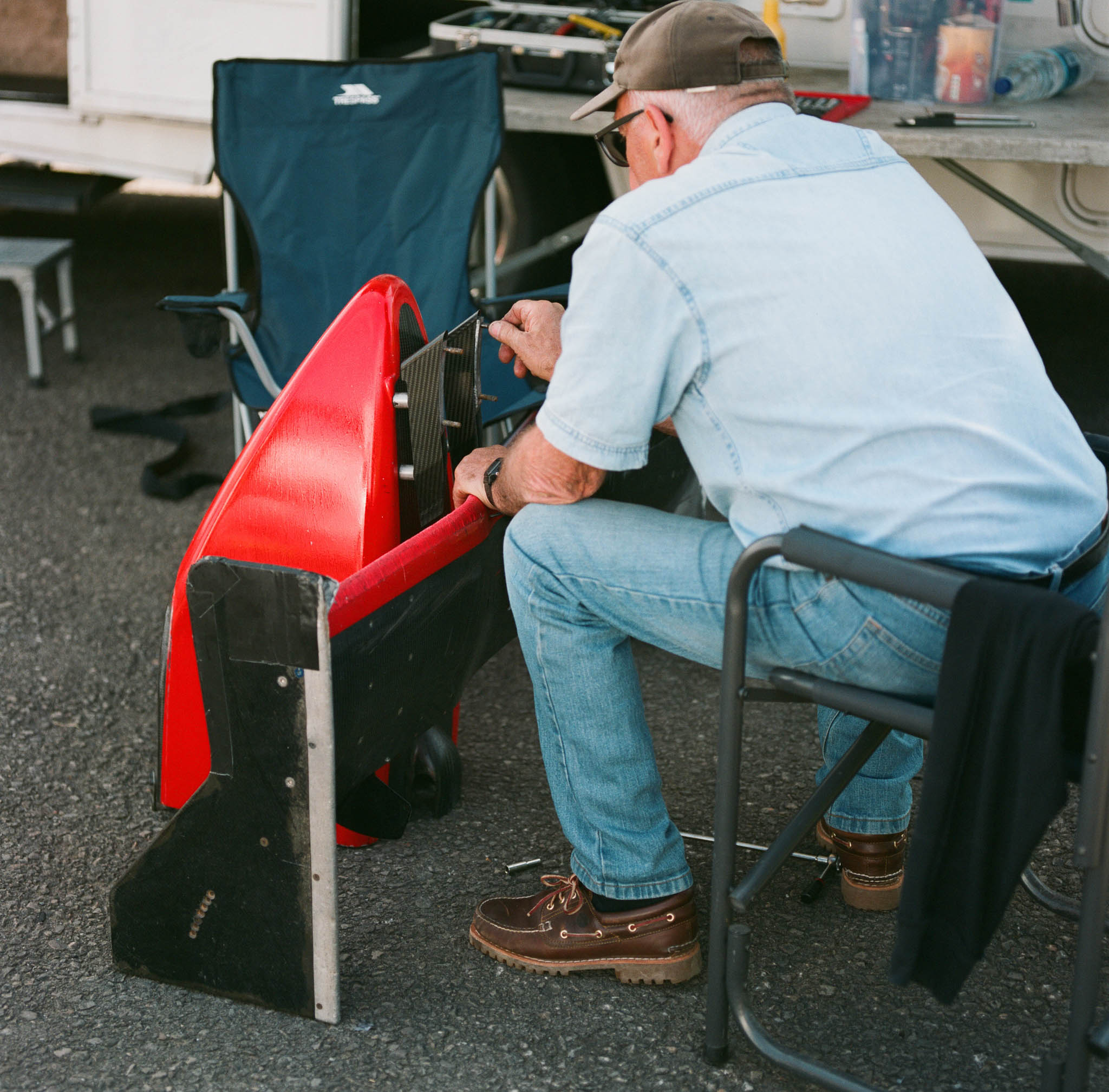
Having managed to get both cars onto the grid for race two everyone was hoping for some fun on the track. Russ had moved up the grid, and was enjoying the speed and stability of Mark’s wider-track car. Things were also going well for Neil who now had a working clutch, and was racing proper for the first time all weekend. Part way through the race another driver made an ill-advised dash for an apex and drove over Neil’s front wing. Neil finished but was more than a few seconds off the pace and came into the paddock a little hot under the collar. Neil was called to the Marshalls’ Office and so the trademark Harrison escape was put on hold. Nick stripped the wing down while we prepped for the return home. We were half-way home when we heard that the Winnebago had died. We headed back to empty it and grab the trailer.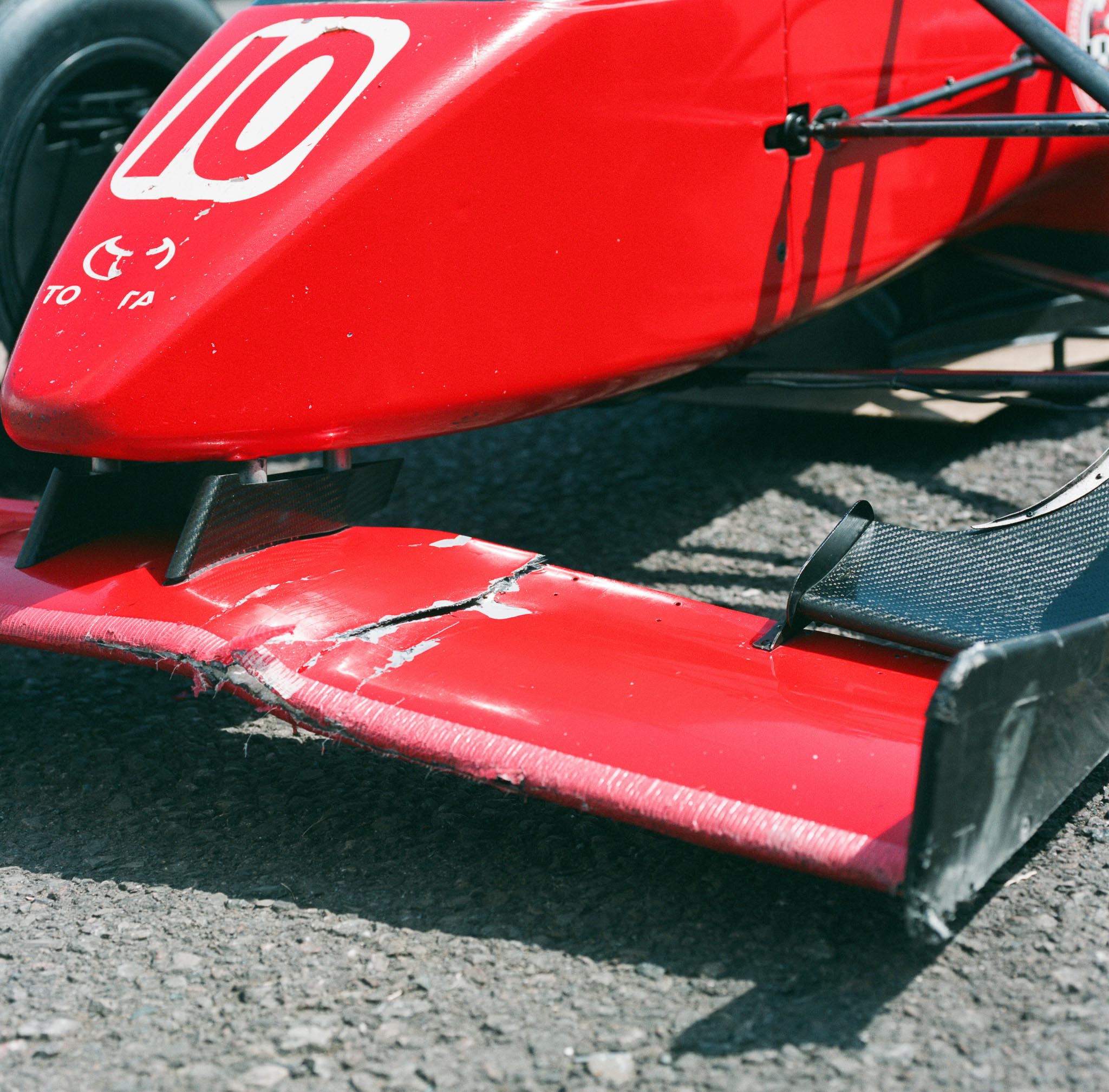
Anticipation
The final arrival of your images from the lab can prove to be both zenith and nadir. In this case I didn’t know how well the expired film had performed. The film was away for over a week, which is nothing, except that I was desperate to see these images, and everyday they grew both better and worse in my imagination. I had given the film a little extra, about 1/3 of a stop, to counter its age and unknown storage. I’d not used each of my lenses in the last year, (each has its own leaf-shutter which could have been broken). I am out of practice with the Hasselblad and in my darkest moments I imagined I had loaded the film incorrectly. (That’s all four rolls.) Their eventual arrival managed to encapsulate the highs and the lows of analog work. Initial relief that there were indeed images was soon replaced with ennui. Like defeat taken from victory the images weren’t as good as I’d remembered. They fell short, I had played too safe, worked within boundaries, made images too similar to my digital output. It was time for a time-out.