

Canon EOS 1V – EF 50mm f/1.2L – Kodak Portra 400
A Journey
The team adventure this year was a return to Italy, and it was made all the more adventurous by the decision to drive. The CFO and I used to drive every year but stopped once we took on our first intern. Now that our second intern has been with the firm for a while, it felt like it was time to try driving again.
There are two key upsides for me when it comes to going by car. The first is that as we go to the same area every year and have been going for a long time, I know the area a little too well. It’s not that it isn’t beautiful or interesting, it’s just that familiarity breeds a lack of excitement.
Historically the drive down was a perfect way to expand the adventure into new territory. Previous excursions have included the Millau Viaduct, Oradour Sur Glane, Monaco, Notre-Dame du Haut in Ronchamp, Siena, Luca, Pisa and the Maginot Line.
Load-Out
Beyond being able to see more stuff, not being limited by airline weight limits means that I can take more stuff too. In the past we’ve set off with the boot full of cameras and I’ve found myself shooting the fifth or sixth camera purely to justify having taken it in the first place.
There were three devices that had to come. The first was my Fujinon G617 and the second was my EOS 1V. Both of these lovely cameras have joined the menage since our last jaunt to Umbria, and I was keen to play with them in a target rich environment.
(The third definite to make the trip was the drone, because of all my cameras it is the only one that can fly.)
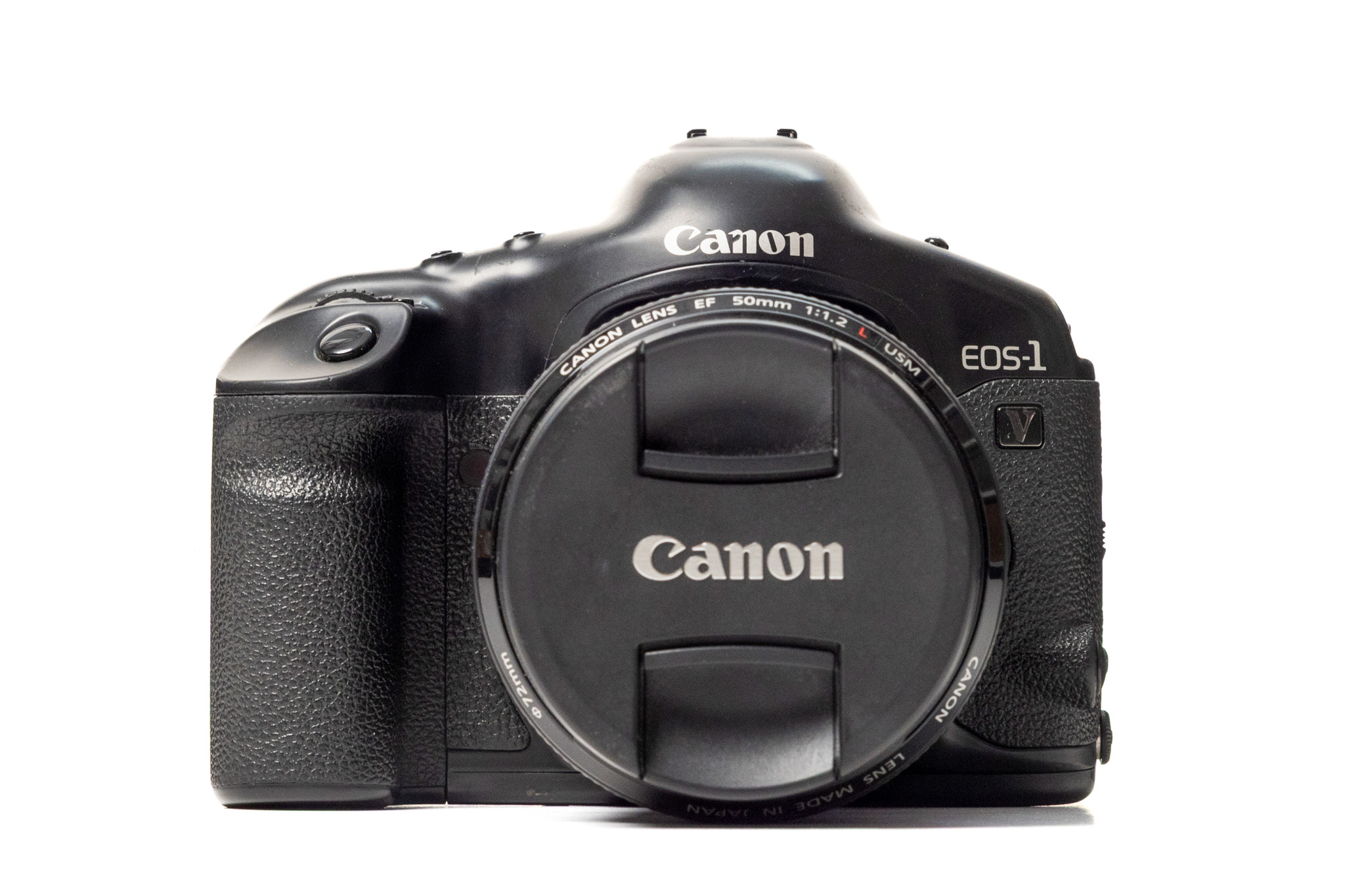

EOS 1V with 50mm f/1.2 USM & Fujica G617
Once I’d packed the must-haves, I filled a suitcase with two digital bodies and focal lengths running from 15-500mm and apertures starting at f/1.2 because who knew what we would see on our adventure.
I knew I was taking too much but a few years ago I found myself at a Red Kite feeding station with a film camera and a 50mm lens, the results were predictably underwhelming.
There was always a chance that I would want to make portraits of the people of Izzalini, or would locate a buzzard’s nest and would want to have the kit to shoot it.

Canon EOS 1V – EF 50mm f/1.2L – Kodak Portra 400
Ride or die(s)
Making this journey with the interns was always going to be different to the way we used to. Now we needed seat-breaks, screen-breaks, run-around-and-eat-things-breaks, and we needed to make and break camp every day.
Various plans and logistical arrangements gave us four nights to complete the journey. This felt luxurious before we set off but felt constrictive once we were on our way. We realised quite quickly that stopping to see things was going to prove a challenge.
France was hot and big, but we had fun playing boule and eating French takeaway, we definitely drove for too long each day.

Nikolo – Canon EOS 1V – EF 50mm f/1.2L – Kodak Portra 400
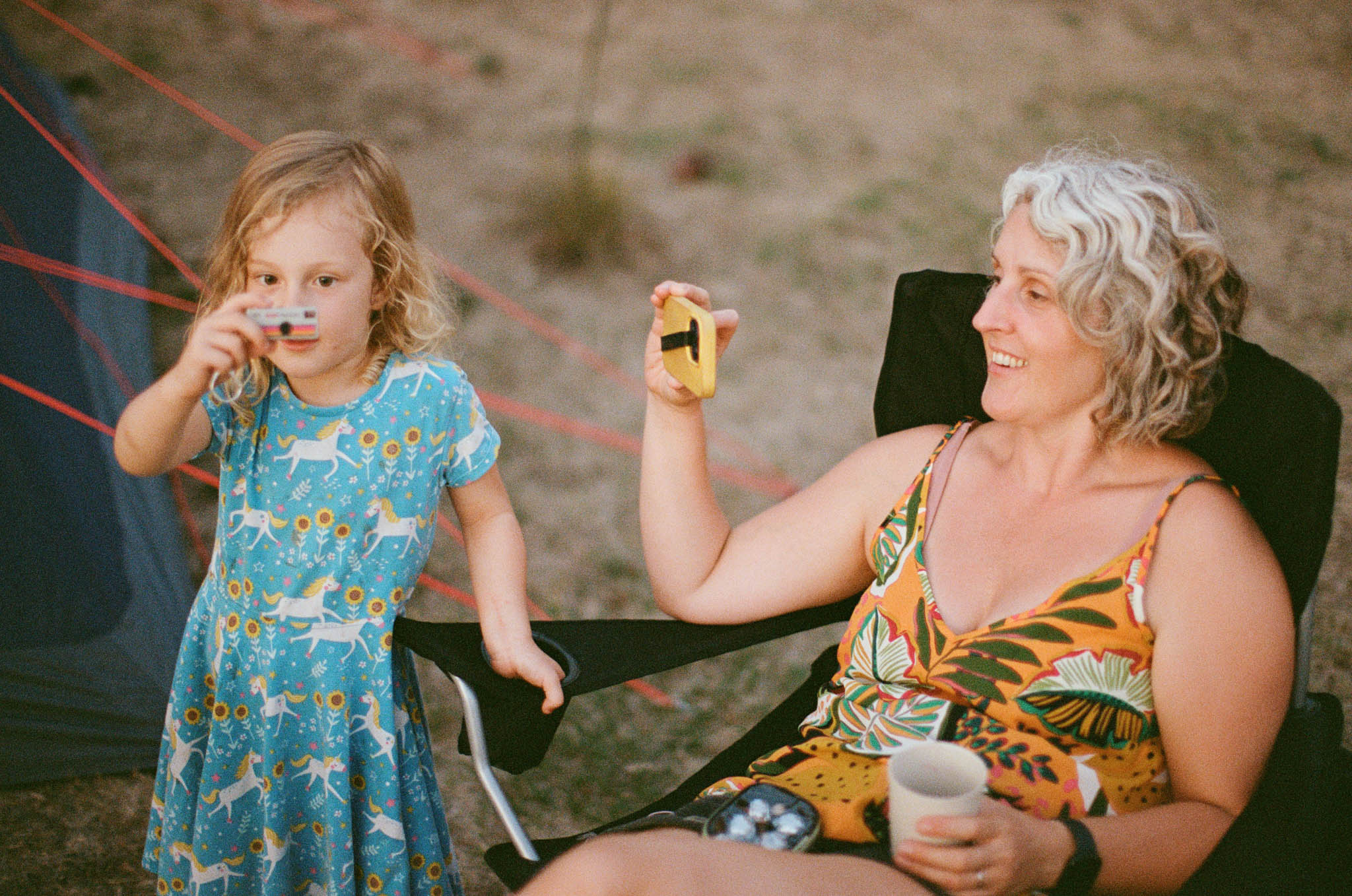
After two nights in France we made it to Italy and found a campsite near Como, where I made a friend in Nikolo, the Interns met a selection of unlicensed movie characters, and had a chance to cool off in the swimming pool.
The G617 spent most of the drive down in the car before finally coming out of the bag to shoot the Piazza Del Duomo in Pisa. The digital stuff also spent the drive down in the car, I shot the whole journey down with the EOS 1V, falling more in love with it as we travelled.
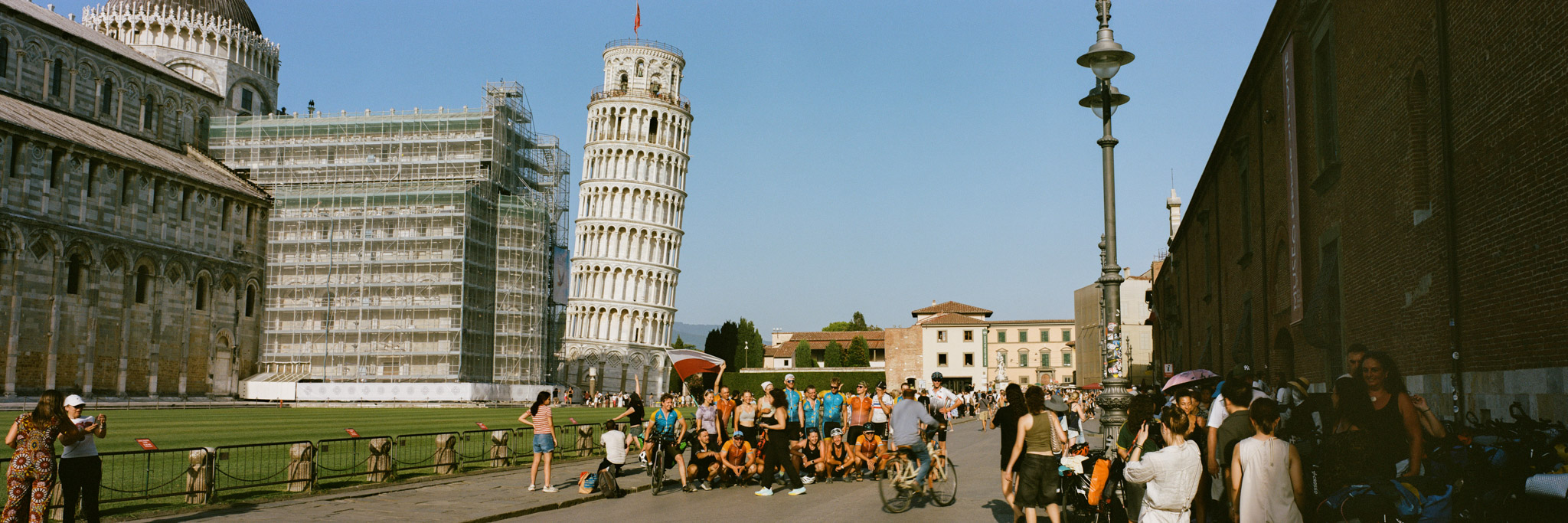
Meanwhile at the Tower – Pisa – Fujica G617 – Kodak Portra 400
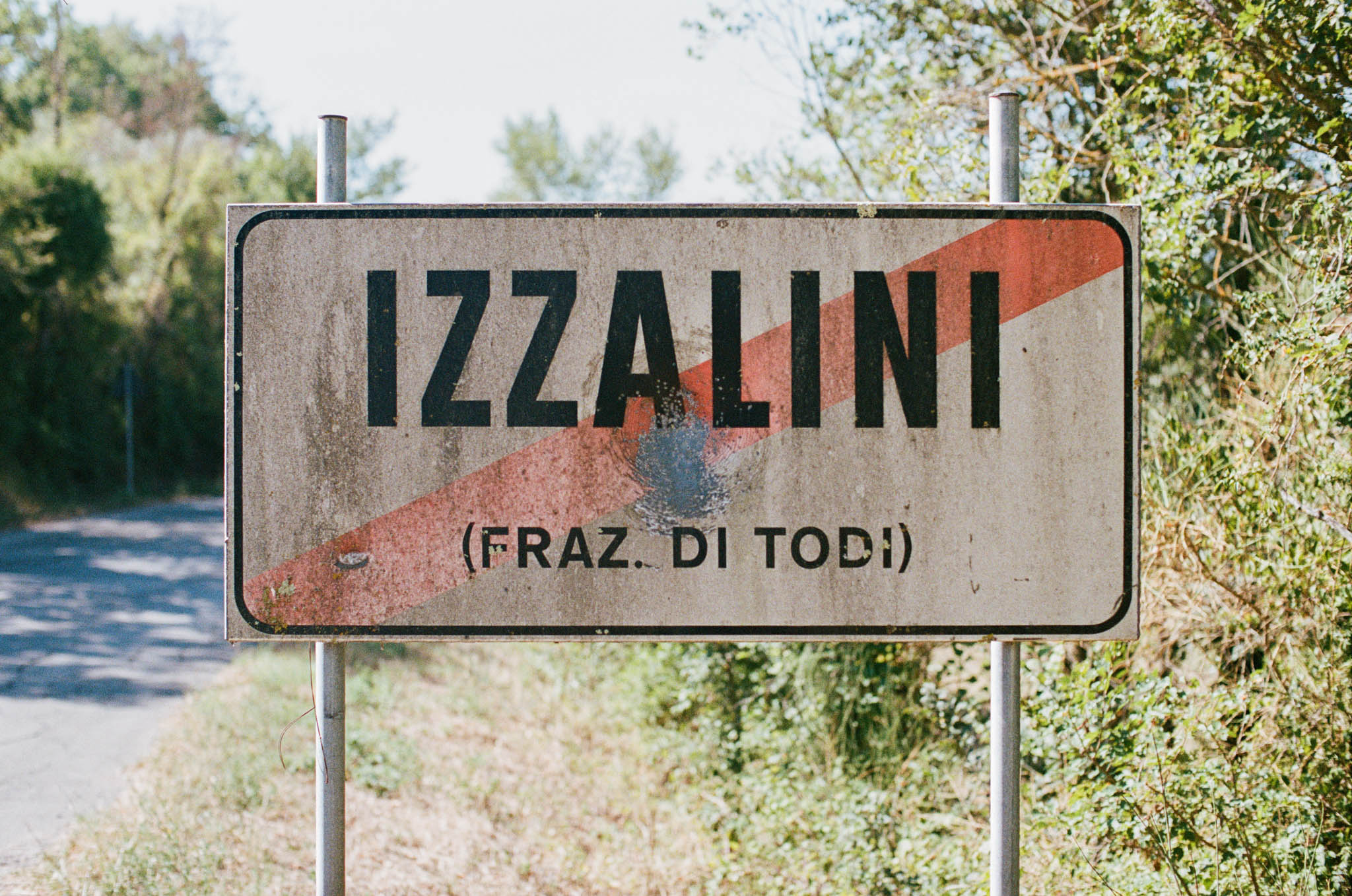


Canon EOS 1V – EF 50mm f/1.2L – Kodak Portra 400
Sometimes it’s about the destination (and not the journey)
Once we found our way to Umbria, there was time and space to go on a few solo photography missions. My main goal was to get to grips with the G617. I’ve learned a bunch over the last year or so and this felt like a good opportunity to put it into practice.
I’ve written before about the symbiosis that comes into play when you’re using a camera. You are enabled by the camera’s capabilities, and equally limited by its constraints. As a creative entity, you are the sum of your parts.
The G617 doesn’t have a particularly wide aperture, f/8 is as wide as it will go. With no focus confirmation you have to scale focus, which makes the utilisation of shallow depth of field challenging.
(It’s also worth noting that the lens vignettes wide open, overpowering the centre-grad’s efforts to balance the light across the image. Stopping down makes a certain amount of sense.)
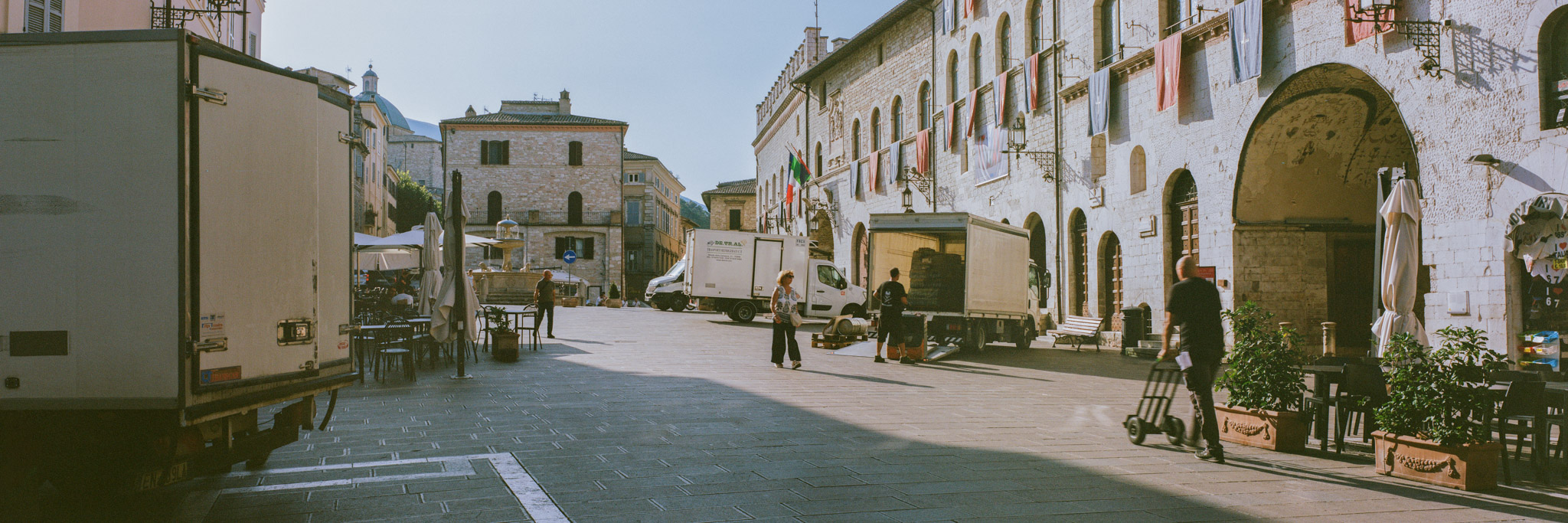
Morning in Assisi – Fujica G617 – Kodak Gold 200
I spent most of the time using the camera at around F/32. I was shooting Kodak Portra 400 metered at ISO200 (to counter the light the centre-grad was taking out of each exposure). This combination meant that my shutter speeds were rarely hand-holdable. Ensuring the camera is level, makes a tripod almost mandatory.
Of all the types of photography I’ve done this is the most prescrisciptive, even shooting my large-format camera (which shares much of the process) offers interchangeable lenses and focus confirmation.

Santuario dell’Amore Misericordioso – Collevalenza – Fujica G617 – Kodak Portra 400
Long story short, this is a very different kind of photography to my usual fair. It’s considered, methodical, deadpan, perhaps even straight. After years of making twee and saccharine images of Umbria, I tried to temper the desire to make panoramic-postcard images and to be a little more democratic (as William Egglestone would say), I was not always successful.

Postcard – Todi – Fujica G617 – Kodak Portra 400
Back in time
One of my jaunts took me to Assisi early in the morning, this was my first return trip to Assisi since the somewhat disastrous adventure that taught me about punctured bellows. I made images of the Basilica, the Piazza Del Comune and a few more as I wended my way towards Perugia.
Once there I headed to a camera shop I’d found online and treated myself to an enjoyable chat, a mooch, and the partially planned purchase of an EF 40mm f/2.8 STM pancake lens for the EOS 1V.
I had one a long time ago and liked its clarity and compact size; I’ve no idea how much action it will see but it’s nice to have one in the bag.
If you find yourself in Perugia swing by www.fratticiolifotostore.it

Olive on a Roundabout – Fujica G617 – Kodak Portra 400
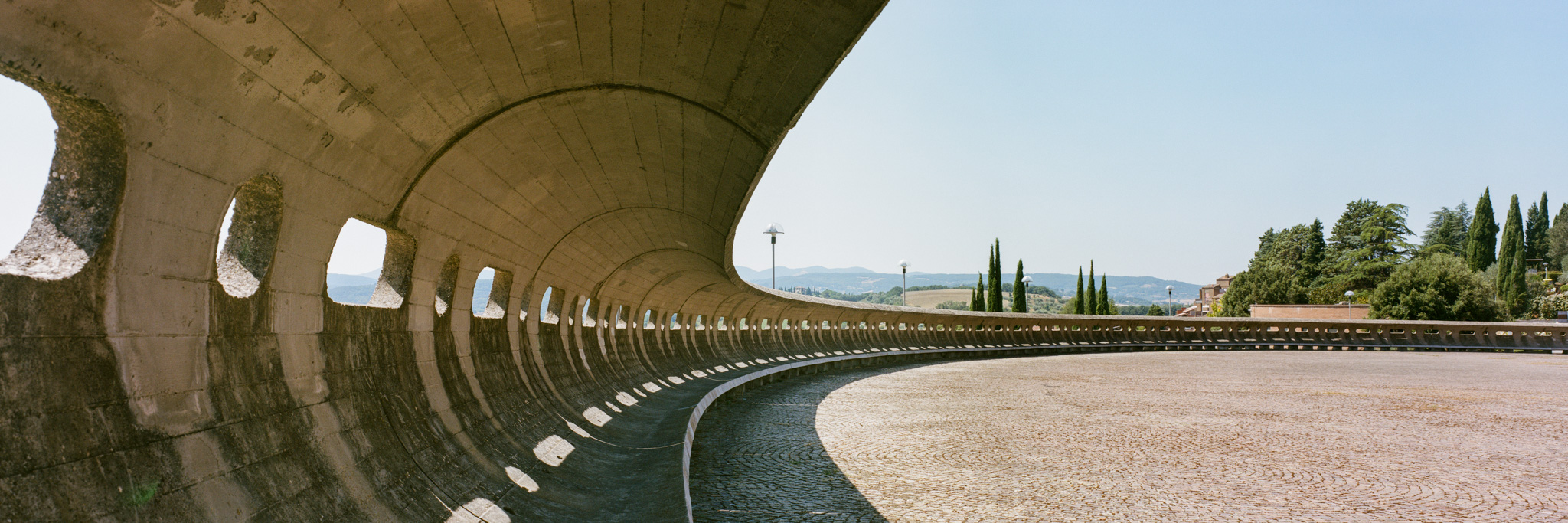
Julio Lafuente’s bench at the Santuario dell’Amore Misericordioso in Collevalenza – Fujica G617 – Kodak Portra 400
While the G617 was making the big pictures, the EOS 1V was on hand for less formal photographs. Its state of the art (for 2000) metering meant that I had the confidence to put a roll of E100 through it. It metered perfectly, even if I’d forgotten what E100 looks like.
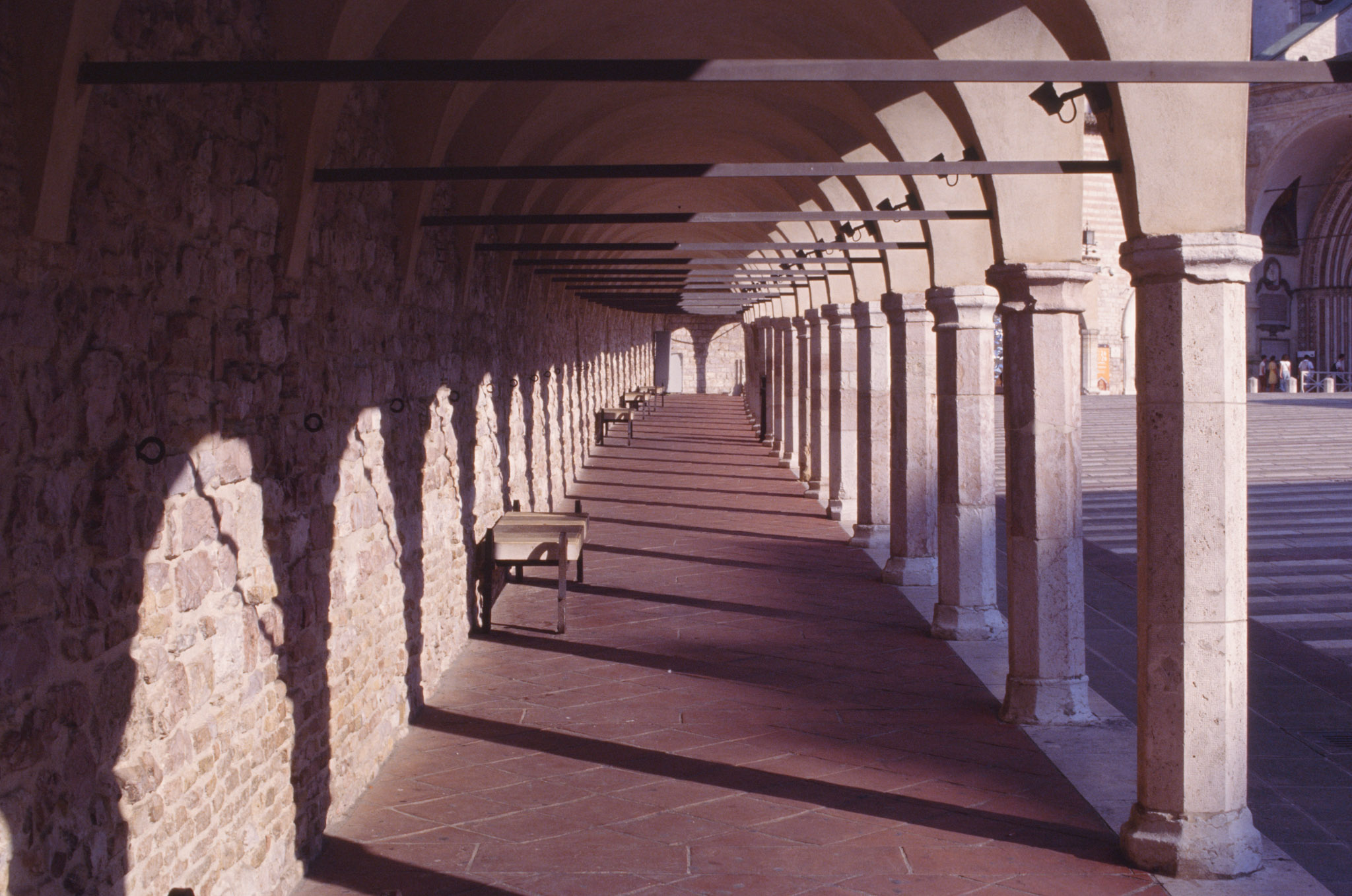
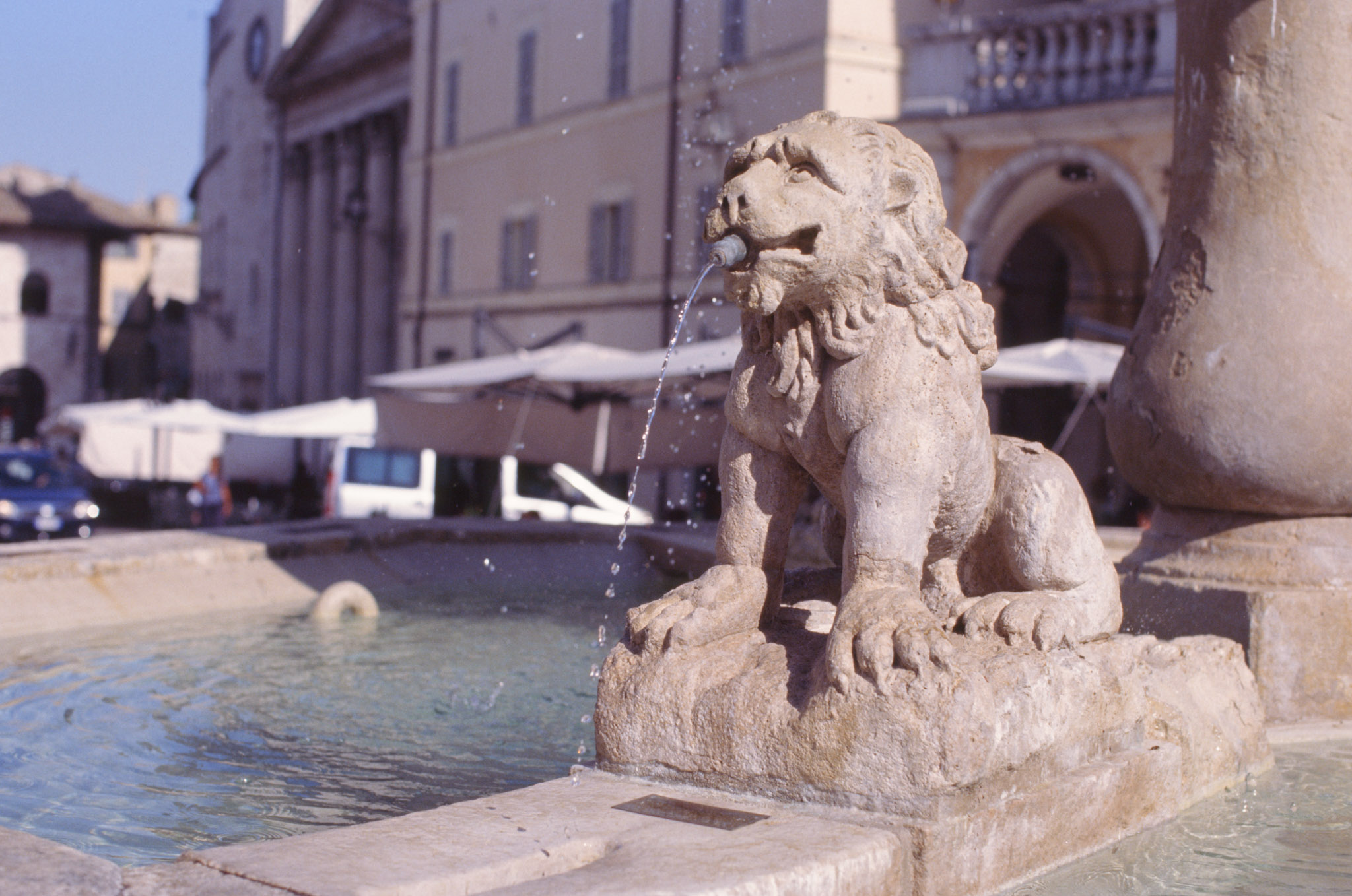


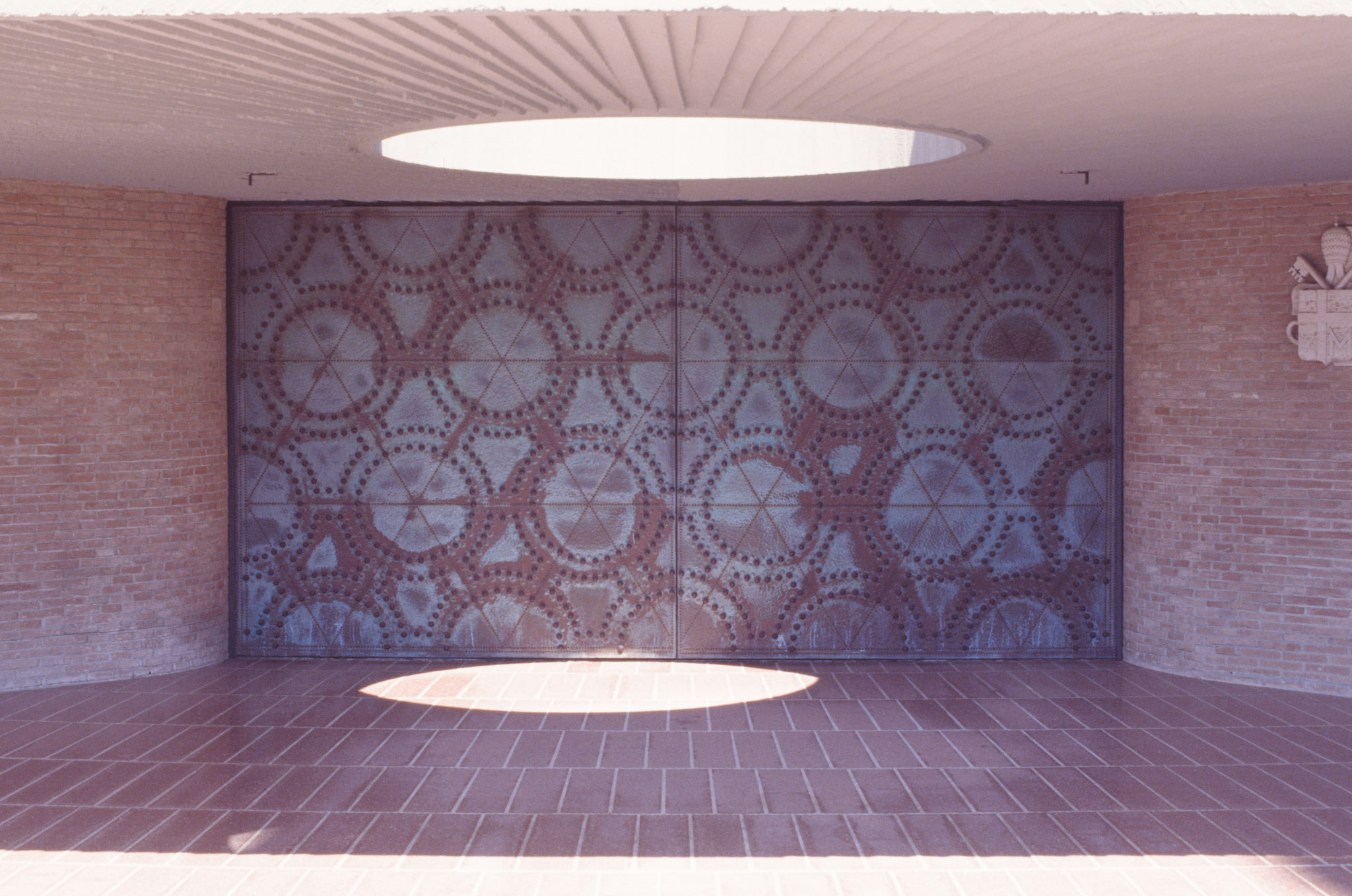
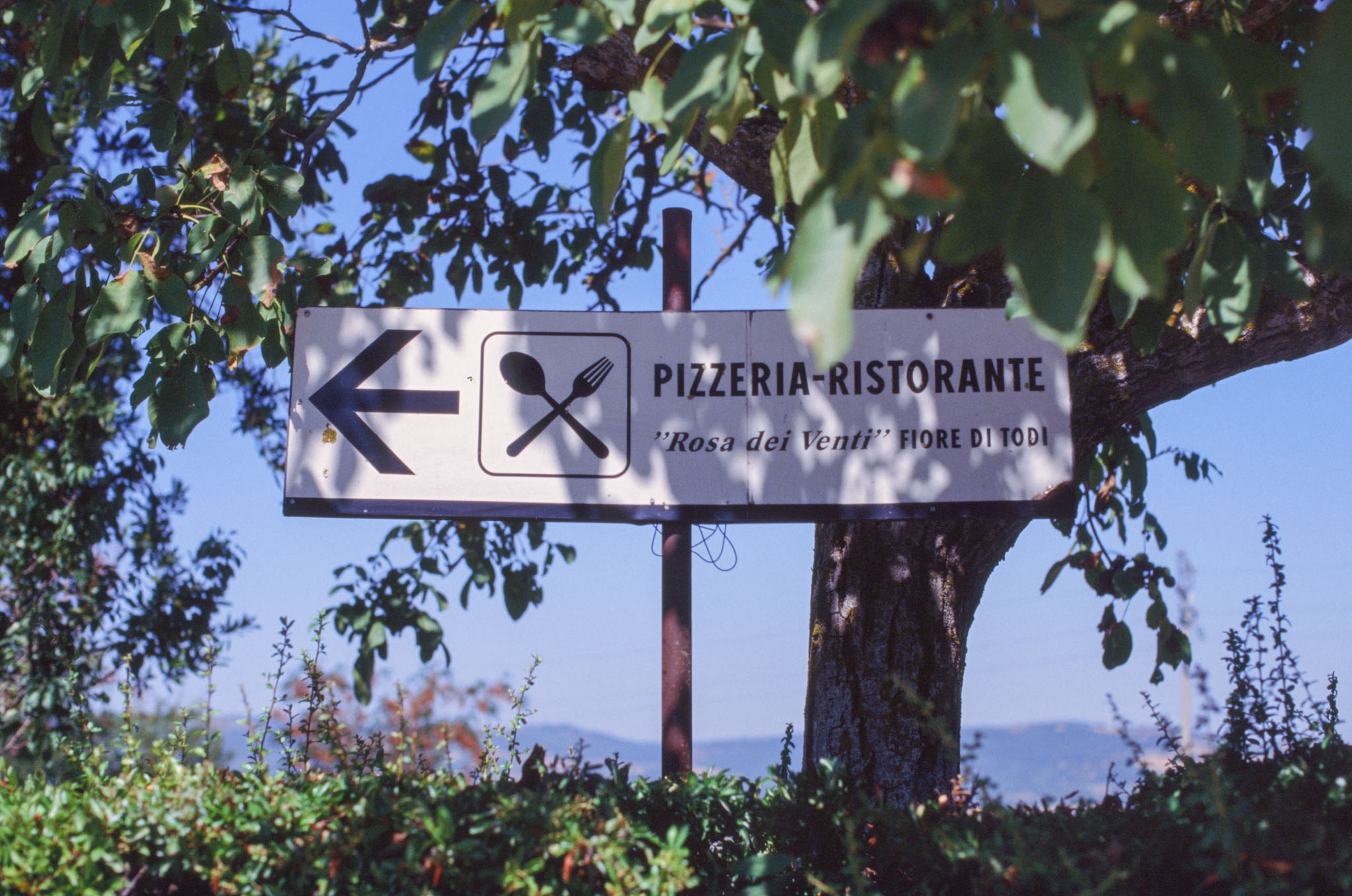

Canon EOS 1V – EF 50mm f/1.2L USM – Kodak E100
The Suitcase
It was half-way through the trip before I even opened the suitcase full of arguably ‘better’ equipment, and this was only because we were going underground.
We were going to descend the Pozzo San Patrizio in Orvieto, and I wanted something wider and faster to use in the dark.


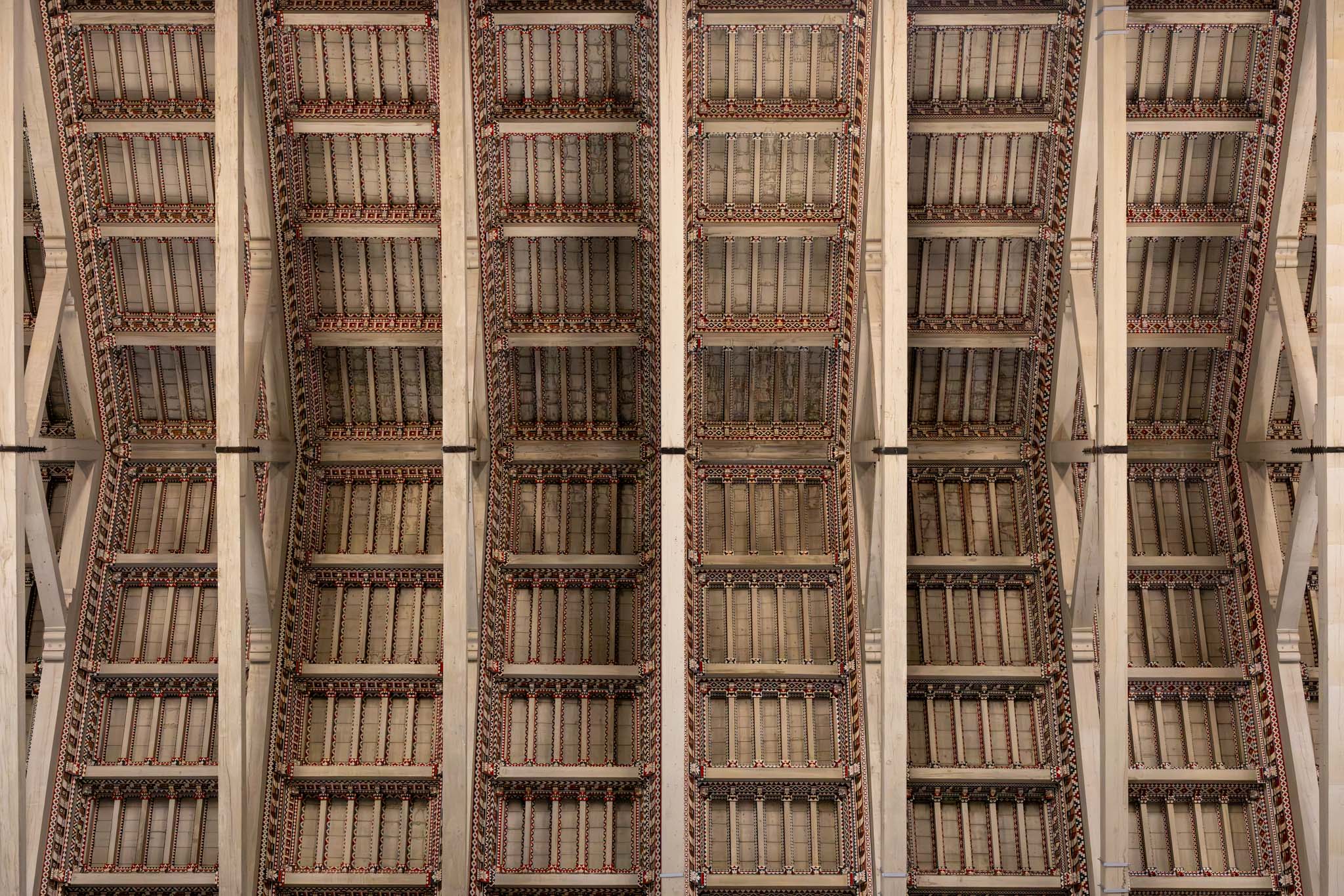

Canon EOS R5 – RF 50mm f/1.2L IS USM – RF 15-35mm f/2.8 IS USM
Heading home
The drive down had given us a chance to get to grips with the new nature of the drive. We knew that we would need at least as long as we’d had for the journey down, and that maybe having some very long days in the car could free up a rest day.
We made a stop on our way north at the Santiago Calatrava’s Reggio Mediopiana Station. I’ve passed this structure a few times but have never had the time to stop, and always felt like I’d have another chance.
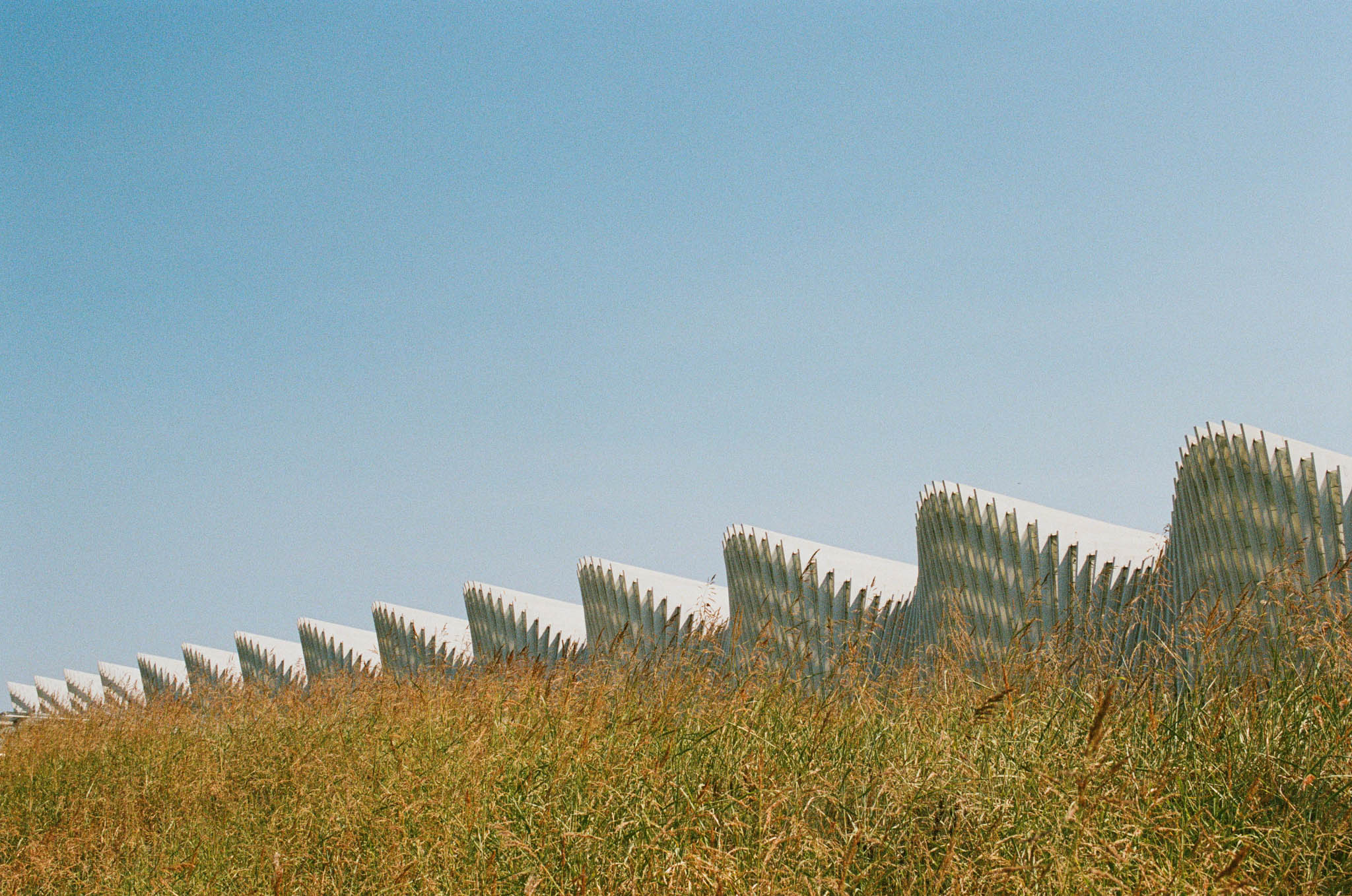
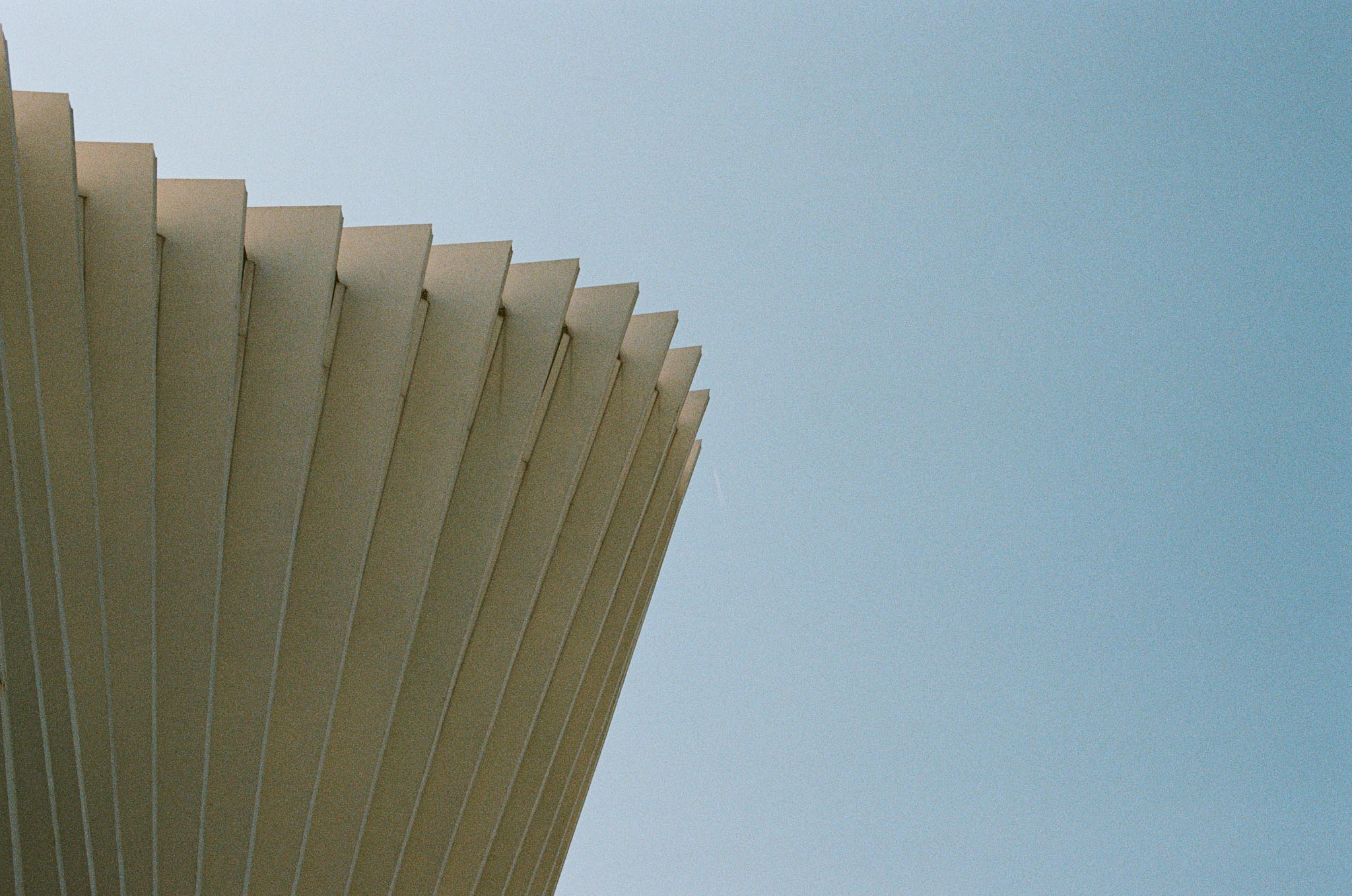
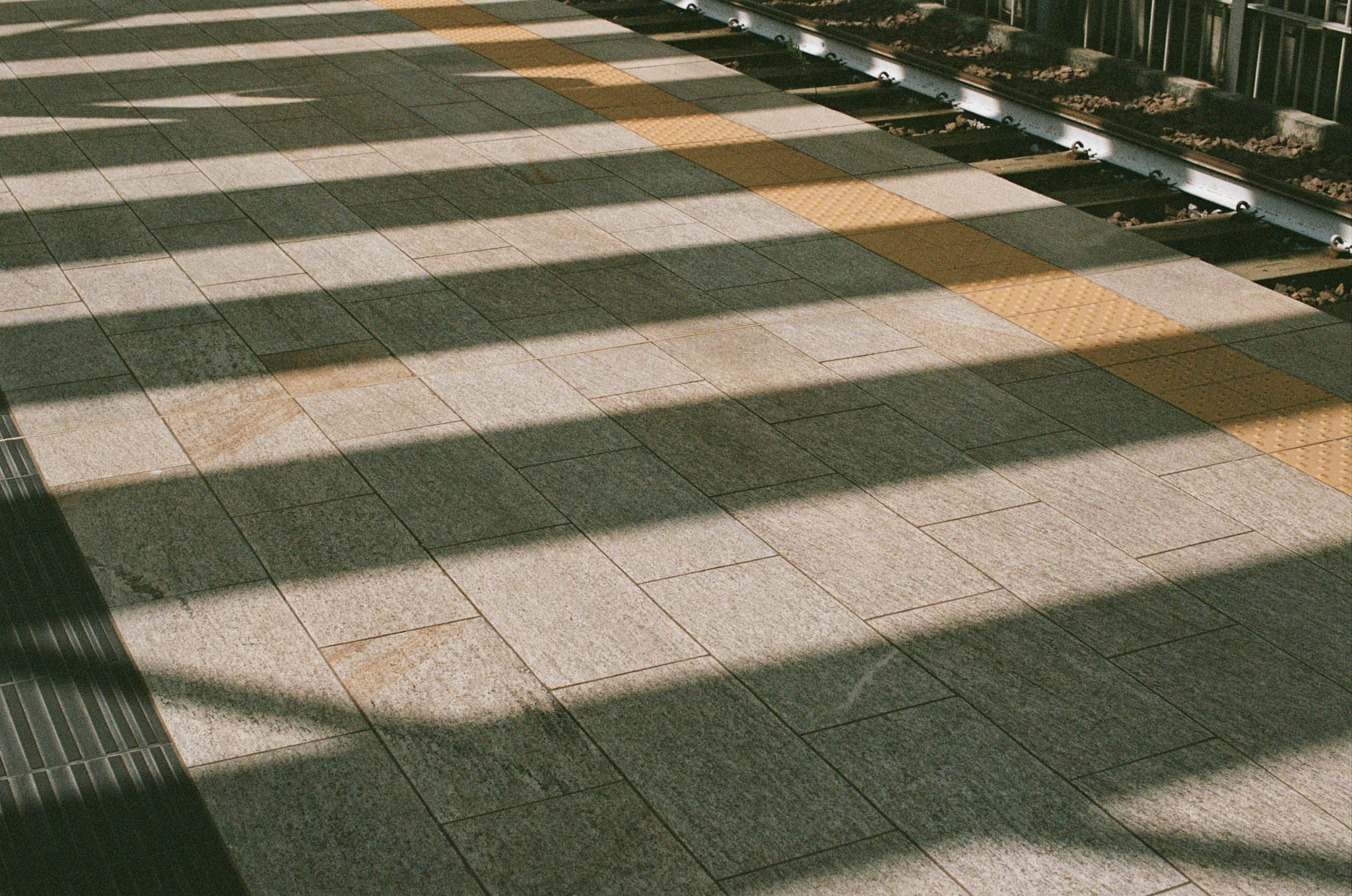
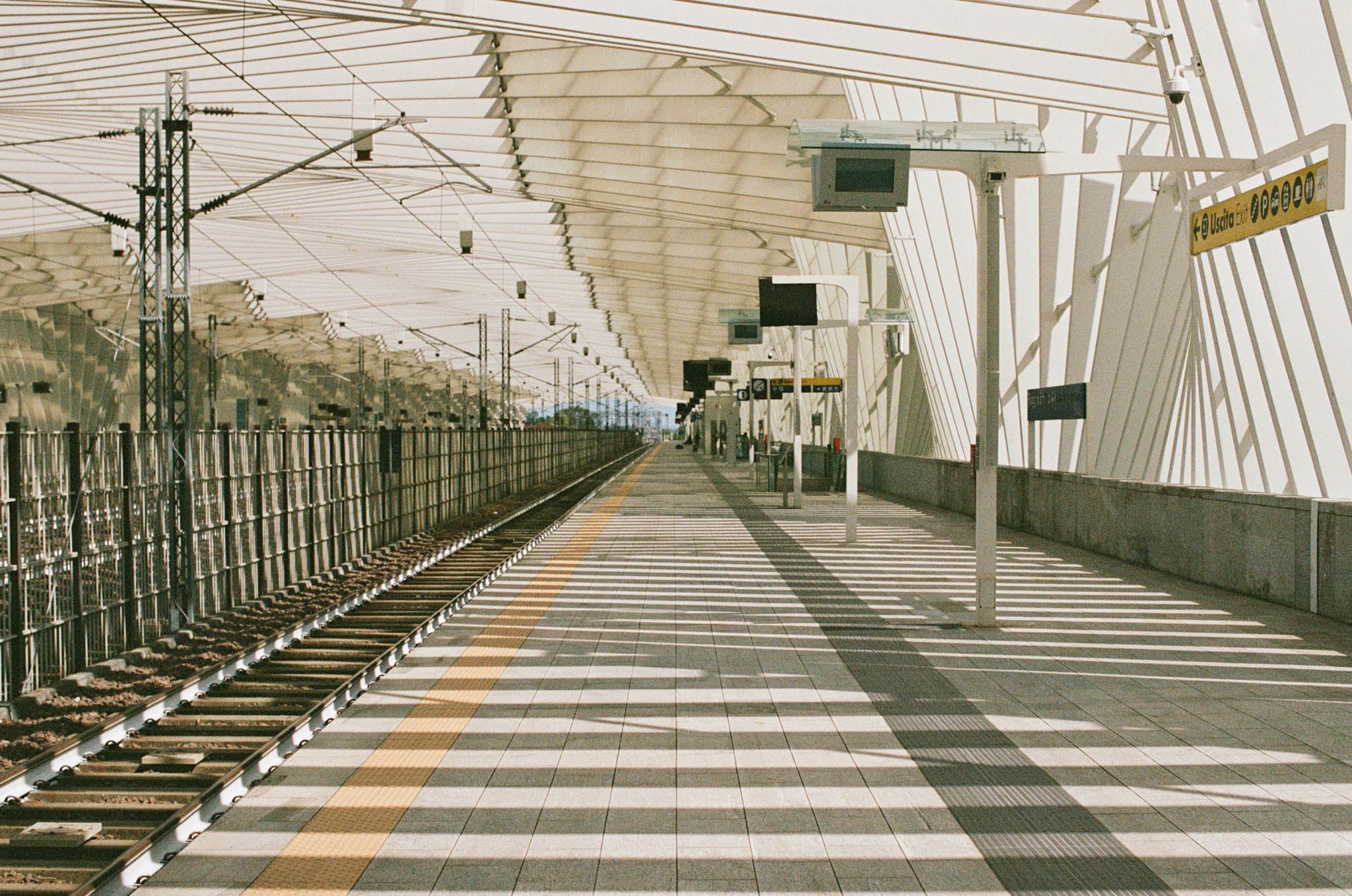
Canon EOS 1V – EF 50mm f/1.2L – Kodak Portra 400
I could have extracted the R5 and some lenses from the case in the boot, maybe even the tripod too, but it was too damn hot, one of the interns was asleep, and we had a fair way to go before we got to our campsite.
I just went in with the 1V and the 50mm and explored for 15 minutes. Then it was time to get back on the road.
A long day gave us the chance to spend two nights at the campsite in Como, where I was pleased to re-meet Nikolo. It also gave us a morning in town to chase down gelato and toy shops before the kids hit the pool. I also made my last panorama of the trip.

Piazza Del Duomo – Como – Fujica G617 – Kodak Portra 400
Last Legs
As if to illustrate the challenges of actually seeing things on a road trip like this, we stopped at Ouvrage Schoenenbourg on our way home.
I was keen to see a second Maginot Line fortification having stopped at one of the smaller ones in the years pre-intern. I thought that Intern No.1 would get a kick out of being underground (and the guns, he’s nine) and so we made our way there after breaking camp.

The fort was pretty astounding, over a kilometer of galleries up to 30m below ground. It was home to up to 600 men and could operate for 3 months without resupply or reinforcement. Featuring an electric train that could ferry men and supplies from the support area up to the six combat blocks, it would be an impressive achievement if constructed now.
At no point did I consider getting one of the R5 bodies out of the case in the boot and taking it down with me. By then I was enjoying the 1V so much that it didn’t even cross my mind. Variable ISO, a focal length wider than 50mm and image stabilisation would all have been really useful down there.
It was a little cold in the tunnels and Intern No.2 wasn’t that interested in the tunnels (or the guns) and so went outside to eat biscuits.
I was torn by the desire to see as much as I could tempered by the need to get back on the road. By the time we’d walked the length of the fort and made our way back to the outside, it was midafternoon and we really needed to get under way.
Nobody wanted to put the tent up again, and between a squall of grey rain and the fact that it was our last night away, we finished our tour in a hotel.
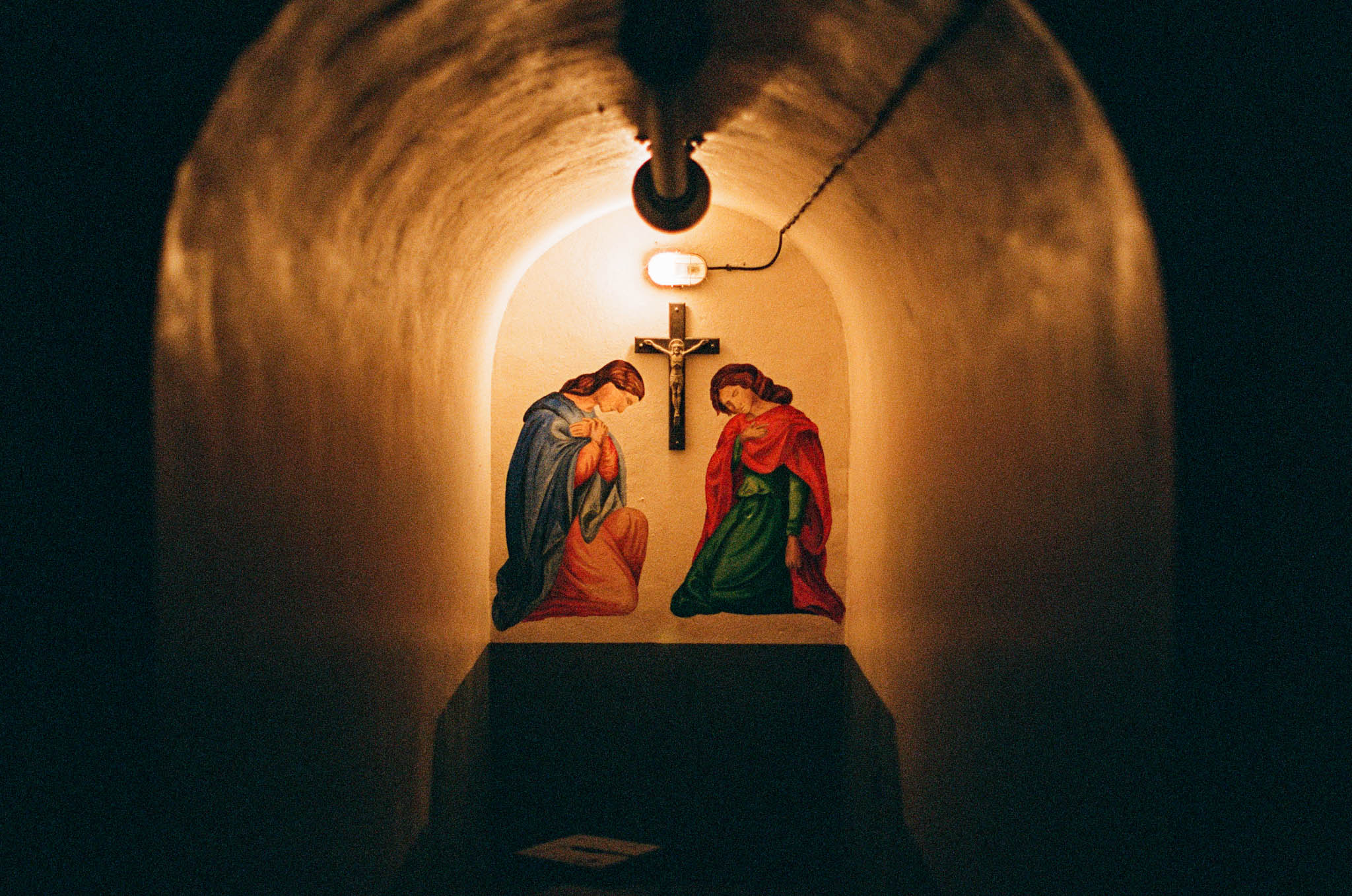
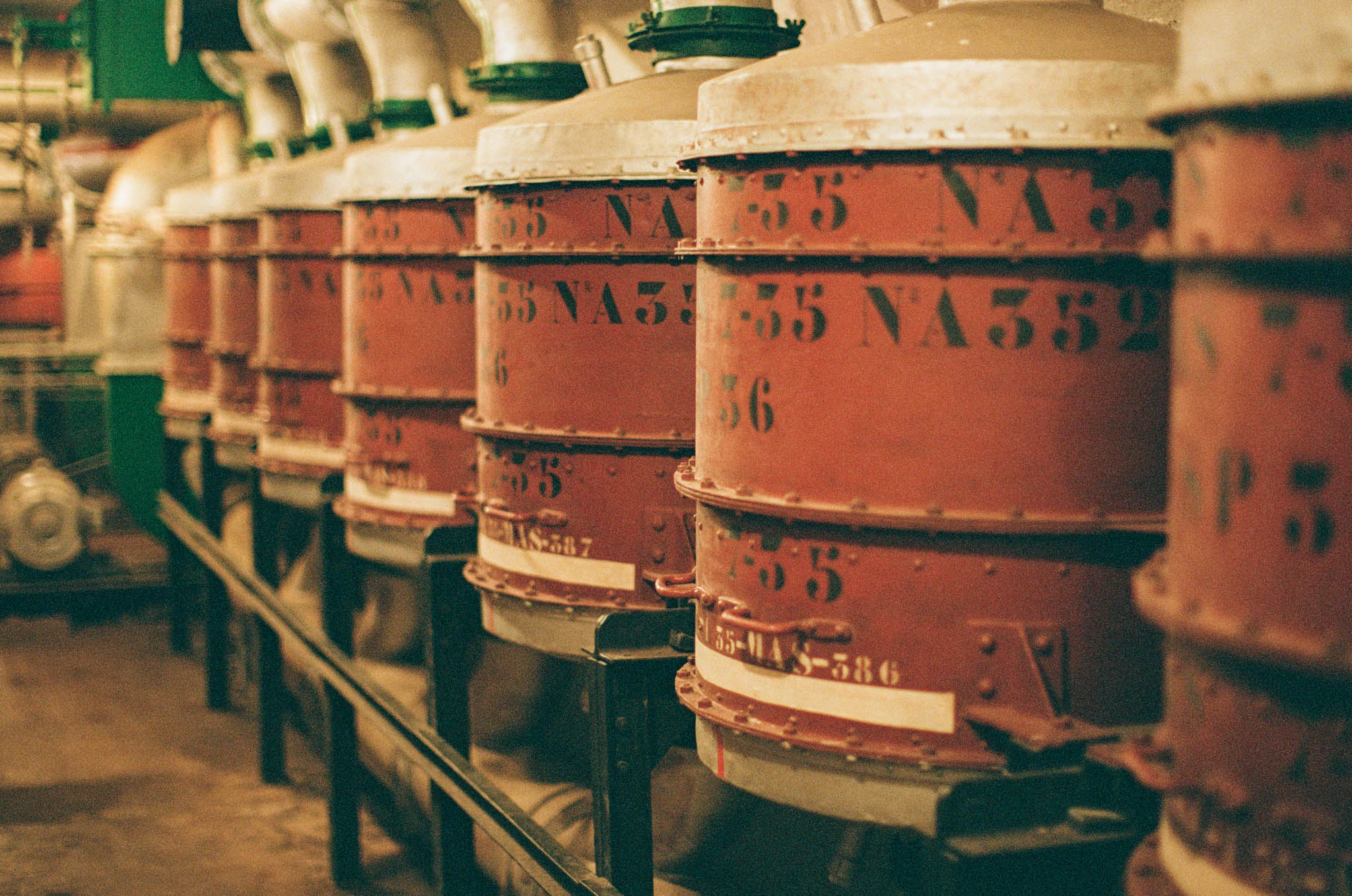
Canon EOS 1V – EF 50mm f/1.2L – Kodak Portra 400
Conclusions
The trip was a good one, even if we were frazzled, sandy and ready for a holiday when we got back. Everyone went into their own space for a bit and enjoyed a little freedom from diplomacy and groupthink.
I think we’ll fly next year, to do the journey justice we’d need to spend over a week doing the driving which is still too long in the car, and too many campsites. (I can see an air-tent in my future.)

Canon EOS 1V – EF 50mm f/1.2L – Kodak Portra 400
The wait for the scans was a hard one, I was so keen to see what I’d made that I booked express development and paid for special delivery to the lab.
I had been worried that my film stash had seen some heat during the summer heatwave, and could have been further baked in the boot of the car on the drive down.
(I did a fair amount of grocery shopping with a very heavy bag on my back so that the cameras didn’t melt in the car).
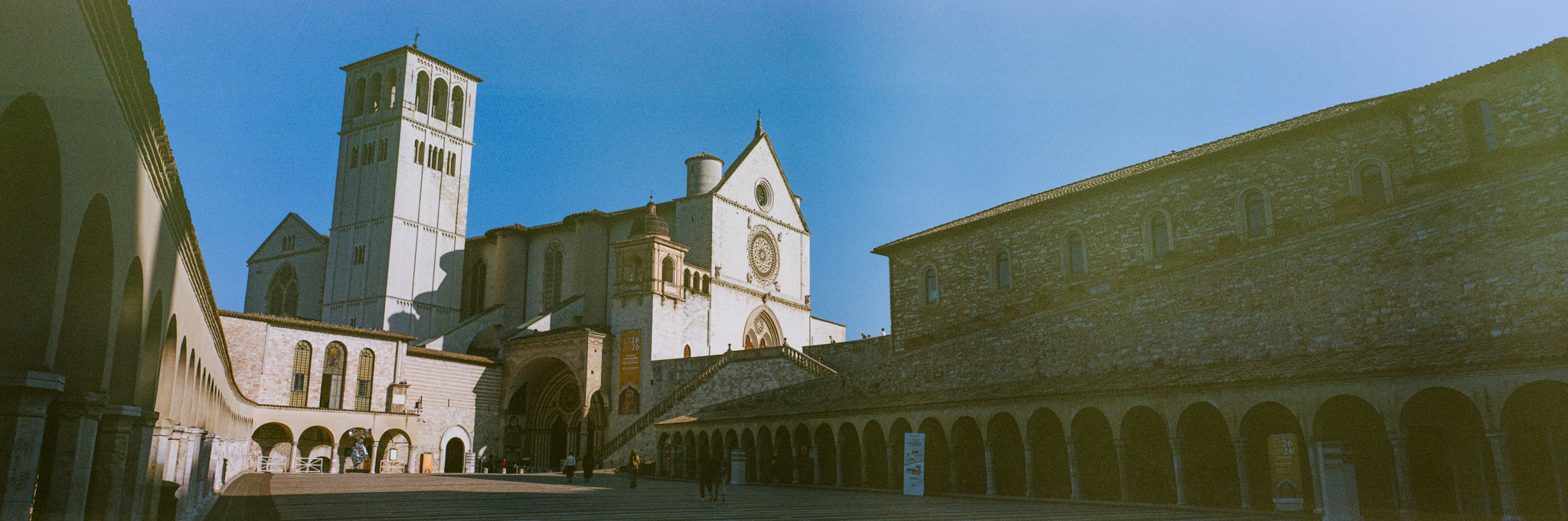
Basilica di San Francesco d’Assisi on a slack roll of Portra 400
After the punctured bellows incident in 2016, this is the second time I’ve made large fogged images of the Basilica…
I shot four rolls of Portra 400 in the G617, three in the EOS 1V, plus a roll of Kodak E100 in the 1V.
Two of the rolls from the G617 were heavily fogged by slack in the roll. This was half my crop of panoramas and it made me want to be sick in a bin. I resolved that seven keepers from 16 frames is still a better keep rate than I usually manage.
Not sure how I introduced the slack as I learned the hard way about tensioning 120 film with my GW690. I’ll have to have a go with a test roll and see if I can replicate the failure.
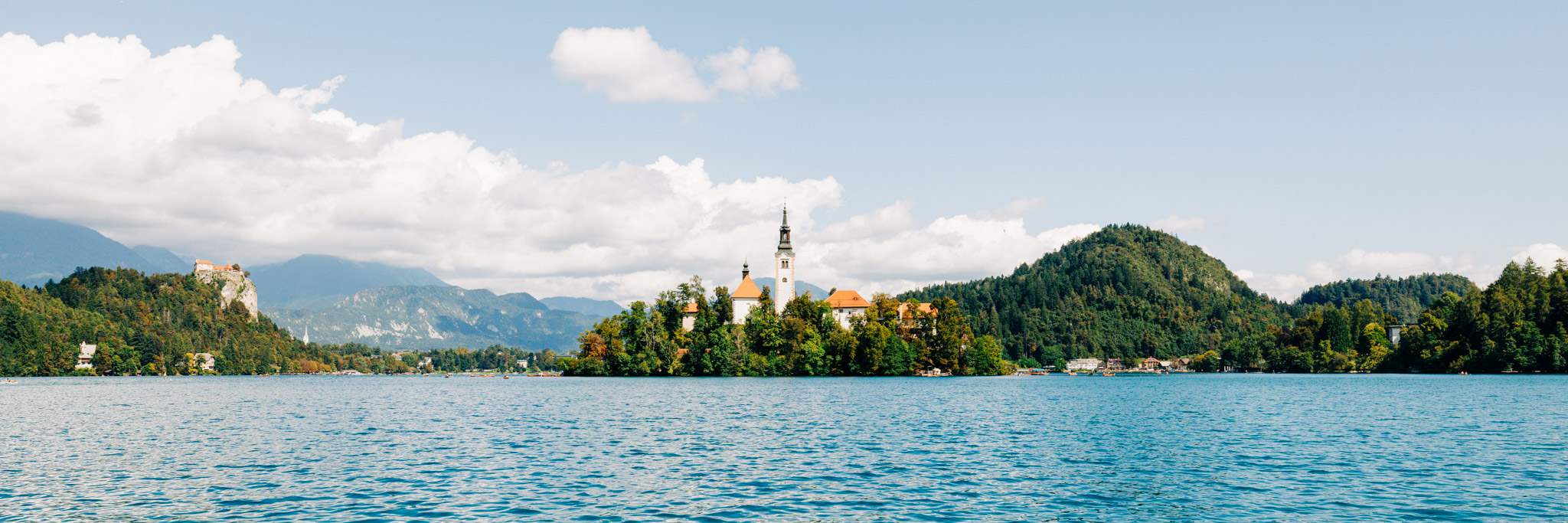
Lake Bled, Slovenia – Canon EOS R5 – RF 15-35mm f/2.8L
The EOS 1V is at least for now, my favourite camera. Love the images, love shooting it, it has re-kindled my love of 35mm film.
For the fifth or sixth year in a row I’ve spent too much money making pictures of my summer holiday. I could have made the panoramas with the R5 and a wide-angle lens, (I proved this last year in Slovenia), and could have had greater flexibility while underground in France.
The thing is, sometimes it isn’t about the pictures.
It is when you’re calling the lab to chase the scans so you can see what you made, that bit is all about the pictures.
But the making part, that’s about being in the moment, about the ease and speed (with the 1V) or the meditative slowness (with the G617) that permeates your being and keeps you in the moment.
With no screen to check and a cost implication, you’re careful, available and present. You can’t connect via wifi and tweak the images in Lightroom Mobile, you can’t share a blow by blow account of the holiday (that’s what phones are for).
You’re there watching the photo take shape in front of you, waiting for a bin lorry to move, or the tour guide to stop outside of the frame, or for the light or for a smile.
Rockwell Moment
I don’t have affiliate relationships but it might be useful to know that my Fujica G617 and my EOS 1V came from London Camera Exchange and the film came from Analog Wonderland (who also developed and scanned it).