
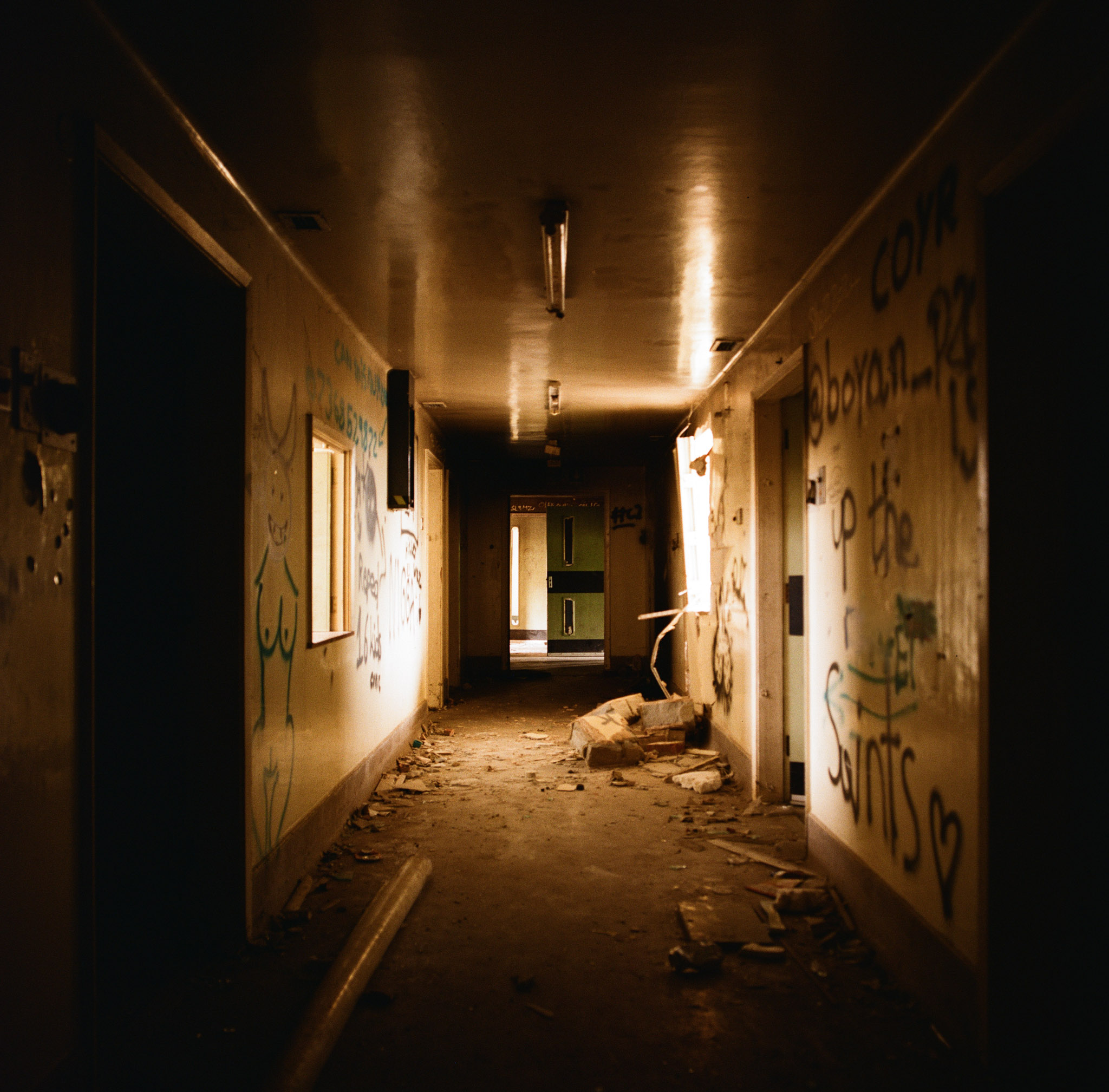
Hallways of Always
Hasselblad 503CX / 50mm f/4 Distagon T* / Kodak Gold 200
A few weeks ago some friends and I went off to explore a derelict site in Gosport. I took my Hasselblad because it’s lovely and it hasn’t seen much action of recent. Regular readers will know that underuse of cameras makes me feel guilty.
I was also eager to see the 6 shots that were trapped inside it, so getting the roll finished would be a boon in itself.
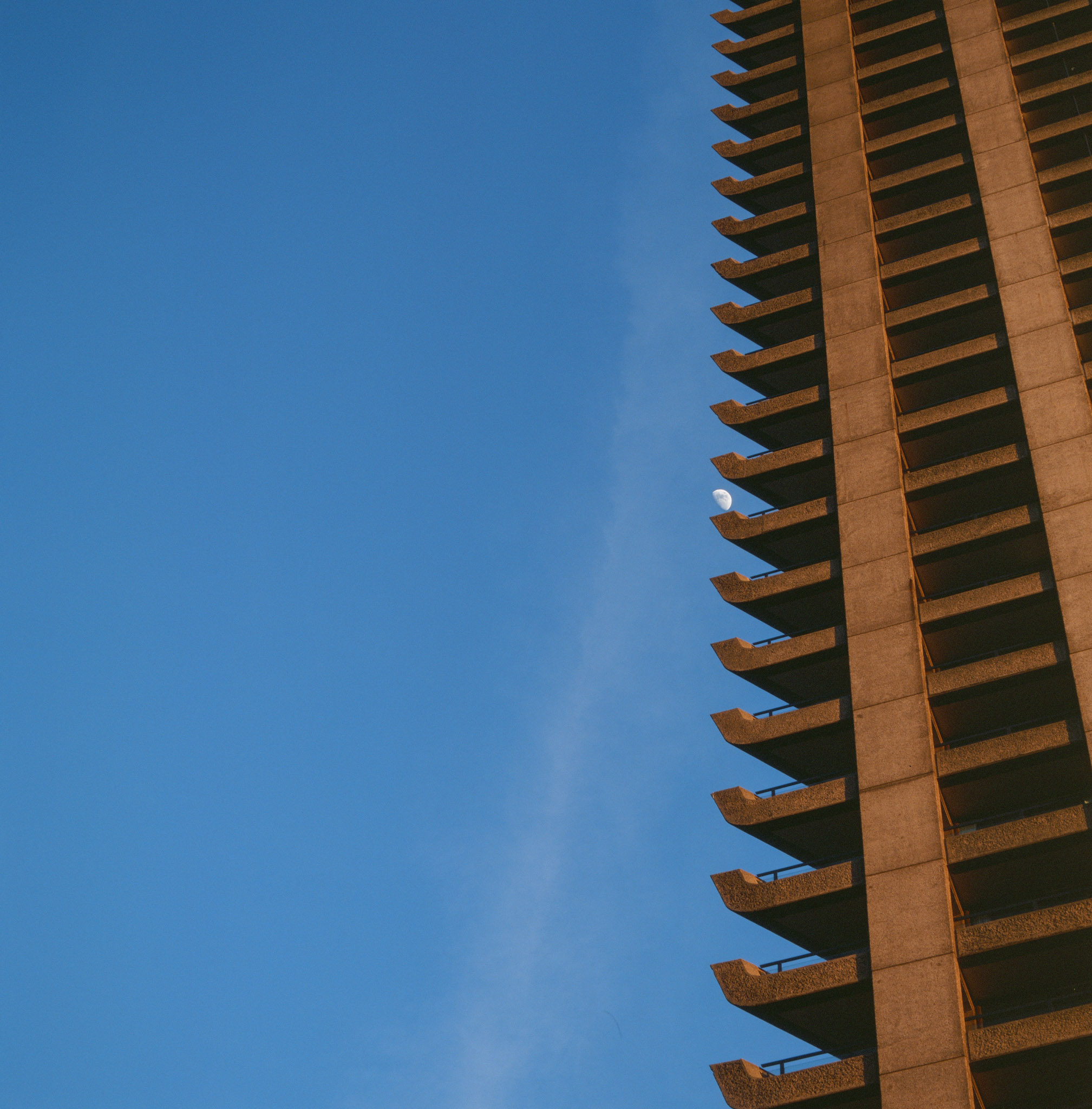
Moon on a Barbican
Hasselblad 503CX / 120mm f/4 Makro Planar CF / Kodak Ektachrome
The Hasselblad, (mine is a 503cx) has been on adventures over the last 12 months as an also-ran. It went to the Barbican last April but only got to play after the EOS1, Tachihara and the Panorama camera had shot their shots.
The Hassy also went out to Avonmouth on a coffee and film mission and got to play a bit, but I also shot the Panorama and EOS1, (this is where the six trapped frames were made).


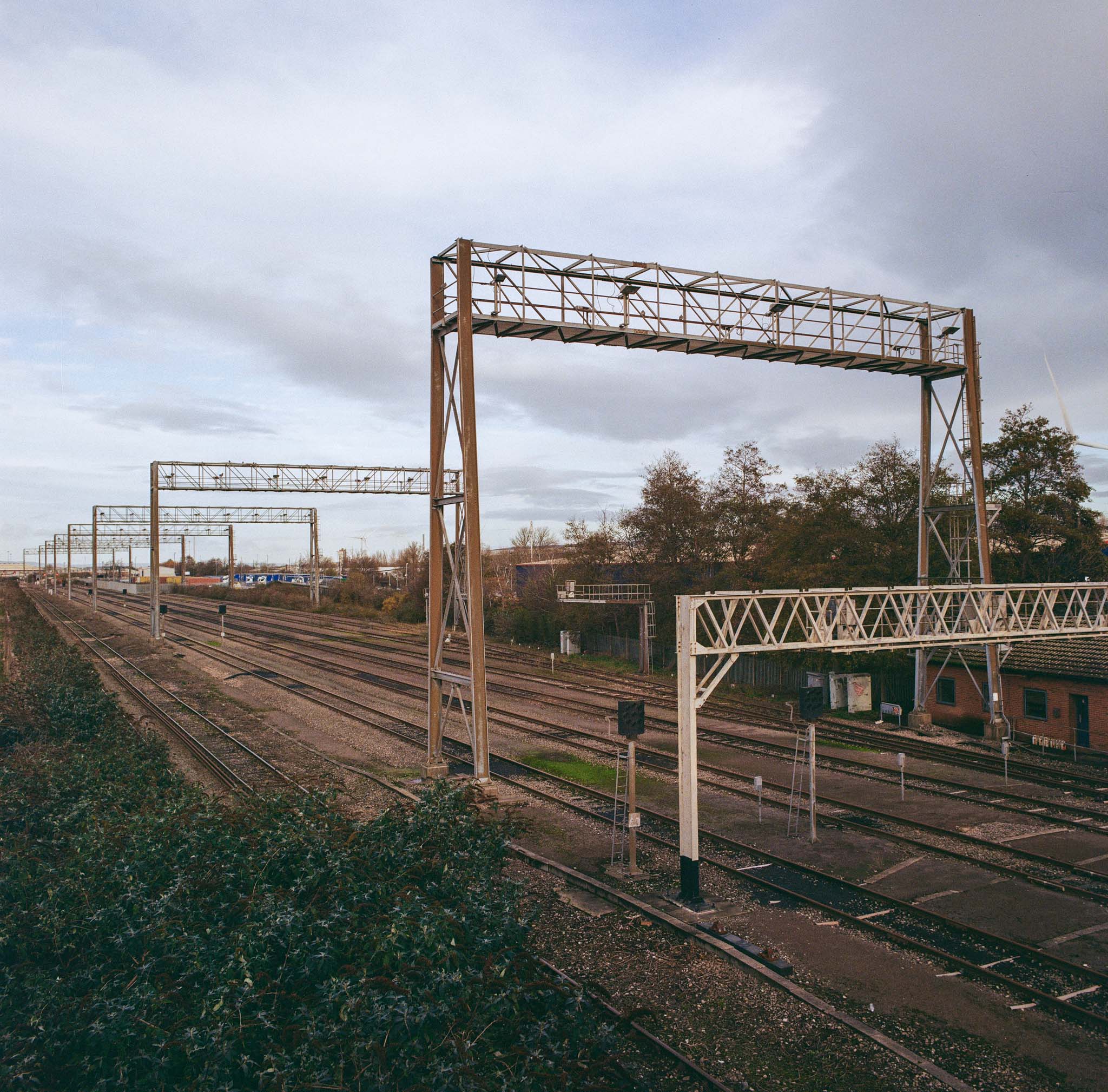
Avonmouth
Hasselblad 503CX / 50mm f/4 Distagon T* / Kodak Gold 200
Old Faithful
I’ve had the Hasselblad for a long time, I got it in 2013 and plan to own it forever. After a lot of action in the first five years or so I’m aware that I’ve started taking it for granted.
It’s on the shelf, being beautiful and well designed and optically awesome. I have a waist level finder, a metered prism, the three lenses I want, and a couple of backs for it.
In the 12 or so years that I’ve had it it’s ousted a Weltaflex TLR and Bronica ETRSI that I got before it and has outlasted a Mamiya C330 and two Fujinon GW690s that I bought since.
When the time came for the mission to Gosport, I packed the full Hassy kit, and then added the Pano and the EOS1 as afterthoughts, because who knows what you’ll find.

Hasselblad 503CX / 50mm f/4 Distagon T* / Kodak Gold 200
Site Specific
The site we were visiting was an MOD facility run by QinetiQ where goats were exposed to high pressures in hyperbaric chambers and/or deep water. They were essentially given decompression sickness.
While the experiments were intended to make submariners and navy divers safer, they were understandably met with significant resistance by animal right campaigners.
The experiments were suspended in 2007 when the MOD agreed that they had learned as much as they could from animal experimentation. They’ve since moved to computer modelling for further insight. This site closed in 2008, shortly after the experiments ceased.
In the 18 years since the site closed it has been roundly trashed. The tanks are full of rubbish, some of the ceilings have collapsed and almost all of the windows are smashed. There’s also evidence of multiple fires.
Dereliction has a sweet spot when it comes to photography. Too soon after closure and it looks like the people have stepped out for lunch, too long and the vandals and thieves will have stripped or smashed everything.
(Much of the destruction appears to have happened in the last five or six years by based on this report from 2020)


Witness Marks
I’m always looking for the witness marks that hint at the human/space interface. I want to visualise the time that has passed since the space was both social and productive. These elements tend to be more poignant and visually arresting in the sweet spot between the dereliction and the vandalisation. They become less visible as the destruction becomes a mask worn over the space’s original purpose.
The destruction of the space is also a witness mark, and no doubt the vandalisation was also a social affair, with people coming together to tag it, break it, and burn it.
The ease with which we gained access (once we found the hole in the fence and the well worn path into the site) stands testament to the amount of time the site has been open to those in the community who wish to go there.


Hasselblad 503CX / 50mm f/4 Distagon T* / Kodak Gold 200
A social affair
It’s intriguing to think that the act of travelling there to document the site’s derelict state, through the mask of its vandalisation was also a social experience, laughing in the car on the way down, finding our way in, choosing the parts of the site we wanted to photograph were all fed by the site, and were responses both to the site and the state we found it in.
Shooting it on the Hasselblad was a joy. The Hassy has the visual confirmation of focus that the pano lacks, and is more free than shooting the large format Tachihara. Being able to take time and think and look, and the simple pleasure of shooting square made me wonder why it’s been so long since the Hassy and I made images together.

Through the Viewfinder
iPhone 17
Conclusions
As is so often the case, the act of shooting a camera reminds me why I own it and makes me want to shoot it more. I spent the entire day shooting the 50mm f/4 Distagon, a lens which I occasionally consider parting with, and am once again fully committed to.
I’m not sure if the metered prism is working correctly, so when I do go out with it next I’m going to go back to using a spot meter, just to see if it improves my hit rate.
I’m also considering a return to Kodak Portra after a few years of almost exclusively shooting Kodak Gold 200 in medium format. Gold is just a little warm and after 20 rolls, I may be ready for something a little cooler, even if my bank balance isn’t.
No doubt I will be writing about another camera in the near future, and will return, guilt-ridden to the Hasselblad in 18 months time, lamenting the lapse in our partnership. Until then shooting the Hasseblad more remains my priority, (not least because I returned from Gosport with a different 6 images trapped in the back of the camera).
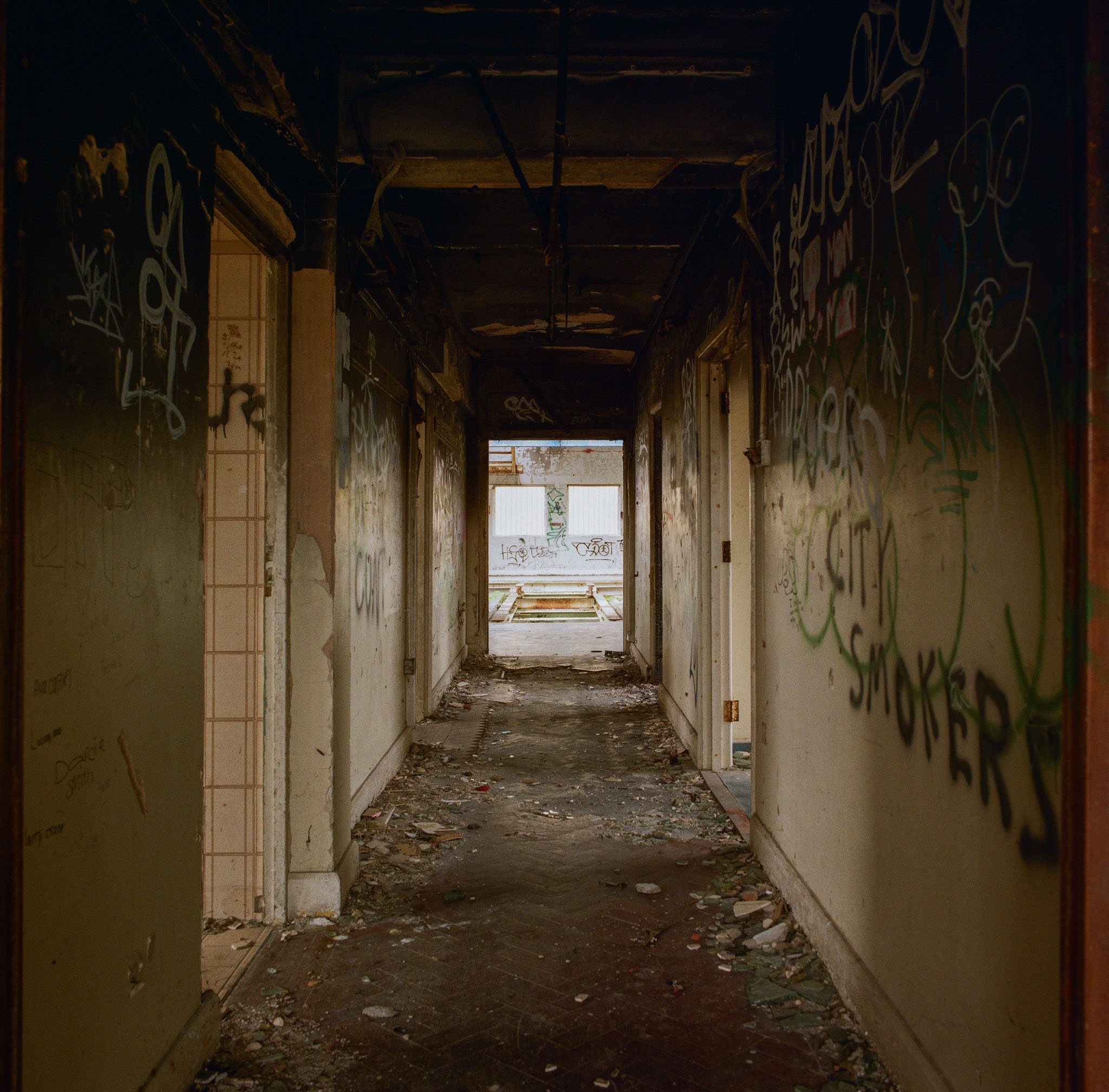
Hasselblad 503CX / 50mm f/4 Distagon T* / Kodak Gold 200
Rockwell Moment
I don’t have affiliate relationships but it might be useful to know that my Hasselblad gear came from London Camera Exchange. The Kodak Gold 200 came from Analogue Wonderland who also developed and scanned the negatives.