
Canon EOS 1V – EF 50mm f/1.2L USM – Kodak Portra 800
One Man
There was a night back in April of 2013 when I was up late bidding on eBay. I wanted a new film back for my Bronica ETRSI*. The film back I had my eye on was a fairly rare ETR 135W, these were horizontally loaded with 35mm film (as opposed to the camera’s usual diet of vertically fed 120). This meant that they could produce around 24 24x54mm panoramas on a roll of 35mm film.
That night we’d had a house party, I was a little the worse for drink and I was winding down before going to bed. I had a well-established Bronica set up at the time, and although the new back was going to be expensive, I really wanted to shoot panoramas. (Given how costly other panoramic options were, this seemed like it would offer good value.)
As the end of the auction drew closer, I was in the lead and began to get excited, this was going to be ace, hang the expense –
3… 2… 1…
Outbid at the last second.
I couldn’t believe it.
*The ETR series were modular 6×4.5cm SLRs whose production ran between 1976 & 2002.

Canon EOS 1V – EF 50mm f/1.2L USM – Kodak ProImage 100
One Goal
Had I not been at least one sheet to the wind, I might have gone to bed grumpy, before moving on and perhaps trying again another day. I was however, feeling a little Rococo and decided to throw a low-ball offer in on a Canon EOS 1V out of childlike pique.
The next morning I awoke with a hangover and keen for the bears to stop fighting in my head. While I was tidying the kitchen with one eye shut I was surprised to receive an email confirming that my offer had been accepted. Accepted for what?

Canon EOS 1 w. EF 50mm f/1.8 STM / Canon EOS 1V w. EF 50mm f/1.2L USM / Canon EOS 1D Body
One Mission
This was a bit of a shock. I’d managed to accidentally secure a bargain price on a camera I only wanted tangentially. I paid the man his money and had to own up to my drunk eBaying. (This would not be the last time I spent too much money on a late-night whim.)
The EOS 1V (the V stood for Vision) was Canon’s flagship and final 35mm SLR**. They were launched in 2000 and remained on sale until as recently as 2018.
At the time, all of my digital cameras had crop-frame sensors. During my previous upgrade window I had decided that I couldn’t afford to go full-frame and upgrade most of my lenses. I therefore bought the best crop-frame camera that Canon made at the time.
This meant that I only had a few lenses that were full-frame compatible, the most useful of which was going to be a 50mm f/1.4, which lived on the camera while I had it. I revelled in the perfect exposure and focusing, and in the jump in depth of field control that came with the move to full-frame. It handled nicely and had great build quality, and produced some of the best 35mm negatives I’d ever made.
It taught me two things very quickly. Firstly, just because it feels like a DSLR, it doesn’t mean you can afford to shoot it like one. It was easy to forget that each push of the button was one of 36.
The second thing it taught me was that I needed to get a full-frame digital as soon as I could.
These days you can pick up a full-frame Canon DSLR for less than £300, but when I was making the jump there were only a few models to choose from, and none were cheap.
**A note for clarity, the EOS 300x was the final 35mm camera designed/launched by Canon. It was a midrange camera that they released in 2004 but then discontinued in 2007. The end of the 1V marked the end of an 83-year era of 35mm film for Canon.

Canon EOS 1V – Irix 11mm f/4 Blackstone – Kodak ProImage 100
One Heart
Later that year, at least partially based on my experience with the EOS 1V, I bought a brand-new Canon 5D MkIII with a 24-105mm f/4. It stung. At this point photography had become a side hustle and was starting to pay for itself, but it was still a big deal.
My first 1V got sold to help ease the pain of going full-frame.
I haven’t been without an EF mount SLR for much of the last 15 years. I ran an EOS 3 for a long time, an EOS 1N for a bit, and have been running the EOS 1 for the last few years.
The EOS 1N went because I owned it at the same time as the EOS 3. The EOS 3 got usurped by the EOS 1 for a number of reasons. Firstly the EOS 1 was in really nice condition, secondly it’s prettier than the EOS 3, and thirdly it had a feature that I really liked. A single central autofocus point.
Having to focus and recompose was a pleasant little frictive notch, a speed bump that conserved film while maintaining all of the other benefits of the top EOS cameras. I thought I was done.
And yet.

Canon EOS 1V – EF 50mm f/1.2 USM – Kodak Portra 800
One Soul
Given that I am a die-hard Canon shooter, someone who refrained from defecting even when he knew he ought to, and someone who’s a bit of a knob, it felt like I should have an EOS 1V.
It was the pinnacle of Canon’s engineering in terms of 35mm cameras. It has 45 autofocus points, a 21-zone metering sensor, a 1/8000th-second shutter, and can get up to 10fps with the optional speed booster, (it can shoot a roll of film in less than four seconds). A year after its launch its AF and metering system would find a second home in the Canon EOS 1D, Canon’s first Pro Spec DSLR.
Occasionally I would look them up on eBay, I’ve not been actively trying to acquire one but I always assumed I’d own one again one day. After all, if I could learn to exercise some self-control, maybe I could have the best of both worlds.

Canon EOS 1 – EF 50mm f/1.2 USM – Leica Monopan
One Solution
Having one central autofocus point might be useful for slowing me down, but focus/recompose does make for the occasional missed photo. When I was making the photo above, with my EOS1, I was at f/1.2 because I was under an overpass and shooting ISO 50 film. I didn’t have a lot of wiggle room. When you centre focus and recompose at f/1.2 it’s hard not to shift such a shallow depth of field, which is how I lost the eye contact in the picture above.
Admittedly this isn’t a use case that comes up often, I rarely shoot very contrasty ISO50 black and white film under an overpass, but in this case it would have been advantageous to have a focus point a little further out from the centre, (and perhaps to have been more careful).
It would be a bit of a stretch to use this one example as a good reason for an upgrade, but I’m willing to give it a try.

Canon EOS 1V – EF 50mm f/1.2 USM – Kodak Portra 800
One flash of light
This time I was not drunk, but I bought my second EOS 1V*** a few weeks ago. This one was also a bargain, one that meant I can afford to either fall in love, or have a brief fling and get it out of my system.
It’s ironic that in the period between owning each of my EOS 1V bodies I’ve owned a bunch of lenses that would have fitted it. I bought them after I sold the last one and then sold almost all of them before I bought this one.
The three I have left are the Irix 11mm f/4 because I can’t afford to upgrade to Canon’s RF 10-20mm zoom, (and occasionally I need something very wide for work). I have the EF 50mm f/1.8 STM that I’ve had for years, and the EF 50mm f/1.2 USM that I purchased illicitly just before Christmas, (further evidence that my impulse control could use a frictive speed bump too).
***I didn’t get one with the optional speed booster, known as the 1V HS. I mean, four seconds for a roll of film…

This camera is set up to print the roll number and a two digit identifier on the roll end.
The question is, what number should I have as my identifier?
Canon EOS 1V – Kodak ProImage 100
One Vision
The EOS 1V remains highly desirable, with low roll-count examples selling for three times the used value of the Canon 5d MkIII, the camera I sold my first 1V to buy. This one appears to have been manufactured in Oita in 2000, making it an early one. It’s on its 371st roll, and has therefore taken between 9000 and 14000 photos. The shutter is rated for 100,000, which means I might have 2500 rolls left in the shutter’s intended lifespan.
Using this one around 13 years after I used my last has been an interesting experience. I got through my first two rolls pretty quickly, which suggests I haven’t learned very much, but that could just be new camera excitement. There isn’t much here that I couldn’t have made with the EOS 1, EOS 1N or EOS 3, in fact, if I had just kept the EOS 3, or even the original EOS 1V I would probably have saved myself a fair amount of money…
One of the things that the move to digital did was force manufacturers to add more screens to their cameras. The EOS 1D that took so much from the 1V had three. These were primarily intended for reviewing images in the field and confirming control and card status, but a massive advantage to these screens was the ease with which menus could be displayed and navigated.
I actually own a Canon 1D. It was given to about about 10 years ago with a very dead NiCad battery and no charger. It has been looking down at me form a shelf in my studio as one of my few ornamental cameras. I’d forgotten it was up there.
Getting it down to look at it for the purposes of this post has absolutely not inspired me to research options that would enable me to test if the camera is still in working order. This would include not chatting to friends in the trade, and definitely not searching eBay.
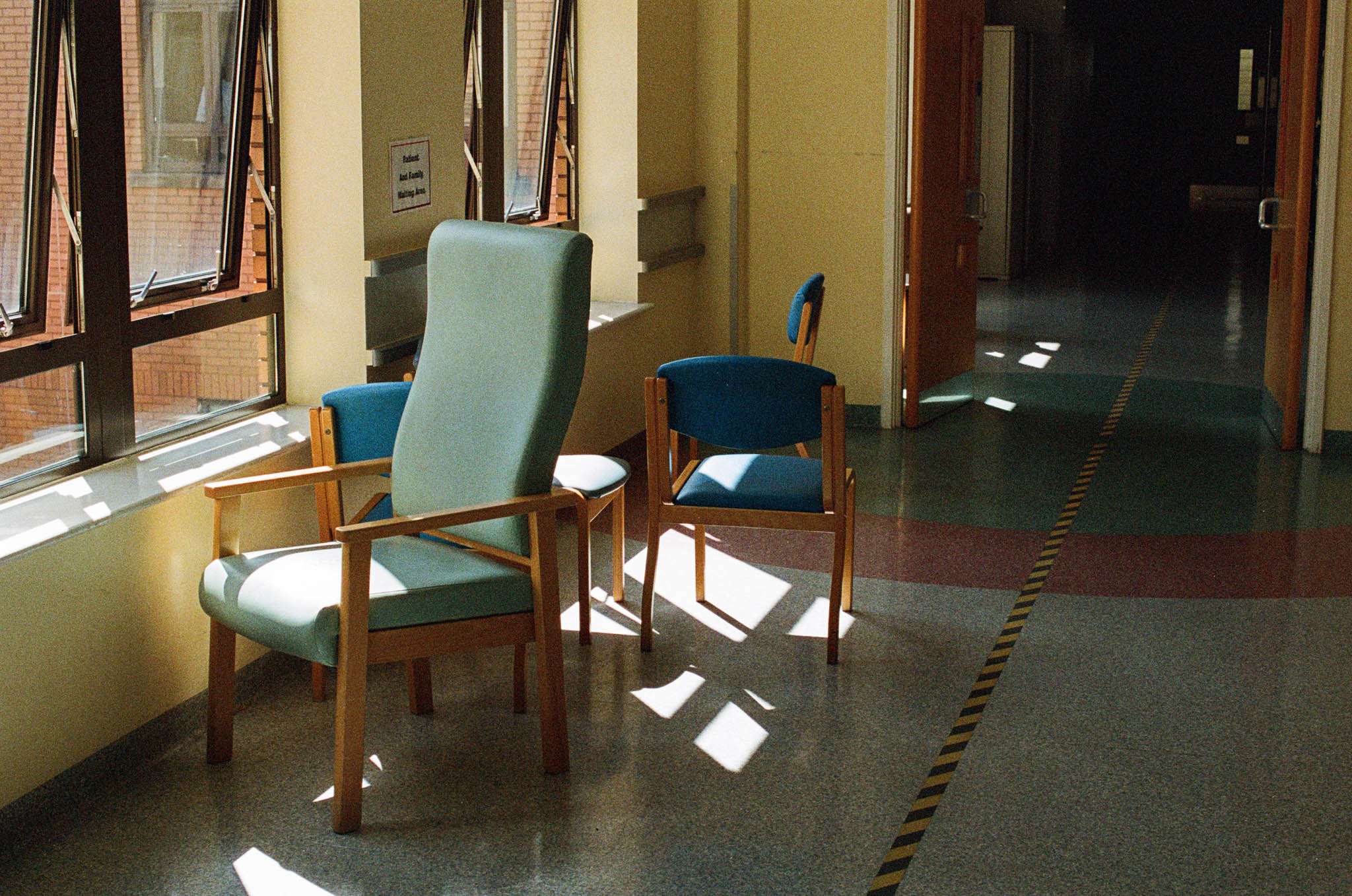
Canon EOS 1V – EF 50mm f/1.2 USM – Kodak Portra 800
Delving into the custom functions in the 1V enables you to control a significant number of variables beyond those you can adjust with the main controls, but this is at the expense of remembering which of the 14 custom functions does what.
There are a lot of centralised subjects in these photographs, which belies my suggestion that I need more AF points and also underline how hard I find changing the focus point in the field. It is not intuitive and neither has it become second nature.
Camera operating systems and the plethora of options that reside within their nested menus have perhaps lost their way in the interim period, (Hasselblad are currently winning the UI battle) but using this camera is a useful reminder of the ease that joy-sticks and touch screens have bought to camera operation.

Canon EOS 1V – Irix 11mm f/4 Blackstone – Kodak ProImage 100
Whoa, whoa, whoa, whoa, whoa, whoa
The house photographed above is one that I’ve passed many times over the last few years, and each time I’ve passed it I’ve wanted to photograph it. It’s always had something a little ‘American Gothic” about it.
It recently began to sport some steel plating over the windows. This suggested it was no longer inhabited. An initial recognisance a little late in the evening for the ProImage 100 I had loaded, proved this to be the case. I bought some 35mm Portra 400 and 800 in time for a second visit.
As mentioned in my previous post, when I bulk bought Portra I only bought 120. When I took that step it was partly because I couldn’t afford to buy 35mm at the same time. It was also because I’ve been gradually deprioritising 35mm film. Not particularly deliberately, but drive to engage with the Hasselblad and the G617 has pushed me in that direction.
Inspired by a special offer, and a newfound excitement for 35mm I’ve since bitten the bullet and ordered 10 rolls of Portra 400, it stung, but I now have Portra in all formats (bar 4×5) to keep me going for the foreseeable future.

Intern No.1 celebrates a work anniversary – Canon EOS 1V – EF 50mm f/1.2 USM – Kodak Portra 800
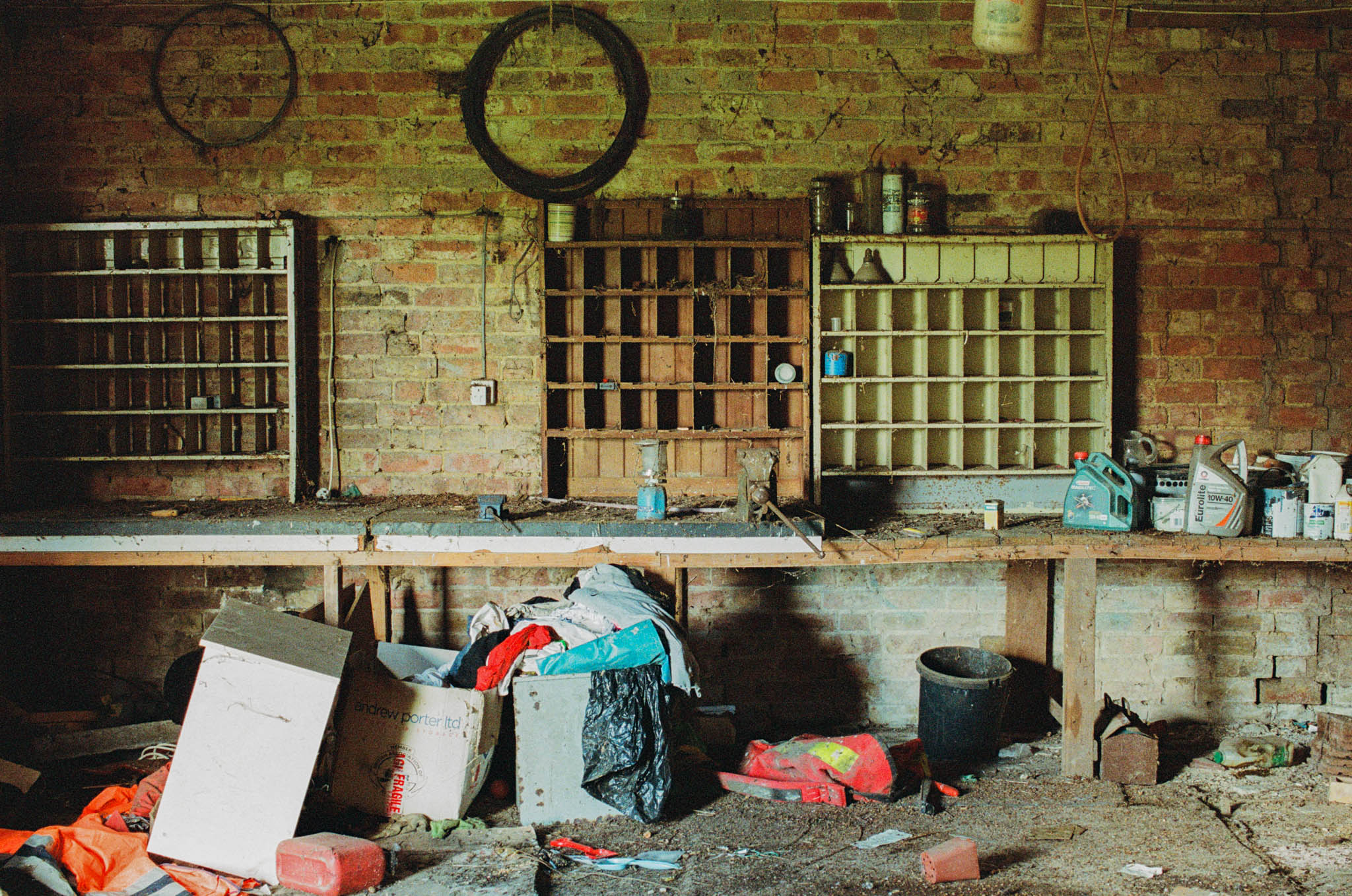
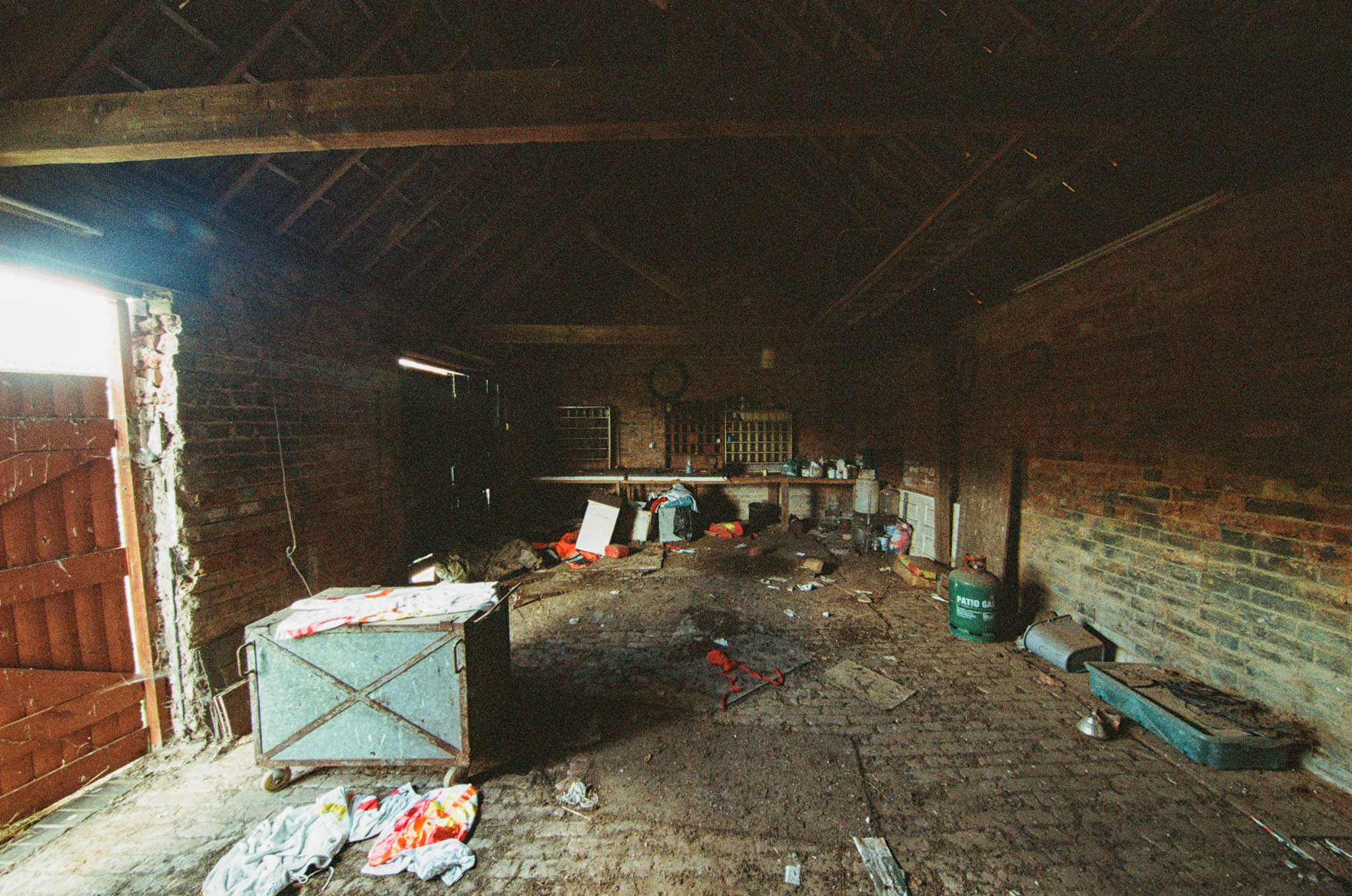


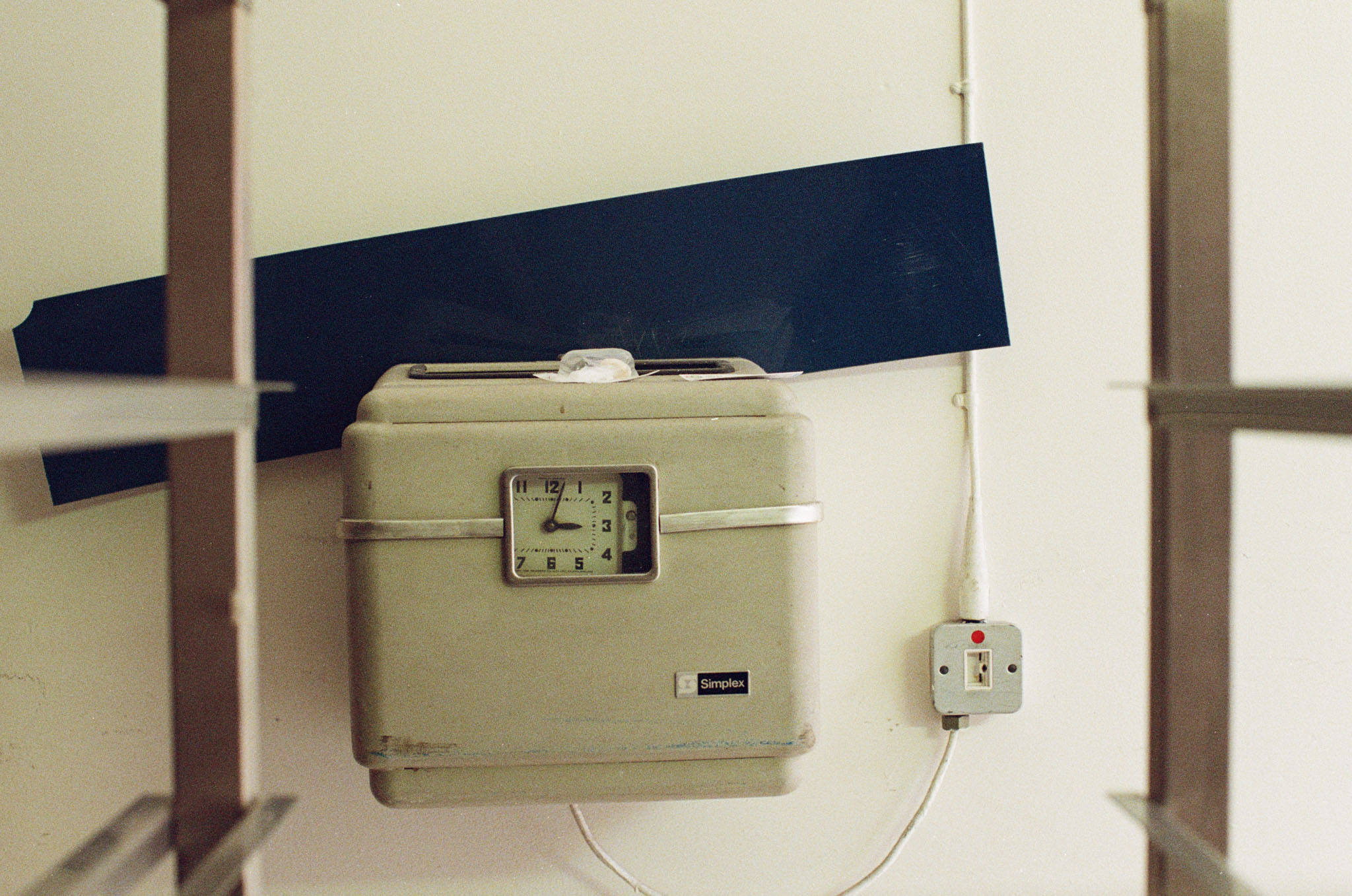

The 1V is a pleasant and well built Swiss Army knife of a camera. Alongside taking it on shoots it’s been everywhere with me, and feels feel like a very workable everyday kind of rig (aside from the weight). Focus is faster than the EOS 1 which is useful when photographing fast-moving interns, and the metering has been bob-on throughout.

ScarePigeon – Canon EOS 1V – EF 50mm f/1.8 STM – Kodak Portra 400
When the time came to shoot my third roll with the camera I decided to shoot it with the EF 50mm f/1.8 STM rather than the f/1.2 to see whether ‘adding lightness’ would improve my general experience. Focus remains fast and image quality remains pretty good, but I absolutely prefer the results from the f/1.2.
The 1V is heavier than the EOS 1 so the weight saving doesn’t feel as pronounced. I can envisage a future where the EOS 1 lives with a 50mm f/1.8 on the front and the 1V rocks the f/1.2.
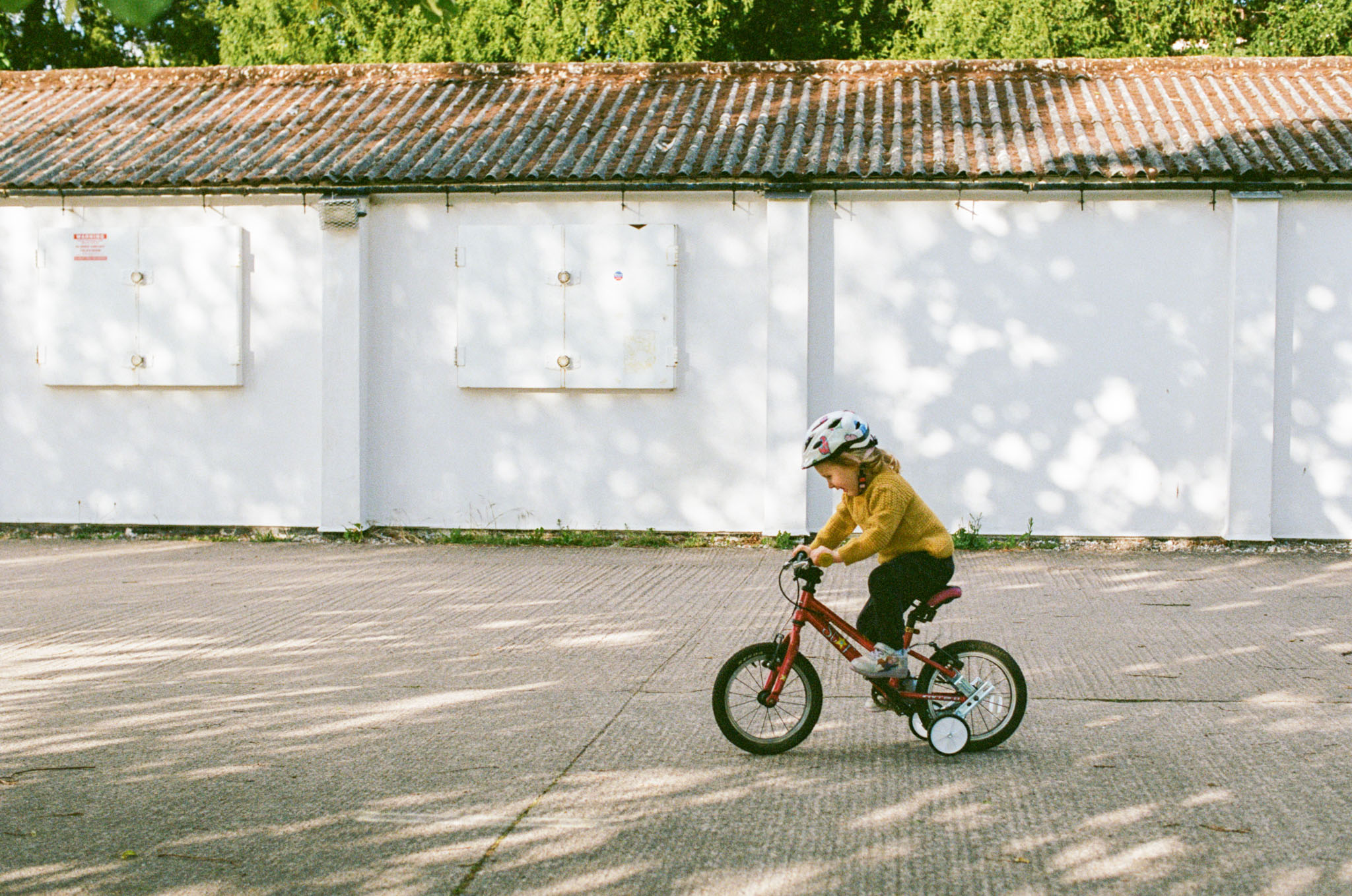
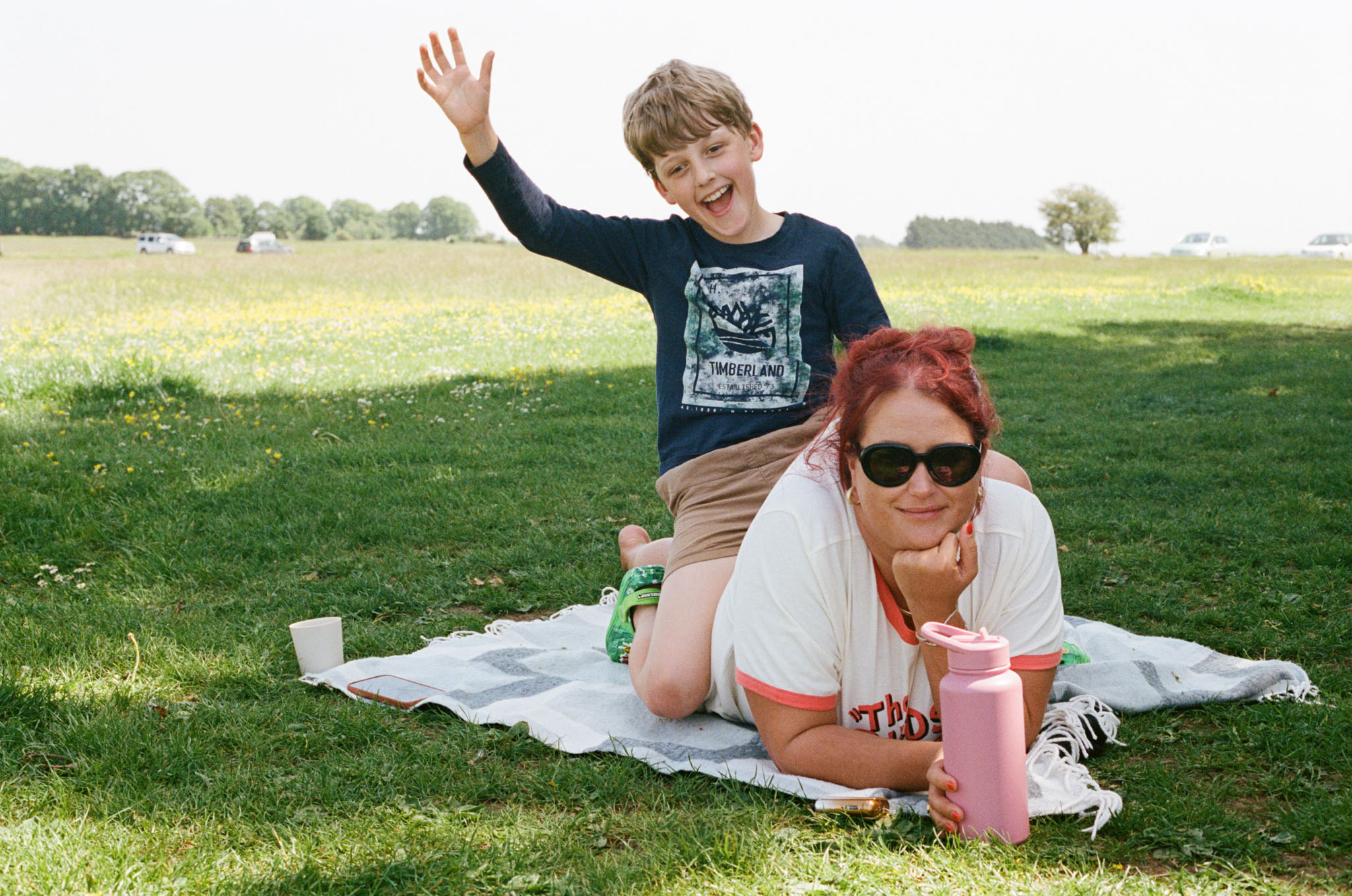

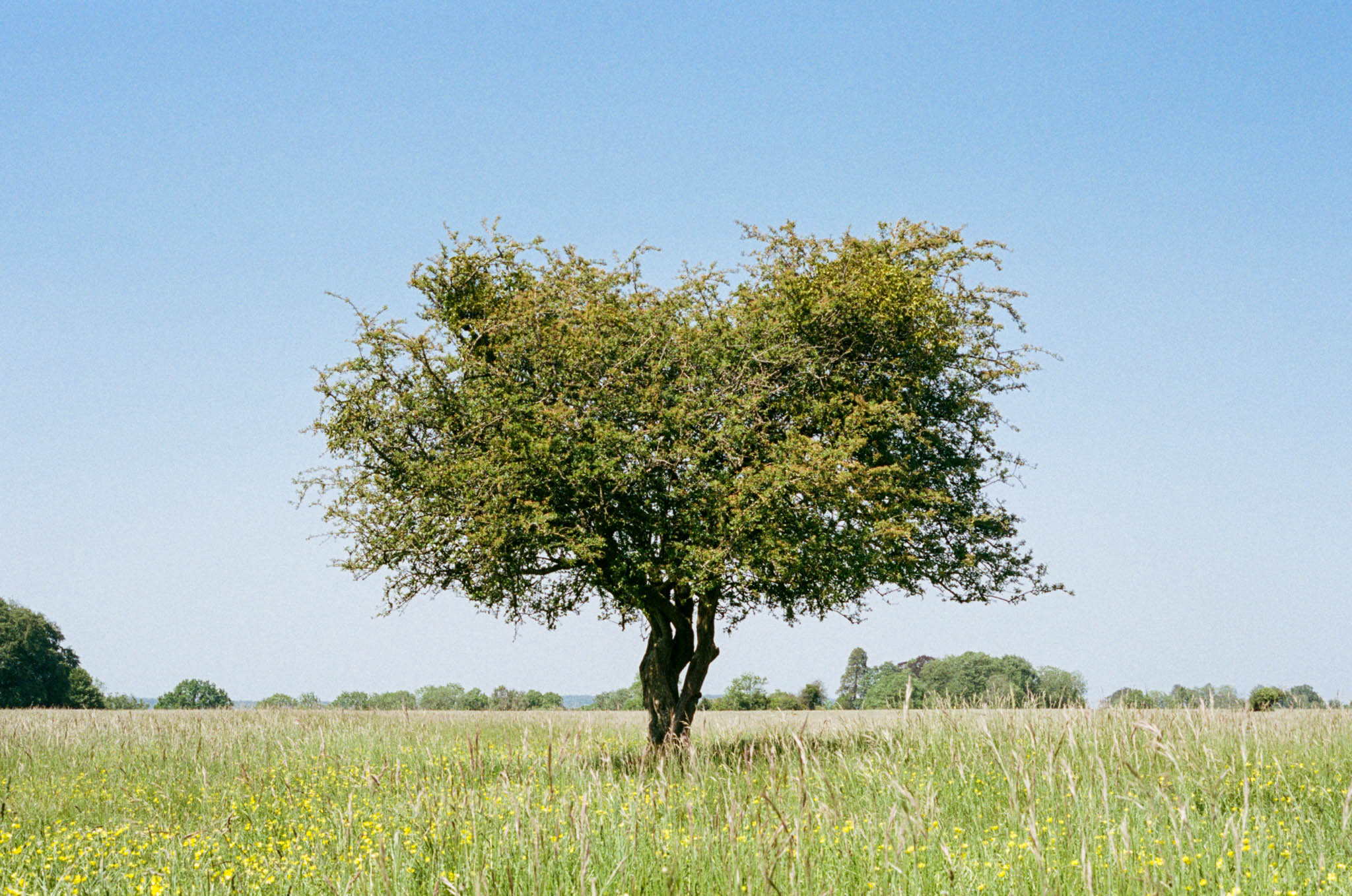
Canon EOS 1V – EF 50mm f/1.8 STM – Kodak Portra 400
Fried Chicken
The counterpoint to my excitement is that had I taken all these pictures digitally I wouldn’t have spent any money. Had I not bought Portra, the EOS 1V, the 50mm f/1.2, and even the E6 processing kit, I would have a bag of cash that I could throw at something else.
Perhaps I could get the RF 10-20 I’ve been sad that I can’t afford, or I could put it towards food, shelter or even childcare.
I’m tempted to say that we live and learn, but there’s very little evidence that I have. Rash decisions about cameras, impulse purchasing, and the tendency to put photography ahead of everything else have been a running theme of the last 13 years. I may have lived, I’m not sure I’ve learned.
Part of me is tempted to sell my EOS 1, if only to counter my spendthriftery, but part of me wonders if I do whether I’ll find myself buying another one in 2039, along with my third EF 50mm f/1.2.
Not long after going full-frame I got my hands on my Hasselblad. The Bronica, the camera I began this post talking about, found itself on borrowed time. Sold on as a really nice kit, it will have helped to pay for something, and that something probably got sold to pay for something else.
I never did get my hands on a panoramic back for it, but presumably some of that money, however small a percentage, helped pay for my Fujica G617, so my panoramic itch got scratched in the end.