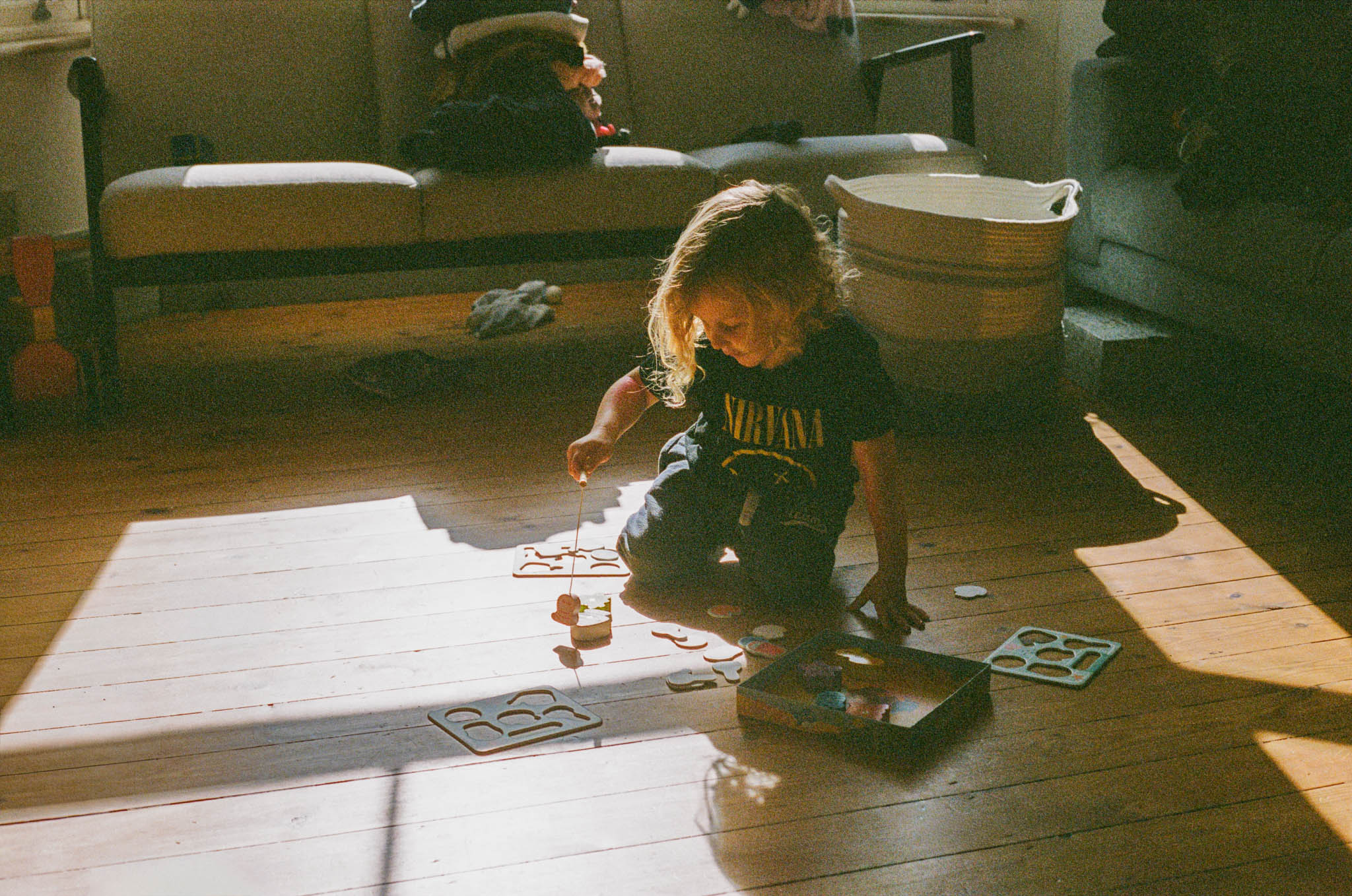
Winter Sun
Leica M4-P – Zeiss 50mm f/2 Planar – KEKS M Meter – Kodak Portra 400
Personal Weakness
I recently bought the KEKS M-Meter. Those of you who have been reading this blog for a while will know that I’ve been messing around with a number of shoe mount meters over the last few years, and you might be wondering how I could possibly warrant a fourth.
It all comes down to personal weakness. The photographer that I would like to be is able to look at the world and meter with his eyes. The photographer I would like to be is so in tune with the light and their camera that they can shoot without thinking, without being diverted by something as prosaic or mechanical as metering.
I can wing it on a sunny day when I’m shooting a forgiving film stock, (I’ve used sunny 16 with Portra and had plenty of success), but give me some expired slide film and hard light and I’m going to make more misses than hits.
A working life spent with cameras with processors that can quickly meter 384 zones across a scene has allowed me to become both lazy and risk averse. I know where to stand when I’m shooting a 50mm through the sheer dint of repetition, but I can’t meter by eye because I haven’t done the work.
This doesn’t matter when I’m shooting my 4×5 or panoramic cameras. Neither is designed or intended for reportage, and that isn’t what they’re used for. Going back into the bag for a spot meter is just part of the process, much like checking the spirit level.

Pears
Leica M4-P – Voigtlander 28mm f/2.8 – KEKS M Meter – Kodak Portra 400
My Canon EOS1 has the forerunner to the metering system in my R5s, my K1000 has needle-match, and while my Hasselblad sports a waist-level-finder when it’s on the shelf, it hunts wearing a metered prism.
This leaves my Leica M4-P. It has no internal meter and is, unlike the pano or the tach, entirely geared towards fast-paced reportage.
Everything about it from its compact size, quiet and snappy shutter or the single stroke frame advance, (not to mention its history), leans toward the documentation of some kind of fleeting and singular moment.
It feels energised when it’s making images quickly. It wants to be frenetic and to live in the now. This feeling is quashed by slow and laborious metering.
I’m often metering when I should be moving, metering when I should be framing, and metering when I should be clicking the shutter.
My Leica shooting heroes Klein/Bresson/Meyerowitz made images with immediacy, drive, and with perfect timing. This is hard to achieve when you add metering into the mix, and it is my frustration with the time lost that makes me buy shoe-mount meters.

A Paper boat in the hand is worth two on the water
Leica M4-P / Zeiss 50mm f/2 Planar / KEKS M Meter / Kodak Gold 200
Old Shoes
The KEKS M-Meter is the fourth shoe mount meter to come into my possession in the last four years, because I haven’t found the right one yet.
I bought a Reveni back in 2020 which has seen little action. I bought it to use with my Canon F1, which had a shoe mount in my memory even if it didn’t have one in real life. I stuck it on top of my Leica where it sat and ate batteries.
The reward was a compact solution that works provided you have a spare LR44 to hand and you can work it with sausage-fingers.
(I should note that the Reveni has since been updated with a Version 2, and now ships with an internal rechargeable battery.)

St. Paul’s from the City
Leica M4-P – Zeiss 50mm f/2 Planar – KEKS M Meter – Kodak Portra 400
Back in the August of 2022 I was on holiday in Italy and filled with the devil may care attitude that pervades when I drink at lunchtime. I saw the announcement of the Keks KM02 online and ordered one immediately.
It’s a great little meter that works well when I can remember what each button does. It’s an issue with me rather than the meter, but I constantly get lost in its feature rich menus while the ‘decisive moment’ slips into memory.
This summer I got my hands on the LD meter from CHI which I really like. I got it primarily because I wanted some form of rangefinder to use with my panoramic camera, (it sports a handy laser that does just that).
It’s smaller and lighter than the KM02 and has the nicest HMI of all my previous shoe-mount meters. Unfortunately my Pro model measures a 7° vector. Had I plumbed for the standard non-pro version which measures a 30° or 50mm FOV equivalent, it could have been the one.

Geometric
Leica M4-P – Zeiss 50mm f/2 Planar – KEKS M Meter – Kodak Gold 200
What makes the KEKs M-Meter different?
The thing that sets the KEKs M Meter apart is that it is specifically engineered for a number of Leica M models (M1, M2, M3, M4, M4-2, M4P. MA, MD, MD2) and features a direct connection to the shutter speed dial on top of the camera. The meter therefore knows what your shutter speed is set to, and your changes are fed back to your meter.
This means that you have one less thing to do, you either adjust your aperture to match the reading, or turn the shutter to till it reads the aperture you want.
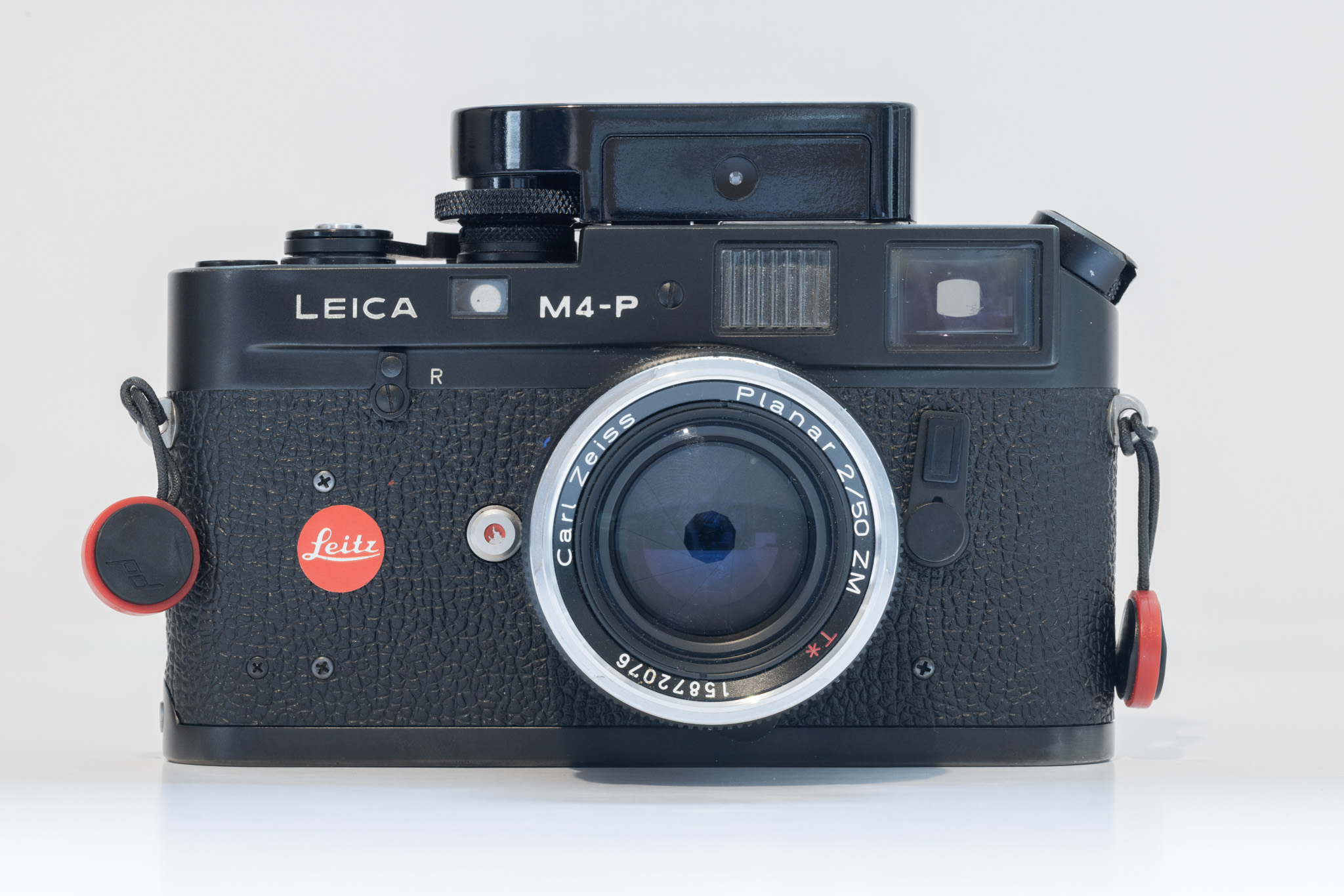
The KEKS M-Meter in-situ
Canon R5 – RF 100mm f/2.8L

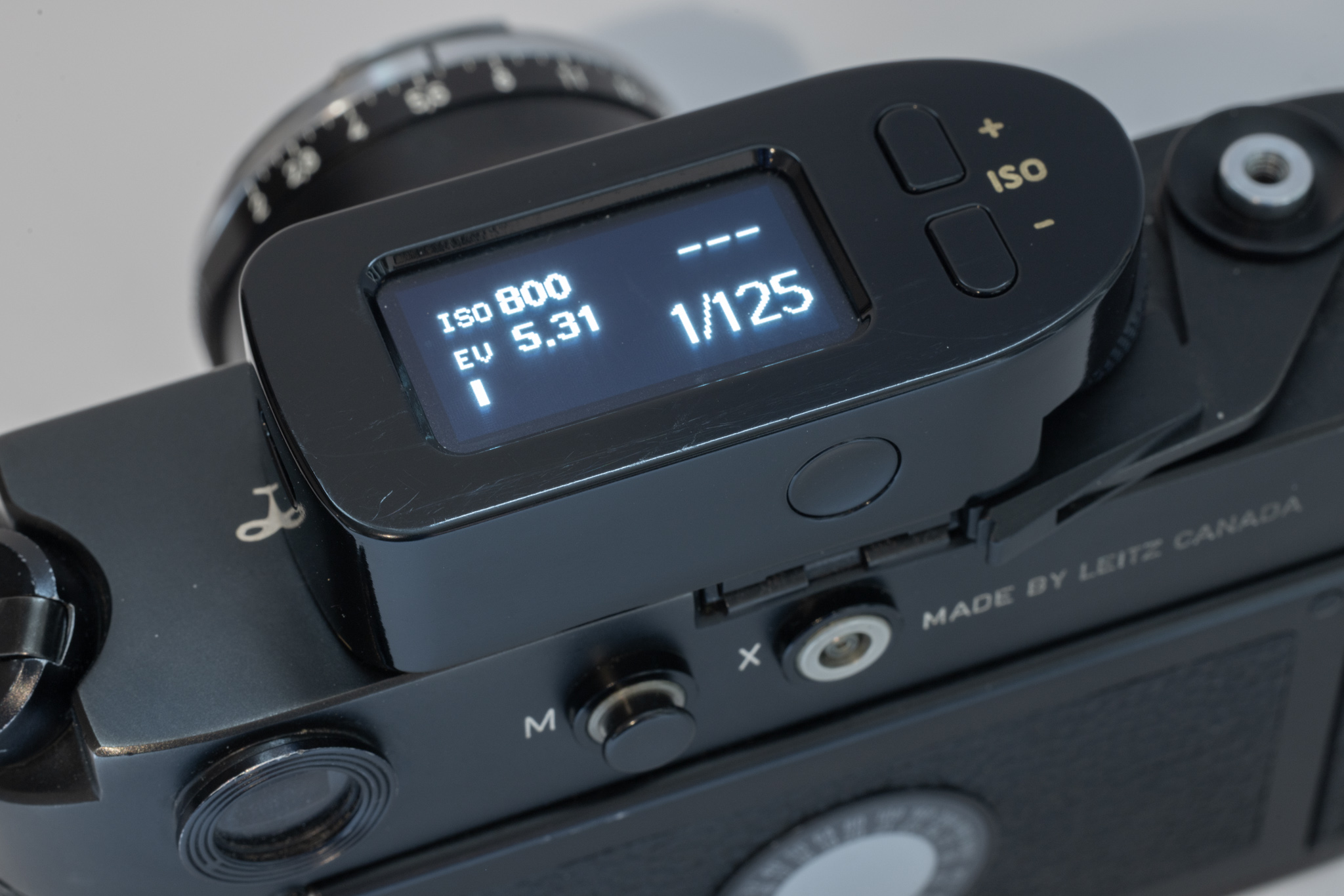
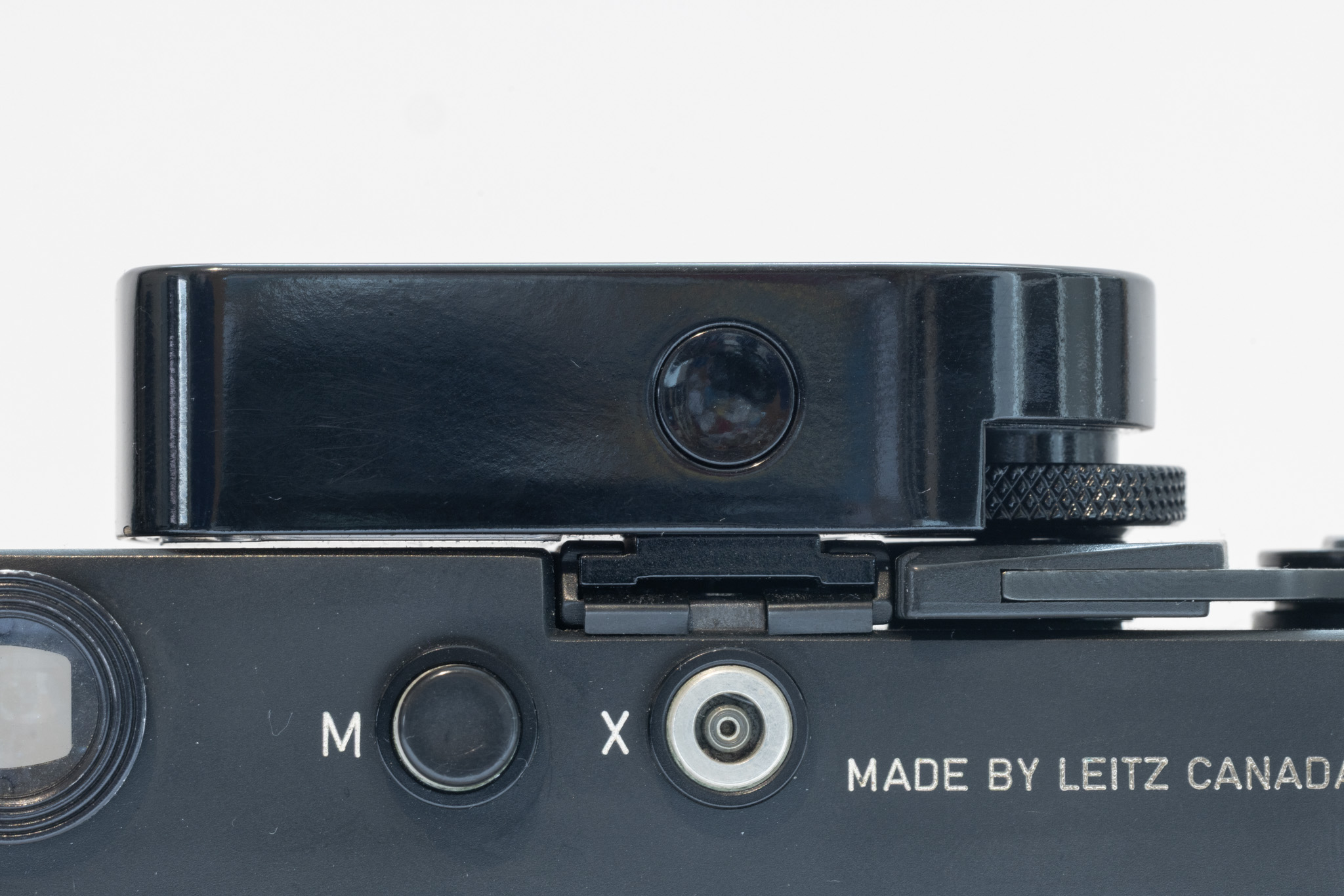

My Leica needs a thorough clean…
While full featured, the M-Meter doesn’t feel over-burdened with options, and the menu is hidden behind a long press of two buttons. Operation is super easy, and I can shoot more quickly than I can with the other meters, albeit not as quickly as I can shoot with the Canon EOS1.
I bought the brass model with the soft black paint. It should weather and brass with time, and will get better looking with age. The brass chassis makes it a weighty option, but so tight is the mating of body and meter that it doesn’t feel it. The camera and meter become one around a single centre of gravity, secure and of one body.
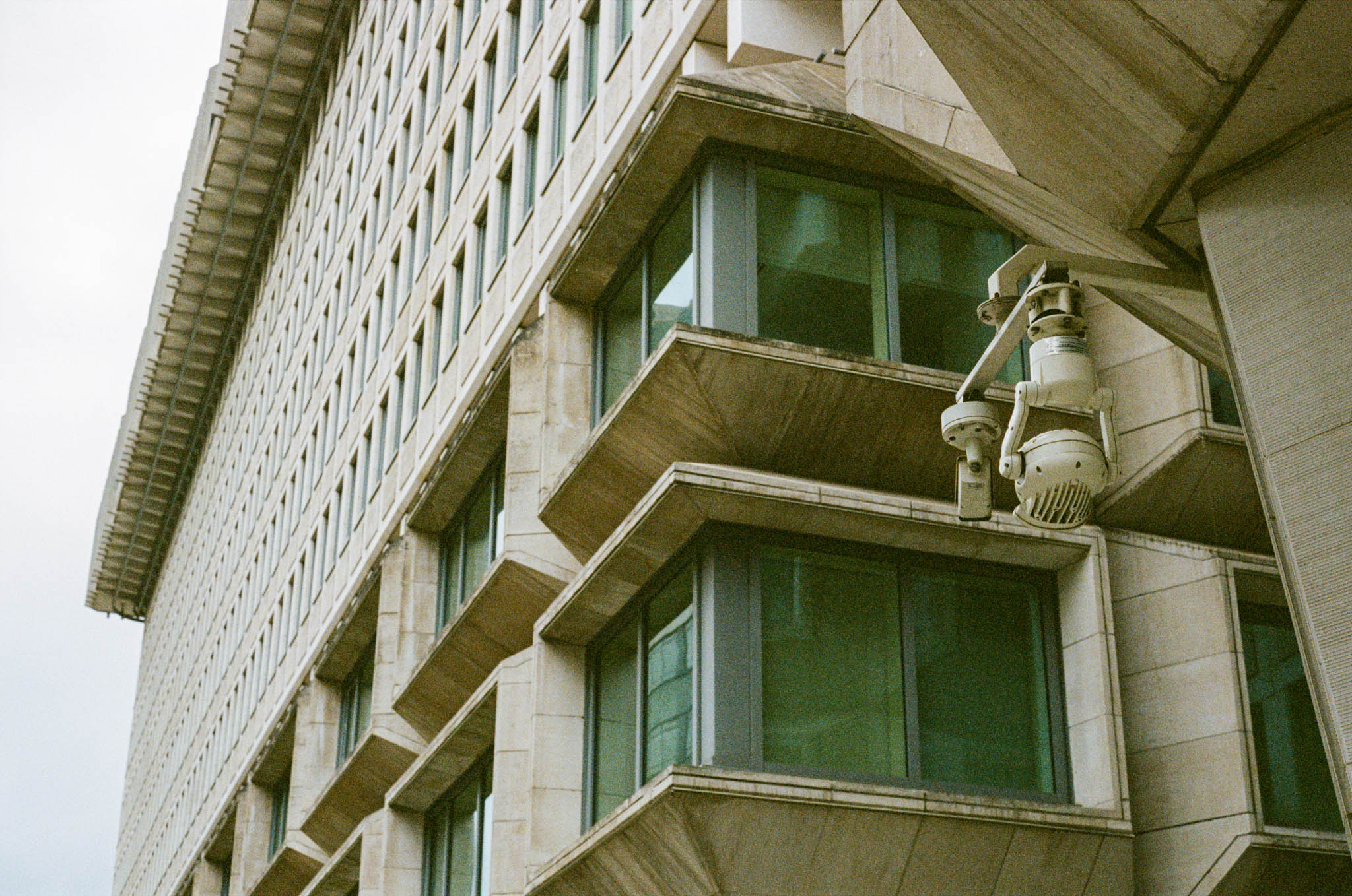
Looking the Other Way
Leica M4-P – Zeiss 50mm f/2 Planar – KEKS M Meter – Kodak Portra 400
Conclusions.
The Keks M-Meter is as clean and attractive a solution to my particular issue as I’m likely to find, (short of buying an M6-TTL), and it does a really nice job.
There is of course no accounting for user error. Using the meter still leaves plenty of room for poor exposure if you aren’t concentrating, or if you’ve forgotten which film is in the camera..
That being said my hit-rate as far as exposure is concerned is no worse than with my other shoe mount meters, and I am faster (and getting faster) with the M-Meter.
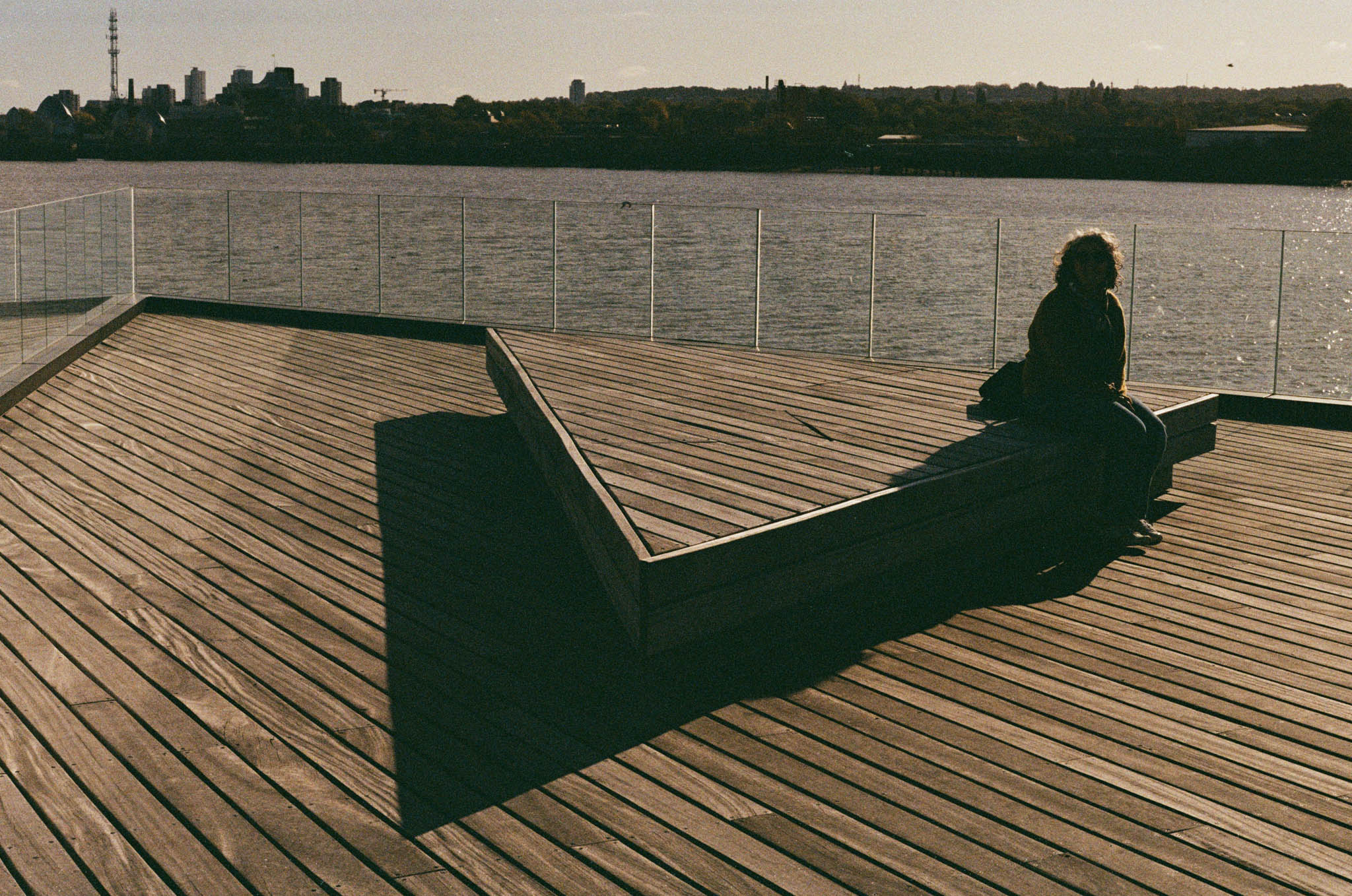
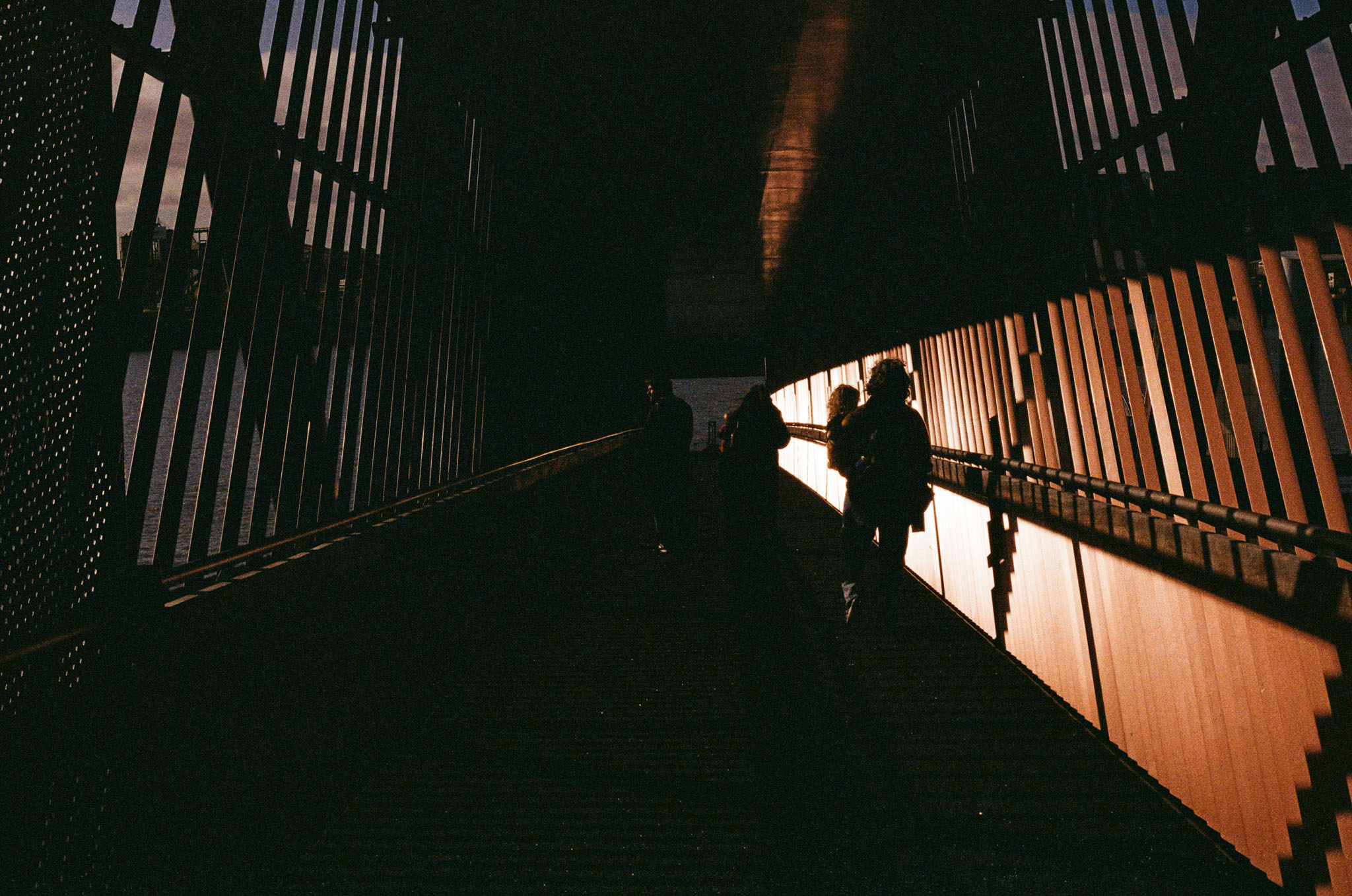

It holds charge well in terms of when you’re in the field, but it will flatten over time on the shelf. You therefore need to have the wherewithal to charge it before an adventure.
I have no plans for a fifth shoe mount meter and will be focusing on using the Keks with the Leica to get as fast as I can. Hopefully through some form of osmosis the meter will help me develop the internal metering skill that I crave.
My desire for my Leica to become an extension of my eye has led me a fair way down this path. Occasionally I do stop to wonder whether it might be time to turn back.
A rational human being would either shoot cameras that meter or learn to do it themselves…